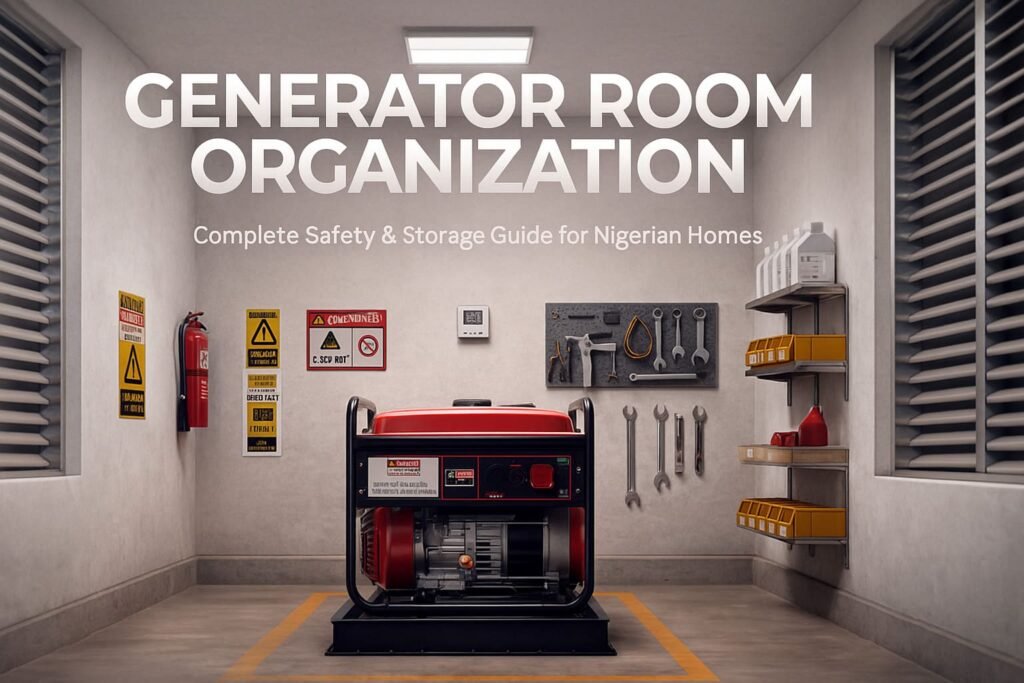
If you’re tired of your generator giving you headache—overheating, causing noise trouble with neighbors, or making your compound smell like diesel—it’s time to organize that generator space properly. You know how during PHCN “up-down” (constant power fluctuations), your generator becomes more important than your landlord? That’s exactly why organizing your generator space properly matters.
With most Nigerian homes relying on generators for electricity, a well-organized generator setup, combined with safety measures and storage solutions, can prevent fires, carbon monoxide poisoning, and equipment damage worth millions of Naira. Proper generator setup is crucial for every Nigerian homeowner who depends on backup power during frequent power outages. Learning how to stay focused during power outages becomes easier when your generator system is properly organized and reliably maintained. This comprehensive guide covers everything you need to know—from understanding LASPPDA building permit requirements to choosing the right KVA capacity for your 3-bedroom house in Lagos or Abuja.
What Are the Requirements for a Generator Room?
Before you start building or reorganizing, you must understand the basic requirements. A generator room isn’t just a shed; it is a technical space that needs to handle heat, noise, and dangerous fumes.
Space Requirements and Clearances
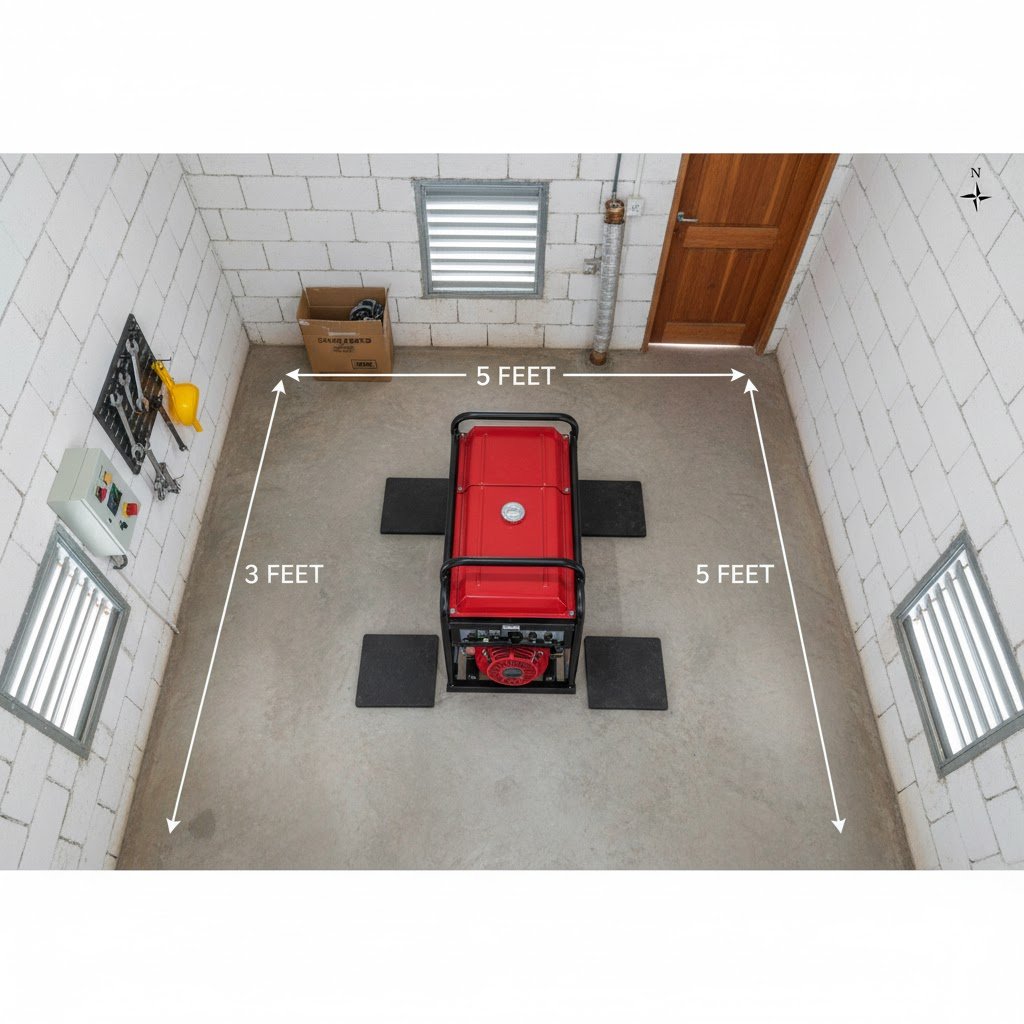
Space is the first thing to consider. You cannot simply squeeze a generator into a tight corner. According to NFPA 110, the internationally recognized standard for emergency power systems maintained by the National Fire Protection Association, indoor generator rooms require 2-hour fire-rated enclosures for Level 1 installations.
For Nigerian homes, especially if you are using a diesel generator, you need enough space to walk around the machine for maintenance. If a mechanic comes to change your oil or filters, they need room to work without touching hot surfaces. NFPA 37 calls for five feet (1.5 meters) from combustible walls (walls that can catch fire).
Building Walls That Won’t Burn
Your generator room must be able to contain a fire if one starts. This is what experts call “fire-rated construction.”
- Walls: Should be made of concrete or blocks that can resist fire for at least 2 hours.
- Roofing: Use non-flammable materials. Avoid wood where possible.
- Floor: Concrete is best because it doesn’t absorb fuel spills.
Minimum Room Dimensions by Generator Size
How big should the room be?
- Small Petrol Generators (2.5 – 5.5 KVA): A space of 6 feet by 6 feet (1.8m by 1.8m) is usually safe.
- Diesel Generators (10 KVA – 20 KVA): You need at least 10 feet by 8 feet (3m by 2.4m).
Research from CS Diesel Generators indicates that generator room temperature must be maintained at 18 to 27 degrees Celsius. During Lagos’ hot dry season, implementing effective cooling strategies for hot Nigerian homes becomes essential not just for your generator room, but for your entire house when power is out. If the room is too small, it gets too hot, and your generator will overheat and shut down.
Budget Planning for Generator Room Setup in Nigeria
Before we dive deeper into safety rules, let’s talk money. Costs change rapidly in this economy, but here are estimates for 2025 planning to help you budget:
- Generator (5.5 KVA Petrol): ₦600,000 – ₦950,000.
- Generator (15 KVA Diesel): ₦2,500,000 – ₦4,000,000.
- Room Construction (Concrete): ₦300,000 – ₦600,000 (depending on size and finishing).
- Soundproofing Materials: ₦50,000 – ₦150,000.
- Cables and Changeover Switch: ₦100,000 – ₦250,000.
Note on Pricing: Price varies based on brand (Chinese vs Japanese vs European), fuel type (petrol vs diesel), and features (manual vs automatic start).
Price Disclaimer: Prices listed are approximate 2025 estimates based on market research and vary significantly based on location, brand, and vendor. Always get multiple quotes before making purchases. This guide does not endorse specific suppliers.
Popular Generator Brands in Nigeria
Choosing the right brand is as important as choosing the right size. Here is a quick, unbiased look at the common names you will see in Alaba or Victoria Island markets.
- Mikano: Perhaps the most famous name in Nigeria. They assemble generators locally using Perkins or Yolo engines. Pros: Massive support network, spare parts are everywhere, and mechanics understand them. Cons: Can be pricey compared to unbranded imports.
- Sumec Firman: The king of small to medium petrol generators. If you need a 2.5 KVA to 8 KVA unit for a flat, this is the standard. Pros: Very affordable, durable for the price, and widely available. Cons: Louder than diesel units, frequent oil changes needed.
- Jubaili Bros: A premium choice, often using Perkins or Lister Petter engines. They are known for high-quality Marapco sets. Pros: Excellent build quality, professional after-sales support, very reliable. Cons: Premium pricing.
- Perkins: This is actually an engine manufacturer (British), but many generators are sold simply as “Perkins.” Pros: The gold standard for durability and longevity. Cons: Very expensive; beware of fake “Perkins-type” engines sold at cheaper prices.
Generator Room Options Comparison
Not everyone needs a full concrete bunker. Effective generator room organization starts with choosing the right structure for your pocket and property type. Here’s how different generator housing options compare across key factors:
| Feature | Concrete Room | Vented Metal Shed | Open Canopy |
|---|---|---|---|
| Cost | ₦300,000 – ₦600,000 | ₦150,000 – ₦400,000 | ₦50,000 – ₦150,000 |
| Security | Excellent | Good (with padlock) | Poor |
| Fire Safety | Excellent (2-hr rating) | Moderate | Poor |
| Noise Reduction | Excellent (with foam) | Moderate | Minimal |
| Ventilation | Requires fans | Natural + forced | Excellent natural |
| Lagos Rain | Excellent protection | Good | Poor |
| Permit Required | Yes (LASPPDA) | Maybe | No |
| Best For | Permanent homes | Rented properties | Temporary use |
Generator Hazards and Safety Control Measures
Understanding and controlling generator hazards protects your family and property. Diesel and petrol generators present multiple risks that require specific control strategies. These serve as essential diesel generator safety precautions for every household.
Physical Hazards
Moving parts like cooling fans, drive belts, and flywheels can cause serious injuries. According to safety protocols from Jubaili Bros Nigeria, all guards and protective covers must remain in place during operation. Never reach near a running generator.
Electrical Hazards
Direct contact with live electrical components can be fatal. Always use a qualified electrician to install your changeover switch. For Nigerian homes using the standard 230V system, improper wiring can electrocute someone or damage appliances worth hundreds of thousands of Naira.
Chemical Hazards
Diesel fuel contains carcinogens that can cause skin rashes and respiratory problems with prolonged exposure. When handling fuel:
- Wear rubber gloves
- Use a proper funnel to avoid spills
- Wash hands thoroughly after fueling
- Store fuel containers in well-ventilated areas away from living spaces
Heat and Burn Hazards
Research from Jubaili Bros Nigeria indicates that exhaust gases typically reach 450–550°C. The exhaust pipe stays hot for at least 30 minutes after shutdown. This is particularly dangerous for children in Nigerian compounds who might touch hot surfaces.
Install clear warning signs in Yoruba, Igbo, Hausa, or Pidgin if needed: “NO TOUCH – E DEY HOT” or similar local language warnings that children understand.
Noise-Induced Hearing Damage
Without proper soundproofing, generator noise can reach 100 dBA—loud enough to cause permanent hearing damage with prolonged exposure. Lagos State environmental regulations typically require noise levels below 65-70 dBA at property boundaries. Install residential silencers and acoustic louvers to meet these standards.
Essential Safety Rules for Generator Rooms in Nigerian Homes
Generator room safety is not optional. Every year in Nigeria, families lose their lives due to generator fumes or fires. Proper adherence to generator room safety guidelines is the only way to protect your household.
Real-Life Generator Tragedies in Nigeria
Understanding why safety matters helps motivate proper practices.
Carbon Monoxide Deaths A single gas-powered generator can release as much carbon monoxide as 400 idling cars. The Occupational Safety and Health Administration (OSHA) provides comprehensive generator safety guidance, emphasizing that carbon monoxide from portable generators can cause death within minutes in enclosed spaces.
In Ogun State, a couple recently died from generator fumes when they operated their generator in a poorly ventilated space according to HSE Nations report. The tragedy highlights three critical mistakes:
- They placed the generator too close to their bedroom.
- Ventilation was inadequate.
- They had no carbon monoxide detector.
Symptoms of Carbon Monoxide Poisoning:
- Headache and dizziness
- Nausea and vomiting
- Confusion and drowsiness
- Loss of consciousness
If you feel these symptoms when your generator runs, immediately:
- Get everyone outside into fresh air.
- Turn off the generator from a safe distance.
- Call for medical help.
- Do not re-enter until the area is well-ventilated.
The 20-Foot Rule Always position generators at least 20 feet (6 meters) from doors, windows, and vents. In Lagos compounds where space is tight, point the exhaust pipe away from neighboring buildings as well. A generator that’s safe for your family shouldn’t endanger your neighbors.
Fire Triangle Prevention
To stop a fire, you must keep the three parts of the “Fire Triangle” apart:
- Fuel: Diesel or petrol.
- Oxygen: Air in the room.
- Heat: The hot engine or exhaust.
Never store extra jerry cans of fuel right next to the hot generator. That is a recipe for disaster.
Emergency Shutdown Procedures
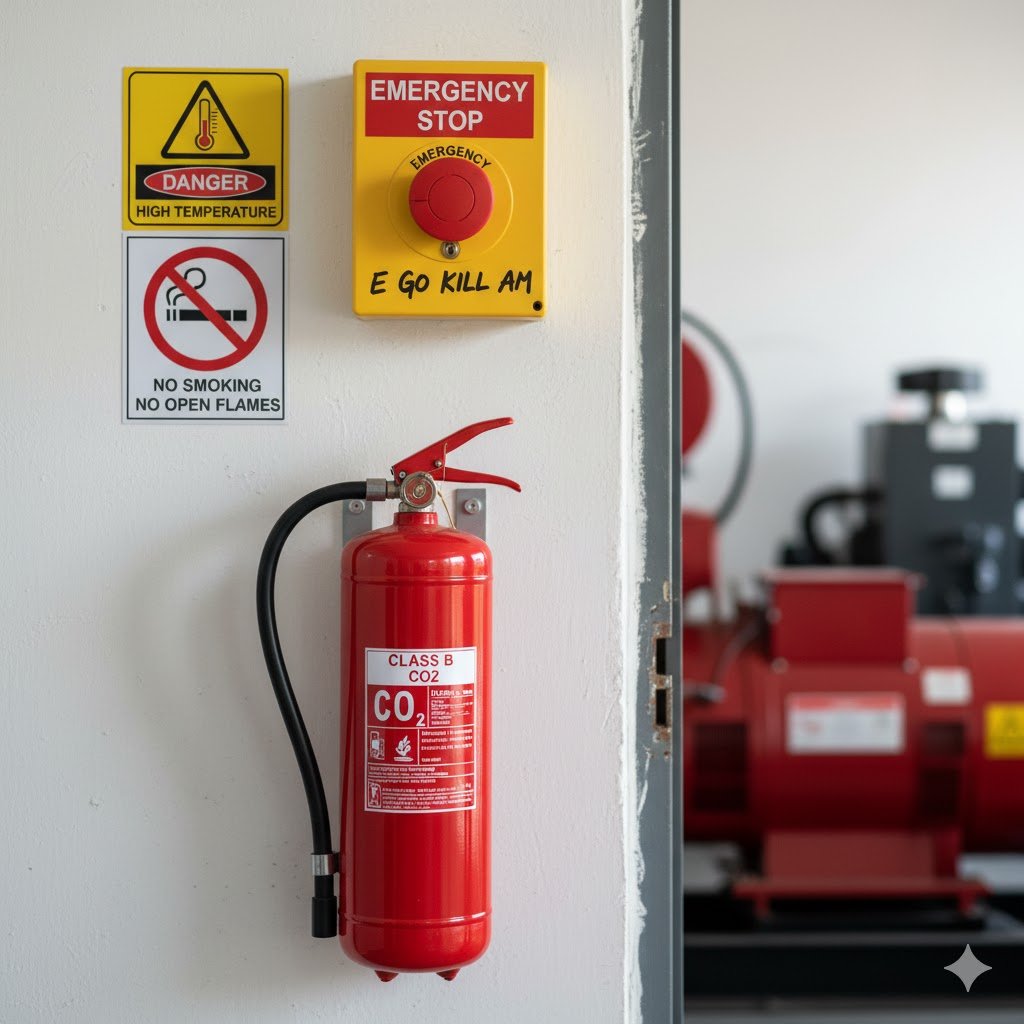
Beyond preventing fires through proper fuel management, you also need quick response systems in case an emergency does occur.
According to Jubaili Bros compliance documentation, thermal-activated fuel shutoff valves are often required. In simple English, this means if the heat gets too high (around 100°C), the fuel supply cuts off automatically.
You should also have a big, red “Emergency Stop” button clearly visible on the outside of the generator room. If there is a fire, you shouldn’t have to run inside to turn it off.
Generator Room Design Guide for Nigerian Homeowners
Generator room design depends on where you live. A house in a crowded Lagos compound has different needs than a duplex in an Abuja estate.
Indoor vs Outdoor Placement Considerations
If you are building a dedicated room:
- It must be detached from the main building if possible.
- If it is attached (like a boys’ quarters extension), the wall connecting to the house must be fire-proof and have no windows.
For Nigerian homeowners living in compact spaces, especially those in one-room apartments, finding space for a safe generator setup requires creative planning. You may need to utilize corridor space, balconies, or shared compound areas while maintaining proper safety clearances.
Vented Generator Shed Options
For Nigerian homeowners without space for a full concrete room, vented generator sheds offer an affordable alternative.
What is a Vented Generator Shed? A vented generator shed is a pre-fabricated enclosure with built-in louvers that allow air to flow through while protecting the generator from rain and sun. These are popular in estates where building permanent structures requires homeowners’ association approval.
Key Features for Nigerian Climate:
- Rust-Resistant Materials: Look for galvanized steel or aluminum construction that withstands our humid coastal climate in Lagos or Port Harcourt.
- Rain Protection: Louvers should face downward to prevent rain entry during the rainy season.
- Security: Lockable doors protect against theft—generator theft is common in some neighborhoods.
- Portability: Some designs can be moved if you relocate.
Local Availability: While search results mention “Home Depot” options, these aren’t available in Nigeria. However, local fabricators in industrial areas like Ikeja’s Alaba International Market or Nnewi can custom-build vented sheds. Expect to pay ₦150,000 – ₦400,000 depending on size and materials.
DIY Alternative: You can build a simple vented shed using:
- Angle iron frame (₦50,000 – ₦80,000)
- Corrugated roofing sheets (₦30,000 – ₦50,000)
- Metal louvers (₦20,000 – ₦40,000)
- Concrete base (₦40,000 – ₦60,000)
Total DIY cost: ₦140,000 – ₦230,000.
Generator Shed Plans for Nigerian Homes
While “generator shed plans PDF” downloads from foreign sources may not suit Nigerian conditions, here’s a practical design adapted for local materials and climate.
Simple Vented Shed Design (DIY-Friendly)
Dimensions for 5-10 KVA Generator:
- Floor Space: 8 feet × 6 feet (2.4m × 1.8m)
- Height: 7 feet (2.1m) – allows adult to stand inside
- Door: 3 feet wide (0.9m) × 6 feet high (1.8m)
Materials List (Available at Alaba Market or Building Materials Shops):
- Foundation: 50kg cement bags (10), sand (2 tons), granite (1 ton)
- Frame: 2-inch angle iron (40 feet total length)
- Roofing: Aluminum corrugated sheets (12 feet length, 2 pieces)
- Louvers: Metal ventilation louvers (4 pieces, 2ft × 1ft each)
- Door: Metal security door with louver insert
- Paint: Anti-rust primer and finish coat
- Concrete blocks (optional for partial walls): 100 blocks
Construction Steps:
- Foundation: Cast 4-inch thick concrete slab with steel reinforcement.
- Frame: Weld angle iron frame, ensuring corners are perfectly square.
- Ventilation: Install two intake louvers on the side facing prevailing wind, two exhaust louvers on opposite side.
- Roofing: Attach corrugated sheets with roofing screws, ensure 2-inch overhang for rain protection.
- Door: Install on hinges with padlock bracket.
- Finishing: Apply two coats of anti-rust paint.
Total DIY Cost: ₦180,000 – ₦280,000 (if you do the work yourself) Professional Construction: ₦350,000 – ₦600,000 (labor included)
This design works well in Nigerian climate because:
- Open louvers prevent dangerous heat buildup.
- Metal construction resists termites (common problem with wood).
- Elevated roof allows hot air to escape naturally.
- Lockable door prevents theft in urban areas.
Noise Control Solutions
Nobody wants to be “that neighbor” who keeps the whole street awake.
- Acoustic Foam: Line the walls with fire-retardant foam to soak up noise.
- Mufflers: Ensure your generator has a high-quality exhaust muffler.
- Mounting: Put the generator on rubber pads to stop vibrations from shaking the floor.
For Lagos and Abuja properties, consider noise regulations. You generally want sound levels below 65-70 dBA when measured 7 meters away.
How to Ventilate a Generator Room Properly
Generator ventilation requirements are tricky in our tropical climate. The Nigerian heat is already intense, and the engine makes it hotter.
Picture This: Proper Ventilation Setup
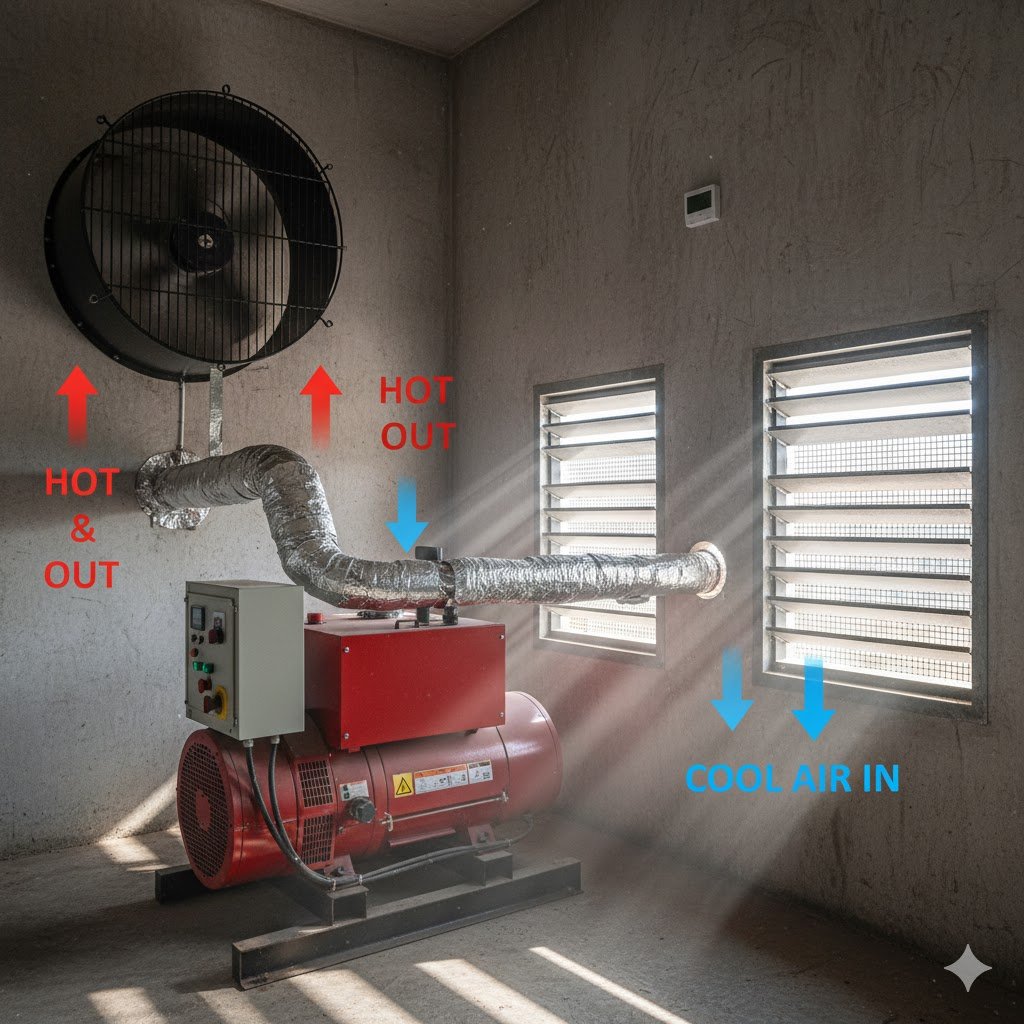
To truly understand generator ventilation requirements, you need to visualize the perfect airflow.
Imagine standing outside your generator room. On the right side wall (facing the fence), you see two large metal louvers positioned about 1 foot (30 cm) above ground level. These louvers have angled slats pointing downward—this lets air in but keeps rain and rats out.
Now look at the opposite wall (facing your compound). High up, about 6 feet (1.8m) from the ground, you see an exhaust fan inside a protective cage. This fan is connected to a thermostat—when the room temperature hits 30°C, the fan automatically switches on and sucks hot air out.
The exhaust pipe from your generator exits through the back wall, extending 3 feet (0.9m) beyond the wall with the opening facing away from your house. The pipe is wrapped in silver heat-resistant tape (lagging) so nobody gets burned if they accidentally touch it.
This cross-ventilation setup creates a “wind highway” through your generator room. Cool air enters from one side, passes over the hot engine (cooling it), and exits as hot air on the opposite side. Simple, but effective, it eliminates the heat buildup risks we discussed in the Generator Hazards section.
Natural vs Mechanical Ventilation
- Natural: Uses windows and louvers. This works for small “I better pass my neighbor” generators.
- Mechanical: Uses electric fans. This is a must for diesel generators (Mikano, Jubaili, Perkins style).
Generator emissions are regulated internationally through EPA standards, with Tier 4 standards requiring NOx and particulate matter reductions of up to 90% compared to older models—an important consideration for ventilation system design.
Air Intake and Exhaust Placement
Based on NFPA 110 standards documented by GenServe, ventilation systems must maintain ambient temperature within manufacturer specifications.
The rule of thumb is: Cool air enters low, hot air exits high. Ensure the exhaust pipe from the engine goes straight out through a “thimble” (a metal sleeve) in the wall. Do not let the exhaust gas just blow around inside the room.
Calculating Required Ventilation Area
According to Jubaili Bros Nigeria’s installation guidelines, use 0.15 m² of louver area per 100 kW of generator power.
For example:
- 5 KVA generator (≈4 kW) needs: 0.15 × 0.04 = 0.006 m² minimum louver area
- 10 KVA generator (≈8 kW) needs: 0.15 × 0.08 = 0.012 m² louver area
In practical terms, for a 10 KVA generator, you need ventilation openings totaling about 130 cm² (slightly larger than an A4 paper).
Air Velocity Requirements
Based on industrial ventilation standards adapted by Atlas Copco for compressor rooms, air velocity at ventilation inlet openings should not exceed 4 m/s (13 ft/s) to prevent turbulence and noise.
The ideal air speed through the room itself should be 7 m/s (23 ft/s) or less according to Genesal Energy’s installation guide.
Ventilation System Types for Nigerian Climate
In the dry season, dust is a problem. Use louvers that point downward to keep rain out but let air in. You might need a mesh screen to stop rats and snakes from entering the warm room.
How Many KVA Generators to Run a House in Nigeria?
Choosing the right size prevents overloading and saves fuel. As we touched on in the Budget Planning section, buying the wrong size can cost you significantly more in the long run.
Load Calculation Method
For a typical 3-bedroom house in Lagos or Abuja, a 3.5 KVA to 5.5 KVA generator handles most household needs based on standard appliance loads.
Use this formula: Total Wattage ÷ 0.8 = Generator KVA requirement.
Wetin You Fit Use Different KVA Generator Do:
- 2.5 KVA: E fit carry light, fan, TV, and small fridge. But if you on AC, e go trip. This is often sufficient for effective one-bedroom apartment design considerations.
- 5.5 KVA: This one strong well well. E fit carry AC, fridge, freezer, TV, and plenty lights for 3-bedroom flat.
- 10 KVA Diesel: This one na correct investment. E fit carry everything—AC for all rooms, fridge, freezer, pumping machine, pressing iron. Na only industrial machine e no fit carry.
Smart Storage Solutions for Generator Rooms
Generator storage solutions help you stay organized. When PHCN takes the light at 11 PM, you don’t want to be tripping over cables looking for oil. Implementing proper generator storage solutions also prevents clutter that could fuel a fire. Just as you would organize your kitchen for Nigerian cooking by grouping similar items and creating functional zones, your generator room needs dedicated areas for fuel storage, tool storage, and maintenance equipment.
Fuel Storage Best Practices
As mentioned in our Essential Safety Rules section above, proper fuel storage is critical for fire prevention. According to NFPA 110 fuel storage requirements, fuel tanks must be sized to carry 133% of the fuel needed according to your generator’s Class rating. Store fuel away from ignition sources with a minimum 5 feet (1.5 meters) separation.
- Diesel: Can be stored in steel drums or tanks. Keep them raised off the ground to prevent rust.
- Petrol: Highly flammable. Only store small amounts in approved jerry cans. Never leave them open.
Tool and Maintenance Equipment Storage
- Wall Racks: Hang your funnels, rags, and wrenches on the wall. This is one of the simplest generator storage solutions that saves floor space.
- Spare Parts: Keep a box with extra spark plugs, fuel filters, and oil.
- Fire Extinguisher: Mount a Class B (CO2 or Dry Powder) extinguisher right next to the door, not behind the generator.
Complete Guide to Generator Room Building Permits in Lagos
According to Lagos State building regulations (as documented in LASPPDA requirements), generator houses must be positioned within setbacks with considerations for safety, health, and good sanitation.
When You Need a Permit
You need LASPPDA approval if:
- Building a permanent concrete or block generator room.
- The structure exceeds 2 floors in height (rare for generator rooms but applicable for rooftop installations).
- Installing a generator in a commercial property.
- Your development involves significant electrical or mechanical systems.
According to Jubaili Bros Nigeria’s compliance documentation, permits for generator installations in Nigeria may be issued by Municipal/Civil Defense Authorities, Ministries of Environment, Fire Departments, and NERC.
Required Documents for Lagos Residents
Building safely in Lagos requires obtaining structural plans from LASBCA and planning permits from LASPPPA, as outlined by Safefellow’s Lagos building guide, which emphasizes the importance of certified electrical work and licensed generator installation.
Based on current 2025 LASPPDA requirements, you must submit:
- Survey Plan: Showing exact location of proposed generator room on your plot.
- Architectural Drawing: Detailed plans showing room dimensions, door placement, ventilation openings.
- Structural Drawing: Signed by a registered structural engineer (required even for small structures).
- Electrical Drawing: Showing cable routes and changeover switch installation.
- Mechanical Drawing: Showing exhaust routing and ventilation design.
- Fire Service Report: Particularly for commercial installations.
- Certificate of Occupancy: For the main land/building.
- Lagos State Development Levy Receipt.
Application Process
According to the standard LASPPDA application process, the procedure involves:
- Step 1: Engage a qualified architect or engineer to prepare drawings (₦150,000 – ₦500,000 depending on complexity).
- Step 2: Submit application online through LASPPDA portal or physically at their office in Alausa, Ikeja.
- Step 3: Pay processing fees (vary by project size, typically ₦50,000 – ₦200,000 for residential generator rooms).
- Step 4: LASPPDA inspection – Officials will visit your site to verify existing conditions.
- Step 5: Approval – Takes 4-8 weeks if all documents are complete.
- Step 6: Pay Development Levy before commencing construction.
Penalties for Non-Compliance
Building without permits can result in:
- Demolition orders from LASBCA (Lagos State Building Control Agency).
- Heavy fines (₦500,000 – ₦2,000,000).
- Court cases.
- Inability to sell property with irregular structures.
Other States
Abuja (FCDA), Port Harcourt, and other cities have similar processes through their local planning authorities. Requirements are generally less stringent in rural areas but always check with your Local Government Area office.
Insurance Coverage for Generator Owners
Protecting your investment goes beyond locks and keys. Many Nigerian homeowners overlook insurance until it is too late.
- Home Insurance: Most standard home insurance policies in Nigeria cover fire damage, but they may have specific clauses about generator placement. If your generator is installed improperly (e.g., too close to the house), your claim could be denied.
- Fire Insurance: If you are storing significant amounts of diesel (more than 500 liters), you may need a specific endorsement on your fire insurance policy. Always declare your fuel storage to your insurer.
- Liability Coverage: In terraced houses or crowded Lagos estates, a fire starting in your generator room could easily spread to your neighbor’s property. Liability insurance protects you from being sued for damages if this happens.
Regular Maintenance for Generator Room Organization and Safety
Maintenance isn’t just about the machine; it’s about the room too. Good generator room organization requires regular checks to ensure safety protocols are being followed. Regular generator room maintenance doesn’t have to be overwhelming, even if you’re juggling work and other responsibilities. Applying the same strategies you use to keep a house clean with a busy schedule, such as creating weekly 15-minute inspection routines, makes generator safety manageable for busy Lagos professionals.
Daily Safety Inspections
According to Genesal Energy’s safety measures guide, conduct visual checks:
- Are there fuel leaks on the floor?
- Is the air vent blocked by leaves or trash?
- Is the battery cable tight?
Record Keeping Requirements
Keep a notebook in the room. Keep a maintenance log for your generator using productivity apps that work offline. Since power outages often coincide with internet disruptions, offline note-taking apps ensure you can always record service dates, fuel purchases, and performance issues. Write down:
- Date of last service.
- When you last bought fuel.
- Any strange noises you hear.
This helps you track costs and catch problems early.
Seasonal Maintenance Tips
To keep your generator running smoothly all year round, you need to adapt your maintenance routine to the Nigerian seasons.
Generator Room Maintenance by Season
Dry Season (November – March):
- Dust Control: The Harmattan season brings a lot of dust. Clean air filters weekly and wipe down the louvers bi-weekly to prevent clogging.
- Cooling: Ambient temperatures rise significantly. Watch for overheating and check the water level in the radiator more frequently as it evaporates faster.
Rainy Season (April – October):
- Leak Prevention: Check for water leaks in the roof and ensure the floor drain works to prevent flooding.
- Rust Protection: Inspect exhaust pipe joints for rust due to high humidity.
- Fuel Safety: Keep extra fuel indoors or in sealed containers to avoid water contamination. Treat fuel with a stabilizer if you are storing it for more than 2 weeks.
- Electrical: Monitor humidity levels as excess moisture can corrode electrical connections.
Year-Round:
- Check battery water level monthly.
- Test the fire extinguisher by shaking it vigorously and checking the pressure gauge.
- Verify carbon monoxide detector batteries quarterly.
- Clean the generator exterior regularly to spot oil leaks early.
Generator Room Organization Mistakes Nigerian Homeowners Make
Avoid these common traps to ensure long-term generator room safety:
- Blocking Vents: Piling old boxes or tires in front of the air intake. This kills the generator and violates generator ventilation requirements.
- Using the Room as Storage: The generator room is not a store for old furniture. It is a machine room. Combustible items create a fire hazard and demonstrate poor generator storage solutions.
- Ignoring Leaks: A small diesel leak on concrete makes the floor slippery and is a fire risk.
- Poor Lighting: Install a battery-powered light in the room. You need to see to pour fuel when the power is out.
Generator Room Troubleshooting
Even with the best generator room organization, issues can arise. Here is a quick guide to common problems and solutions for Nigerian homes.
Common Generator Room Problems and Solutions
Problem: Generator Overheats and Shuts Down This is the most common complaint, especially during the hot dry season in March-April.
- Causes: Blocked air vents (check for spider webs, leaves, plastic bags), room too small for generator size, exhaust fan not working, radiator needs cleaning.
- Solution: Clean all vents monthly. If the problem persists, install a larger exhaust fan or add a second intake vent.
Problem: Diesel Smell Throughout House
- Causes: Cracked fuel line leaking into the room, spilled fuel on the floor not cleaned properly, exhaust pipe has a hole or disconnection.
- Solution: Check all fuel connections weekly. Clean spills immediately with detergent and water. Replace damaged exhaust pipes—don’t try to patch them with tape.
Problem: Neighbors Complaining About Noise This is serious in Lagos where environmental officers can seal your property.
- Solutions:
- Install acoustic foam on walls (₦50,000 – ₦100,000).
- Upgrade to a residential-grade muffler (₦30,000 – ₦80,000).
- Ensure the generator sits on rubber anti-vibration pads.
- Run the generator during permissible hours only (typically 7 AM – 10 PM in residential areas).
Finding Generator Installation Services Near You
For Nigerian homeowners in major cities searching for “generator room organization safety and storage solutions near me,” several options exist.
Lagos Area Services
In Lagos neighborhoods like Ikeja, Lekki, Surulere, and Victoria Island, numerous certified electricians and generator technicians offer installation services. Look for COREN (Council for the Regulation of Engineering in Nigeria) registered professionals.
Recommended Service Providers:
- Jubaili Bros Nigeria – Authorized dealers with installation services.
- Local electrical contractors in Alaba International Market.
- Estate-based generator technicians (ask your estate manager for recommendations).
Abuja Services
Federal Capital Territory residents can find qualified installers through:
- Licensed electrical contractors registered with FCDA.
- Generator dealers in Wuse, Garki, and Maitama.
- Abuja Electricity Distribution Company (AEDC) approved contractors.
What to Ask Service Providers:
- Are you COREN registered?
- Do you provide warranty on installation work?
- Will you handle LASPPDA permit applications?
- What’s your experience with my generator brand?
- Can you provide references from nearby installations?
Cost of Professional Installation:
- Basic installation (residential, 5-10 KVA): ₦100,000 – ₦250,000.
- Complete room construction + installation: ₦500,000 – ₦1,500,000.
- Commercial installation (20+ KVA): ₦1,000,000 – ₦5,000,000.
Does a Generator Room Add Value to Your Property?
In the Lagos and Abuja real estate markets, a well-constructed generator room is a legitimate selling point. Unlike in other countries where generators are temporary, in Nigeria, they are semi-permanent infrastructure.
- Move-In Ready: Buyers in estates like Nicon Town or Banana Island view a dedicated, soundproofed generator room as a sign of a premium, “move-in ready” property.
- Safety Perception: A proper generator house with fire-rated walls and separation from the main building assures buyers that safety has been prioritized, potentially increasing the property’s market value.
Reducing Costs with Solar Integration
With fuel prices constantly fluctuating, relying solely on a generator is becoming unsustainable for many Nigerian families. Integrating solar power can significantly reduce your running costs.
- Hybrid Systems: Use your generator to charge a battery bank during cloudy days or heavy load periods (like running ACs), and switch to solar/inverter for light loads (fans, TV, lights).
- Reduced Runtime: By offloading 50% of your power needs to solar, you double the lifespan of your generator and halve your diesel budget.
- Cooler Operation: Running the generator for fewer hours means less heat buildup in the generator room, reducing wear and tear on cooling systems.
Conclusion
Generator room organization is a vital part of managing a home in Nigeria. It keeps your family safe, extends the life of your expensive equipment, and ensures that when the power cuts, your lights come back on without stress.
Take a look at your generator setup today. Is the floor clean? Is the ventilation clear? Do you have a fire extinguisher nearby? Making these small changes can save you money and protect your life.
Whether you are in a bungalow in Ibadan or a terrace in Lekki, proper generator room organization and safety should always come first.

Oladepo Babatunde (Prince Babatee Tunde) is a Computer Scientist, researcher, and professional content writer with a Higher National Diploma in Computer Science from Kwara State Polytechnic, Nigeria.
With a background in technology and a passion for clear communication, Babatunde specializes in creating thoroughly researched, reader-focused content on productivity, personal development, home living, and technology. Every article he writes is backed by extensive research and fact-checking to ensure readers receive accurate, actionable information.
As a freelance writer, he has helped brands and publications deliver content that educates, engages, and empowers their audiences. His mission at Vibena is simple: make complex topics easy to understand and help Nigerians live smarter, more productive lives.