Learning how to protect your peace on social media has become essential for Nigerian youths navigating Facebook, the rapidly growing TikTok, and other platforms daily. Nigeria had approximately 107 million internet users in early 2025, representing 45.4% internet penetration. Within this group, over 38.7 million active social media users in Nigeria as of January 2025, according to DataReportal’s Digital 2025 Nigeria Report. Nigerian users spend 3 hours 23 minutes daily on social media specifically, which represents approximately 51% of their total 6 hours 38 minutes of daily internet usage across all devices, confirms Krestel Digital’s 2025 Nigeria Social Media Data Report. The mental health impact cannot be ignored. Omo, social media can stress you o!
⚠️ Data Context Note: This guide primarily uses data from DataReportal and Krestel Digital published in January 2025. More recent October 2025 data from NapoleonCat suggests continued growth, with Facebook users reaching approximately 45.4 million by late 2025, indicating the Nigerian social media landscape continues to expand rapidly.
A critical 2025 finding shows that 65.2% of Nigerian internet users now leverage social platforms for work, making Nigeria the global leader in professional social media use, surpassing all other countries surveyed according to Krestel Digital’s international comparison. This creates a dual pressure: managing the personal anxiety from lifestyle content and the career stress from “hustle culture” on platforms like LinkedIn and X. Crucially, with 98.2% of Nigerian users actively researching products on social media, the guide must also address the intense financial pressure and consumption anxiety created by constant brand exposure. Furthermore, female representation has dropped to 38.6%, highlighting a worsening gender digital divide and the need to address unique challenges like cyberbullying and harassment faced by young Nigerian women.
A 2023 DataReportal survey revealed something striking: 65% of Nigerian youths feel social media influences their self-esteem and aspirations. Samson Ololade, a University of Abuja student profiled by Prime Progress Nigeria, experienced this firsthand. After spending countless hours scrolling through TikTok Nigeria and bantering on WhatsApp status updates, he noticed his mental health awareness suffering. The constant comparison to successful peers online left him feeling inadequate.
But here’s the good news: protecting your peace doesn’t mean abandoning social media completely. Digital wellbeing is just one aspect of comprehensive self-care practices for Nigerians that support your overall mental health and happiness. Organizations like the Mentally Aware Nigeria Initiative (MANI) are teaching young Nigerians practical strategies to maintain digital wellbeing while staying connected. From managing overwhelming WhatsApp groups to filtering disturbing content on your feed, you can take control of your online experience.
This comprehensive guide answers critical questions Nigerian youths are asking: How does social media relate to self-care? What are practical ways to stay safe online? How do I start protecting my peace today? You’ll discover 12 actionable strategies, understand the relationship between digital habits and mental wellbeing, and learn platform-specific privacy settings for WhatsApp, Instagram (IG), and TikTok. Whether you’re in Lagos dealing with FOMO from luxury lifestyle content and consumer pressure, in Abuja managing family WhatsApp drama, or anywhere in Nigeria seeking digital balance, these techniques will help you reclaim your peace. Let’s begin with understanding why this matters.
How Does Social Media Relate to Self-Care? Understanding the Connection

Many people think self-care is just about face masks and relaxation, but it’s actually about protecting your overall wellness—and that includes your time online. When we ask, “How does social media relate to self-care?” the answer is complex. It can be a great tool, but it can also be a major source of stress.
Defining Digital Wellbeing: Digital wellbeing is the idea that you are in control of your technology use, and that your technology supports your goals and values instead of controlling you. For Nigerian youths, mastering digital literacy is key to this.
The Good Side: Positive Digital Engagement: Social media isn’t all bad. It has helped to build strong social support networks, especially when people are far from home. Platforms are great for spreading mental health awareness through campaigns like #MentalHealthAwareness and #EndTheStigma in Nigeria. You can follow established organizations for verified advice.
The Stress Side: Negative Impacts: The problem starts when you get trapped in the loop. The constant stream of information can lead to anxiety reduction problems and sleep disturbances. When you are always seeing others’ perfect Lagos lifestyle content or filtered success, it starts a comparison culture where you measure your own worth by what you see online. This online validation culture is toxic.
The new reality of work-related use adds another layer of stress: Career Anxiety. Platforms like LinkedIn and X are now vectors for professional pressure, where users feel they must constantly be “building their brand” or “hustling” to succeed.
The Mentally Aware Nigeria Initiative (MANI) constantly works to address how this social pressure affects young people. When you scroll too much, you can enter a state called doomscrolling, where you consume endless negative news, making your psychological resilience weaker. If the anxiety becomes overwhelming, step away and try these quick stress relief techniques that work specifically for Nigerian home environments. Research published in the International Journal of Research and Innovation in Social Science confirms that excessive social media usage contributes to mental health challenges including anxiety, depression, and low self-esteem among Nigerian youths, particularly due to factors like cyberbullying and social comparison. Remember, if you are one of the 38.7 million active Nigerian social media users, you must actively fight for your mental wellbeing.
The New Nigerian Digital Landscape: 2025 Platform Standings
The platforms young Nigerians use are shifting rapidly, and understanding these trends is key to digital self-care. Here is a breakdown of the top platforms in early 2025, according to Krestel Digital:
Critical Insight: TikTok has experienced explosive growth, nearly matching Facebook as the most-used platform. Conversely, Instagram has seen a significant decline, suggesting Nigerian youths are moving away from traditional image-sharing toward short-form video and professional networking.
| Platform | Active Users (Million) | Growth Trend | Implication for Peace |
|---|---|---|---|
| 38.7M | Modest Growth (+5.3%) | Remains dominant for groups and broad connection. | |
| TikTok | 37.4M | Explosive Growth (+56.9%) | High risk of doomscrolling and comparison due to endless, fast-paced video feeds. |
| YouTube | 27.0M | Decline (-5.3%) | Still essential, but less dominant for social interaction. |
| Snapchat | 19.6M | Strong Growth (+29.7%) | Focus on close, temporary sharing may reduce long-term pressure. |
| 11.0M | Strong Growth (+20.9%) | Focus on career pressure rather than lifestyle comparison. | |
| 9.9M | Major Decline (-20.2%) | Less widespread comparison culture, but still high visual pressure. | |
| X (Twitter) | 7.57M | Strong Growth (+31.7%) | High risk of political stress, arguments, and negative news (doomscrolling). |
Data source: Krestel Digital’s 2025 Nigeria Social Media Statistics, January 2025. Note: User figures represent advertising reach rather than confirmed active users.
The Challenge of Platform Diversification: Managing 7+ Apps
A critical finding from Krestel Digital in 2025 is that Nigerian internet users aged 16+ now use an average of 7.09 social media platforms monthly, a 41.8% increase from the previous year.
Why This Diversification Matters for Your Peace:
- Platform Fatigue: Using seven or more different apps means your attention is constantly fragmented. You are mentally switching between a professional voice on LinkedIn, a casual, fun voice on TikTok, and managing family on WhatsApp. This constant code-switching drains your cognitive energy and contributes to fatigue.
- Inconsistent Boundaries: If you’ve mastered your privacy settings on Instagram and WhatsApp, but forget about Snapchat or your less-used X (Twitter) account, your boundaries are compromised. You are only as protected as your weakest platform.
- Echoes and Cross-Platform Stress: Content, rumors, or toxic arguments can easily jump from one app to another. A stressful conversation on X might bleed into your mood on Facebook. Your digital self-care strategy must now be applied consistently across all 7+ platforms.
The Mandate: You must view peace protection as a system. The strategies in the next section need to be applied holistically, not just to your three favorite apps.
New Challenge: The Professional Pressure of Social Media (65.2% Work Use)
With 65.2% of Nigerian users engaged in work-related social media activity, it is no longer possible to simply detox when your career is on the line. The pressure shifts from fear of missing out (FOMO) to fear of being left behind (FOLB) professionally.
Strategies for Managing Work-Related Digital Stress
- Strict Time-Boxing for Work Platforms:
- Rule: Treat platforms like LinkedIn, professional X accounts, or work-related Telegram groups like email. Only check them during official work hours (9 AM–5 PM).
- Why: Checking work content in the evening forces your brain back into “professional performance mode,” preventing anxiety reduction and disrupting rest. When you log off from work, log off from your professional feeds.
- Segment Your Digital Identities:
- Action: If possible, use separate devices, browsers, or user profiles for personal and professional apps. For example, keep LinkedIn on a dedicated work browser where you are not logged into Instagram or TikTok.
- Why: Prevents accidental notification mixing and reduces the mental load of constant context-switching between your casual self and your professional self.
- Curate the Professional “Hustle Culture” Feed:
- The Problem: Platforms are flooded with success stories, promoting the idea that you must be working 24/7. This creates acute career anxiety.
- Solution: Mute or “unfollow without disconnecting” accounts that preach toxic productivity or unrealistic success timelines. Follow established industry leaders who share genuine insights and mentorship, not just bragging. Prioritize learning over comparison.
- Define and Maintain Professional Digital Boundaries:
- Rule: Be clear about who can contact you where. If a client DMs you on Instagram, politely redirect them to your professional email or LinkedIn.
- Why: This helps separate your career responsibilities from your personal space, protecting your emotional boundaries from merging with your work life. Never accept work calls or respond to job-related DMs late at night.
New Challenge: The Financial Pressure of Consumption (98.2% Product Research)
Nigeria leads the world in using social media for brand discovery (66.9%) and, more importantly, product research (98.2%). This means almost every time a Nigerian youth opens an app, they are exposed to consumption pressure. The challenge shifts from lifestyle comparison to active consumption anxiety.
Strategies for Protecting Peace from Consumer Pressure
- The “Financial Peace Filter” Rule:
- Action: Before dwelling on any post featuring an expensive product, a luxury trip, or a filtered Lagos lifestyle content, ask yourself: “Is this a true need, or an affordance that will compromise my financial stability?”
- Why: This shifts the focus from desire to digital wellbeing and financial reality, drastically reducing affordability anxiety. If you cannot afford it today without sacrificing savings or essential bills, it is content you should scroll past immediately.
- Unfollow Transactional Influencers:
- Action: Audit the accounts you follow. Mute or unfollow any Nigerian influencer whose content is primarily sponsored promotions, haul videos, or displays of lavish items you desire but cannot afford.
- Why: Influencer marketing is designed to generate FOMO and a sense of urgency. By removing these constant commercial bombardments, you protect your bank account and your mind from unnecessary comparison. Follow personal finance accounts instead.
- Use “Not Interested” to Reduce Commercial Algorithmic Content:
- Action: On platforms like TikTok and Instagram, actively use the “Not Interested” or “Don’t show me content like this” features on sponsored ads and commercial product videos.
- Why: The algorithm learns fast. By explicitly rejecting commercial content, you teach the app to show you less buying pressure and more educational or genuinely entertaining content, improving your digital self-care.
- Practice the 48-Hour Purchase Delay:
- Action: If you find a product on social media you feel compelled to buy, wait 48 hours before committing.
- Why: Most consumption anxiety is immediate and emotional. By delaying, you allow the urgency created by the marketing to fade, letting you assess the purchase rationally based on your real needs versus the digital wants triggered by the algorithm.
Protecting Peace from the Gender Divide: Strategies for Nigerian Women
The latest data indicating a worsening gender digital divide (female representation dropping to 38.6%) highlights a crucial point: young Nigerian women often face unique, heightened pressures online that require specific self-care strategies. The challenges go beyond general comparison and include disproportionate rates of cyberbullying, sexual harassment, and intense public scrutiny over personal choices (such as dress or relationships).
Targeted Peace Strategies for Nigerian Women
- Double-Lock Your DMs and Comments:
- Action: On platforms like Instagram and X, restrict who can send you direct messages (DMs) to “People you follow” or “Verified accounts only.” Use the keyword filter tool to automatically hide comments containing misogynistic slurs or harassing phrases.
- Why: Reducing unsolicited direct access drastically cuts down on exposure to unwanted advances and harassment, preserving your emotional boundaries.
- Be Vigilant with Location and Real-Time Sharing:
- Action: Avoid posting your precise, real-time location. Review the metadata on photos before posting (especially on Facebook or private groups) to ensure your location tags are off. Delay posts about your activities until you have left the venue.
- Why: For Nigerian women, personal safety offline can be compromised by oversharing online. Practicing extreme caution with location data is a critical digital security measure.
- Build a Private Sisterhood Network:
- Action: Instead of relying on public platforms for emotional release, establish small, private, end-to-end encrypted groups (like a private Telegram channel or a locked WhatsApp group with Close Friends) for venting, support, and sharing sensitive content.
- Why: This creates a safe space, leveraging the positive aspects of community without the risk of public backlash or unwanted male commentary that often dominates open forums.
- Practice Guilt-Free Blocking and Reporting:
- Action: Block and report any user who engages in cyberbullying, harassment, or threats immediately. Do not feel obligated to engage, explain, or “educate” them.
- Why: Your primary goal is peace protection; immediate, non-verbal blocking is the most effective way to enforce that boundary.
- Use Privacy Settings to Control “Following”:
- Action: Regularly audit your followers and ensure your account is private. Use the feature on platforms like Instagram and X to “Remove Follower” who make you uncomfortable, even if they haven’t explicitly harassed you yet.
- Why: Given the vulnerability to online stalking and targeted abuse, maintaining a curated and known follower list is a proactive layer of defense.
12 Powerful Ways to Protect Your Peace on Social Media in Nigeria
This is the most important section, full of practical, step-by-step advice on how to protect your peace on social media on your favorite apps.
1. Take Regular Social Media Detoxes
A social media detox means taking a planned break from platforms for a set time. It can be hard, especially when you feel the FOMO (Fear of Missing Out), but it’s crucial for clearing your mind.
What Does a Detox Mean? For Samson Ololade, the University of Abuja student we mentioned earlier, a month-long break was life-changing. He reported it was tough initially, but it was crucial for his mental health. You don’t need to start with a month! Start small.
How to Implement Your Detox:
- Start with a Weekend: Try putting your phone in a drawer from Friday evening till Monday morning. You’ll find you have more time for friends, family, and hobbies. To maximize the benefits of your weekend detox, consider planning a complete reset day that combines digital disconnection with intentional self-care activities.
- Use It During Busy Times: A detox is especially important during big Nigerian festive periods or while studying for exams. Use that time for strong family connections and less scrolling.
- Find a Replacement Activity: When you feel the urge to scroll, switch to a book, a walk, or talk to someone offline.
2. Master Your Privacy Settings on WhatsApp, Instagram & TikTok
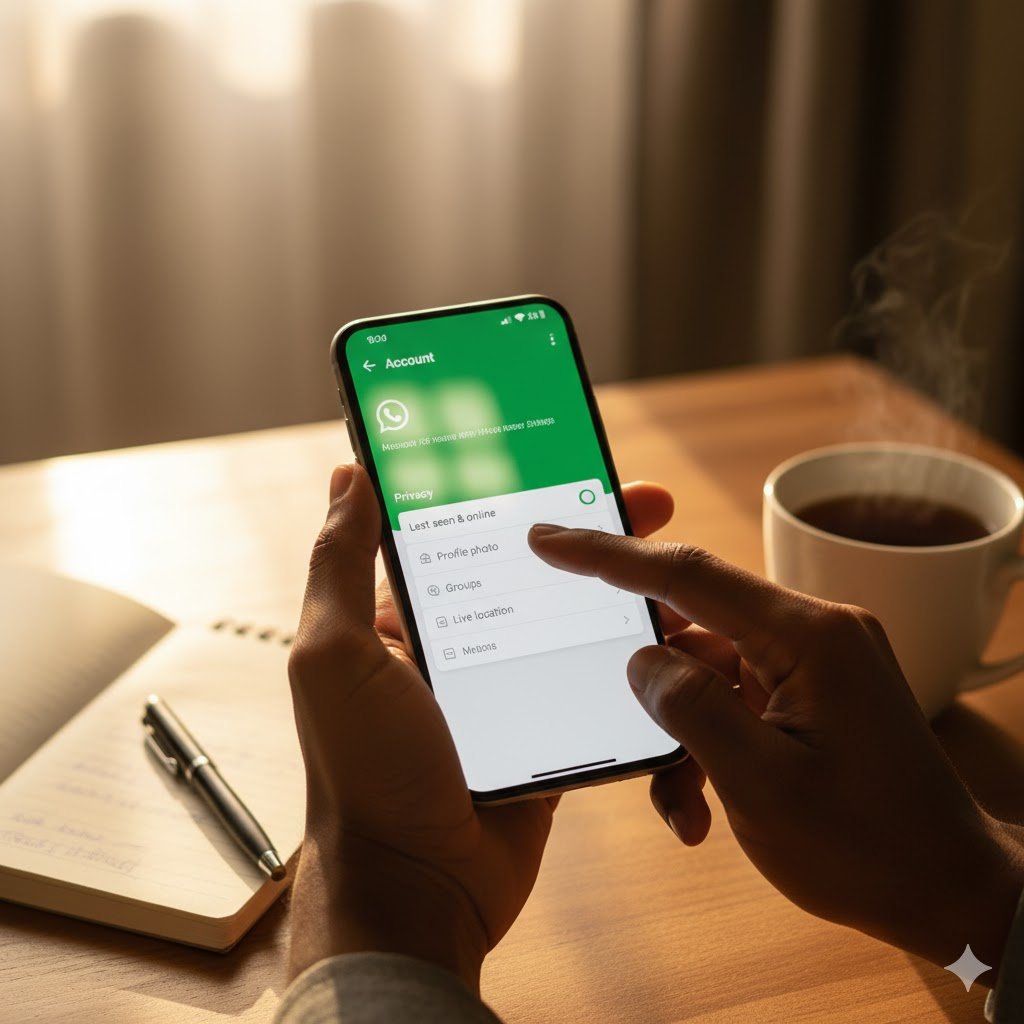
Protecting your digital space means using the privacy settings the apps give you. This is essential for setting digital boundaries.
| Platform | Peace Protection Tip | Step-by-Step Action |
|---|---|---|
| Status Privacy | Go to Settings > Privacy > Status. Select “My contacts except…” to hide your updates from family members or contacts you don’t trust completely. | |
| Close Friends | Use the “Close Friends” list for sensitive stories. This reduces social pressure and allows you to share authentically with a trusted circle. | |
| TikTok | Duet/Stitch Controls | In Privacy settings, control who can use your videos in Duets or Stitches. Limiting this can protect your privacy on social media from strangers. |
| All | Comment Filtering | Go to Settings and use keyword filters to hide comments that use insulting language or negativity. |
Nigerian-Specific Tip: Tired of being added to random groups? On WhatsApp, go to Settings > Privacy > Groups. Change “Who can add me to groups” from “Everyone” to “My Contacts.”
3. Filter Disturbing Content Using Built-in Tools
You need to know how to avoid seeing disturbing content on social media. The app algorithms are designed to show you things that get a reaction, but sometimes that content is graphic, triggering, or just plain negative.
- Understanding Algorithmic Content: The algorithmic content is what the app thinks you want to see. You can teach it better.
- Instagram’s Sensitive Content Control: Go to Settings > Account > Sensitive Content Control. You can choose to “Limit” or “Limit Even More” the amount of potentially graphic or disturbing content you see in your Explore tab.
- TikTok’s Restricted Mode and Keywords: Use Restricted Mode (Settings and Privacy > Content Preferences) to limit adult content. More importantly, use the keyword filtering tool to mute words related to things you find triggering, like specific political events or graphic violence that often appears in Naija news content.
- WhatsApp’s Mute Features: Mute WhatsApp status updates from people who share too much negativity or spam.
4. Implement the 5-5-5 Rule for Social Media Usage
This rule is a great way to manage your screen time management and create intentional usage habits. Since a perfect 5-5-5 rule on social media isn’t standard, we’ve adapted a practical version for Nigeria:
The Nigerian 5-5-5 Peace Rule:
- 5 Minutes Check-In: Only check your social media apps for a maximum of 5 minutes at a time. This keeps the quick scroll quick and stops you from falling into the black hole of endless scrolling.
- 5 Hour Gap: Try to leave at least a 5-hour gap between your checks during your workday or when you are focused on important tasks.
- 5 PM Cutoff: Make 5 PM your last major check of the day. This helps you disconnect before family time and avoids scrolling before bed, which severely harms sleep.
If you struggle with this, use Digital Wellbeing tools and apps on your phone (like iOS Screen Time or Android Digital Wellbeing) to lock yourself out after the 5-minute limit.
5. Set Healthy Digital Boundaries with Contacts
You can’t have emotional boundaries if you don’t have digital ones. Understanding why setting boundaries is important for work-life balance applies equally to your digital spaces—without clear boundaries, social media invades every aspect of your day.
- Mute, Don’t Unfollow: If a friend constantly posts things that make you feel bad, you don’t have to unfollow them. Use the mute features on IG, TikTok, or Twitter/X. They won’t know you muted them, and you keep your friendship offline while protecting your peace online.
- Managing Family WhatsApp: Nigerian context means you probably have massive family WhatsApp groups. If they are sending too many forwards or draining your energy, mute the group notifications. You can check it once or twice a day when you are ready.
- Use the “Restrict” Function: Instagram’s Restrict feature lets you manage interaction with a specific account without blocking them. Their comments on your posts will only be visible to them, and they won’t know you’ve restricted them.
6. Manage Notifications to Reduce Anxiety
Every notification is a tiny interruption that increases your anxiety reduction challenge. Constant interruptions break your focus and make you feel constantly on edge.
- Turn Off Non-Essential Alerts: Go into your phone settings right now and turn off all notifications for apps that are not crucial (like banking or work). Do you really need a notification every time someone likes your Instagram reels Nigeria post? No.
- Schedule Check-In Times: Instead of reacting to every ping, decide you will check Instagram at 10 AM, 2 PM, and 6 PM. This makes you the boss of the phone, not the other way around.
- Do Not Disturb: Use the Do Not Disturb feature every day from dinner time until you start work in the morning.
7. Follow Accounts That Promote Positive Mental Health
Your feed should be a reflection of the positive things you want in your life. Be intentional about curating your feed.
- Nigerian Mental Health Advocates: Seek out and follow verified Nigerian mental health professionals or health influencers whose credentials are clear. A good rule is to follow accounts recommended or affiliated with trusted organizations.
- Organizations: Follow the official pages for MANI (Mentally Aware Nigeria Initiative) and She Writes Woman. These organizations offer support and resources, often sharing information on social media detox programs and counselling services, and they can direct you to their network of vetted professionals.
- Choose Education Over Comparison: Actively seek out educational content that helps you grow, instead of just scrolling through posts that trigger comparison culture. Following accounts that promote digital wellbeing will naturally reduce the amount of negative or toxic content you see.
8. Practice Mindful Scrolling Techniques
Mindful scrolling is the opposite of aimless scrolling. It means being fully present and aware of what you are doing.
- Ask Why: Before you open an app, stop and ask yourself: “Why am I opening this app? What is my goal?” If the answer is “to avoid my homework” or “because I’m bored,” find a better use of your time.
- Recognize Doomscrolling: If you notice yourself getting deeper and deeper into negative news (especially in Nigeria, where political content can be stressful), that’s doomscrolling. Close the app immediately.
- Set Physical Barriers: Avoid scrolling in bed. The blue light from your phone messes up your sleep. Instead of reaching for your phone first thing, establish a productive morning routine that sets a positive tone before you ever open social media.
9. Recognize and Combat Social Comparison
The social comparison trap is when you measure your own life by the highlight reels of others. The online validation culture makes this worse.
- The Reality of the Reel: When you see another amazing aso-ebi from an Owambe party or stunning Lagos luxury content, remind yourself: People share highlight reels, not full reality. That beautiful apartment might be a short-let, or that designer bag might be on loan.
- Cognitive Reframing: As shared by Favour Ojeniyi, profiled by Prime Progress Nigeria, instead of comparing, try reframing influencer success as motivation. If they can achieve that, what small step can you take today toward your own goals?
- Your Worth is Not a Like Count: Your value is not measured by the number of likes, comments, or followers you have. Focus on self-esteem protection by basing your worth on your character, goals, and offline relationships. The comparison trap often creates limiting beliefs about your own potential. Learn how to develop a growth mindset that focuses on your personal progress rather than others’ highlight reels. You can combat comparison anxiety by starting a micro-journaling practice where you reflect on your genuine achievements rather than measuring yourself against curated online content.
10. Build Offline Support Networks

Digital wellbeing is built on a foundation of strong real-world connections.
- The Power of Face-to-Face: Make time for face-to-face interactions. Nigeria has a wonderful, strong community culture. Go to your local community group, meet up with friends, or spend quality time with your family. This is how you build real, deep connections that fight off FOMO.
- Join a Club: Join a sports team, a book club, or a church youth group. When you are active offline, you naturally spend less time seeking online validation culture.
- Balance: Leverage the strong Nigerian context of family gatherings and community parties. As you reduce social media consumption, fill that time with small daily joys that create genuine happiness rather than the fleeting dopamine hits from likes and comments.
11. Use Digital Wellbeing Tools and Apps
Your smartphone knows how much time you spend on it. Use that data to your advantage for better screen time management.
- Built-in Trackers: Both Android (Digital Wellbeing) and iOS (Screen Time) have excellent built-in tools. Beyond screen time trackers, discover productivity apps that work offline to help you stay focused on real-world tasks when you step away from social platforms.
- Set Daily Limits: You can set a daily time limit for individual apps. For example, limit Instagram to 45 minutes a day. Once the time is up, the app locks you out until the next day. This is a simple but effective way to practice digital boundaries.
- Reducing Background Activity: In the Nigerian context, turning off background app refresh can also help you save mobile data and stop apps from demanding your attention when you aren’t using them.
12. Know When to Seek Professional Help

Sometimes, even the best digital self-care strategies are not enough. If social media is seriously affecting your life, you need to know when to talk to an expert.
- Recognizing the Signs: If you have persistent anxiety, depression, or extreme mood swings tied to social media use, or if you can’t sleep or eat properly because of it, these are signs that you need help.
- Available Resources in Nigeria: The Mentally Aware Nigeria Initiative (MANI) and She Writes Woman are great organizations that offer resources and sometimes provide online counseling or can connect you with mental health professionals who understand the Nigerian context. MANI, for instance, is recognized by OpenCounseling’s Nigeria directory as one of the largest providers of counseling support services in Nigeria.
- Destigmatizing Therapy: Talking to someone is a sign of strength, not weakness. Do not let social pressure or old beliefs stop you. Your mental peace is more important than anyone’s opinion.
What Are the 7 C’s of Social Media? Applying Them to Your Peace
The “7 C’s” is a framework to help you use social media purposefully, aligning your habits with digital wellbeing. Let’s look at what each C means and how to protect your peace on social media using it.
- Content: Focus on quality over quantity. Curate your feed so the content you consume is helpful, inspiring, or entertaining in a positive way. Unfollow accounts that make you feel bad about yourself.
- Peace Tip: When you post, make sure your content reflects your authentic self, not what you think will get online validation culture.
- Community: Build supportive networks. Your social media community should lift you up, not drag you down into toxic arguments or comparison.
- Peace Tip: Join positive groups related to your hobbies, not just groups built on gossip.
- Conversation: Engage meaningfully, avoid toxic arguments. If a conversation on Twitter/X or Facebook is becoming abusive or stressful, use the mute or block function immediately.
- Peace Tip: Never try to win an argument with a stranger online. It is a drain on your emotional boundaries.
- Collaboration: Use platforms for positive partnerships. Collaboration is key for professional growth.
- Peace Tip: Work with people who respect your digital boundaries and value your time.
- Credibility: Follow trusted sources. In Nigeria, there is a lot of misinformation. Check who you are following to ensure they have credibility, especially for news or health advice.
- Peace Tip: Don’t get drawn into spreading unverified news on WhatsApp status updates.
- Connection: Aim for authentic relationships. Use social media to deepen your real-world connection with friends and family, not replace it.
- Peace Tip: If you haven’t spoken to someone offline in a while, pick up the phone instead of just liking their post.
- Conversion: Use social media purposefully. Conversion means turning time spent into something valuable, whether it’s learning a new skill, finding a job, or spreading mental health awareness.
- Peace Tip: If your scrolling isn’t converting into happiness, knowledge, or profit, it’s probably wasting your peace.
5 Essential Ways to Stay Safe on Social Media Beyond Mental Health
When people ask, “What are 5 ways to stay safe on social media?” they often mean protecting their privacy and avoiding scams. These tips are crucial for your overall digital wellbeing.
- Protect Personal Information: Never share private details like your full home address, bank details, or copies of your ID on public posts. Be careful about sharing your location in real-time. This is about protecting yourself from online harassment and fraud, which are common Naija social media trends.
- Verify Before Trusting: Scam alerts are everywhere in Nigeria. If someone asks you for money or offers you something too good to be true, it’s probably a scam. Always verify the source, especially before clicking on links from unknown contacts.
- Use Strong Authentication: Two-factor authentication (2FA) is a must. If a hacker gets your password, 2FA prevents them from logging in because they need a code sent to your phone. Use this on Instagram, TikTok, and especially your email and banking apps. This is the best way to protect ourselves on social media technically.
- Be Wary of Phishing: Phishing is when criminals try to trick you into giving away personal information by sending fake links or messages that look real (like from your bank or a famous Nigerian influencer). If you get a suspicious message, delete it.
- Report Harassment Immediately: If you experience cyberbullying or online harassment, do not engage. Use the platform’s reporting tools (Block functions, etc.) immediately. Take screenshots as evidence, and then block the person.
Best Advice for Social Media Usage: Practical Wisdom for Nigerian Youths
We’ve covered settings and rules, but what is the best advice for social media usage overall? It comes down to mindset.
- Curate Intentionally: Don’t wait for the algorithm; choose your content actively. Every follow or like is a vote for what you want to see more of. Only keep the things that add value to your life in Nigeria.
- Social Media is a Tool, Not Life Itself: Remember that these apps were created by people trying to make money. They are tools for connection and information, but they are not the real world. Real success is built offline.
- Don’t Measure Your Worth by Likes: This goes back to self-esteem protection. Whether your TikTok or Instagram reels Nigeria post gets 10 likes or 10,000, it doesn’t change who you are as a person.
- Consume More Than You Compare: If you are scrolling, try to spend most of that time learning or getting positively inspired, not comparing your life to the perfect, filtered Lagos lifestyle content you see.
- Take Breaks Without Guilt: You do not owe anyone an explanation for taking a social media detox. If your emotional boundaries are being crossed, step back without feeling guilty. This is an act of self-care.
How to Get Started: Your 7-Day Peace Protection Challenge
You’ve learned the strategies; now, how do I start protecting my peace today? Take this 7-day challenge to put everything into practice and build strong digital wellbeing habits.
- Day 1: Audit Your Usage. Look at your phone’s screen time report. Be honest: which app takes the most time? This is your starting point.
- Day 2: Adjust Privacy Settings. Go through the steps in Section 2. Master your privacy settings on WhatsApp, Instagram, TikTok, and any other frequently used app. Turn off “Last Seen” and set your status to “My Contacts Except…”
- Day 3: Unfollow/Mute 10 Accounts. Go through your feeds and unfollow or mute 10 accounts that consistently cause you stress, comparison, or negativity (both personal, professional, and commercial “hustle culture” accounts). Use the mute features heavily.
- Day 4: Set Up Content Filters and Notification Limits. Implement the content filtering tips (like “Not Interested” buttons and keyword muting) and turn off notifications for at least half of your non-essential apps.
- Day 5: Plan Your First Social Media Detox. Decide on a short, manageable break, like a 24-hour phone-free Sunday. Put it in your calendar. Note: If work requires it, you may check essential work platforms (LinkedIn/email) only once for five minutes.
- Day 6: Follow 5 Positive Nigerian Accounts. Follow MANI, She Writes Woman, and three other local accounts that focus on fitness, learning, or positive mental health awareness.
- Day 7: Reflect and Commit. Check in with yourself. Do you feel less anxious? Set a long-term digital boundaries commitment, like sticking to the 5-5-5 Rule or avoiding your phone for the first hour of the day.
Conclusion
Protecting your peace on social media is not a one-time fix; it’s an ongoing practice of self-care and setting strong digital boundaries. You have learned that your relationship with technology is yours to control, and that includes managing algorithmic content, filtering out disturbing content, and fighting the constant urge for online validation culture, career pressure, and *consumption anxiety.
Remember the powerful resources available to you in Nigeria, from MANI (Mentally Aware Nigeria Initiative) to She Writes Woman. By actively managing your screen time management and choosing mindful scrolling over doomscrolling, you are making a commitment to your mental wellbeing.
Now that we’ve fine-tuned the data context, which of the 12 peace protection strategies do you think you’d implement first to improve your digital wellbeing?

Oladepo Babatunde (Prince Babatee Tunde) is a Computer Scientist, researcher, and professional content writer with a Higher National Diploma in Computer Science from Kwara State Polytechnic, Nigeria.
With a background in technology and a passion for clear communication, Babatunde specializes in creating thoroughly researched, reader-focused content on productivity, personal development, home living, and technology. Every article he writes is backed by extensive research and fact-checking to ensure readers receive accurate, actionable information.
As a freelance writer, he has helped brands and publications deliver content that educates, engages, and empowers their audiences. His mission at Vibena is simple: make complex topics easy to understand and help Nigerians live smarter, more productive lives.