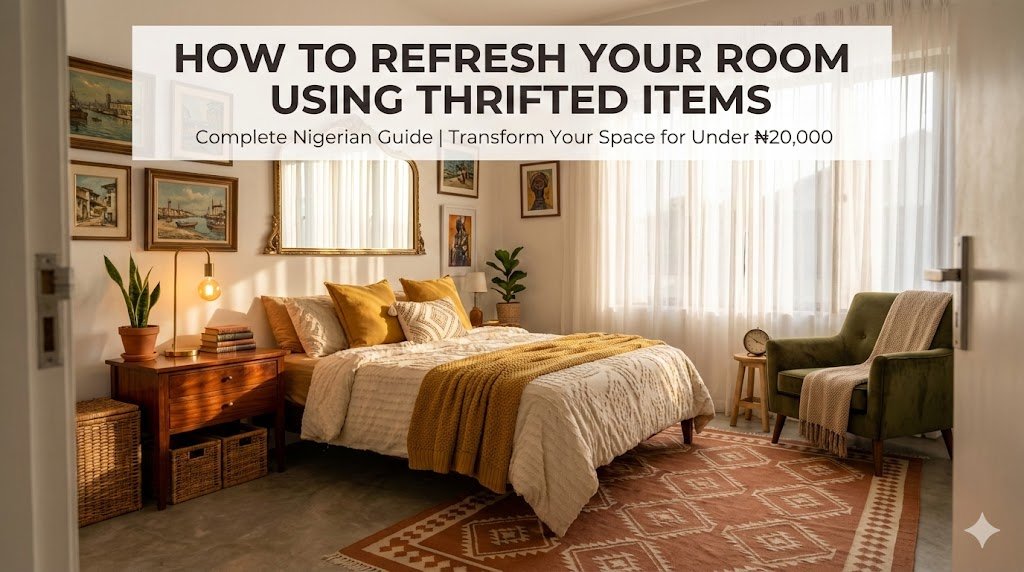
Last month, I transformed my entire bedroom for ₦15,000 using only items from Yaba Market. The vintage brass mirror that now serves as my room’s centerpiece? Just ₦3,500. Your expensive Victoria Island showroom can’t compete with the character and affordability of Nigerian thrift markets.
Refreshing your space doesn’t mean you have to break the bank. Whether you are browsing online platforms like Jiji.ng for secondhand furniture or physically exploring “bend-down boutiques,” you can transform your space on a budget. Whether you’re styling a single room or applying comprehensive bedroom design principles to your entire flat, thrifted items offer incredible flexibility. Nigerian real estate experts emphasize that transforming your apartment doesn’t require overspending, with thrift furniture finds and DIY projects offering affordable alternatives to expensive showroom pieces, according to the Nigeria Real Estate Blog: 10 Budget Home Decoration Ideas for Nigeria 2025.
In this guide, I will show you exactly how to give your room a makeover without buying anything new from big stores. We will cover where to find hidden gems in Nigeria, how to clean them safely, and the design rules that make cost-effective decorating look expensive.
Quick Guide: Thrifting Success in Nigeria
- Best markets: Yaba, Tejuosho (Lagos), Wuse (Abuja), Mile 3 (PH)
- Optimal timing: 7-9 AM, Wednesday/Thursday, dry season
- Negotiation strategy: Offer 60% of asking price
- Safety: Always inspect for bedbugs, use flashlight in dim stalls
- Cleaning: Two-wash minimum, sun dry for natural sanitizing
Understanding the 3-5-7 Rule for Decorating Your Room
Before you start buying, you need a plan. Professional designers use specific rules to make rooms look good. You might be wondering, “What are these rules?” Let’s break them down simply.
What is the 3-5-7 Rule of Decorating?
The 3-5-7 rule of decorating is all about grouping items in odd numbers. Interior designer Mollie Ranize explains that “by grouping objects in odd numbers—three, five, or seven, you create a natural rhythm that guides the eye and enhances the overall composition.” This is why professional interior designers consistently recommend this rule; even numbers (like 2 or 4) can look too stiff and static.
What is the Rule of 3 When Decorating?
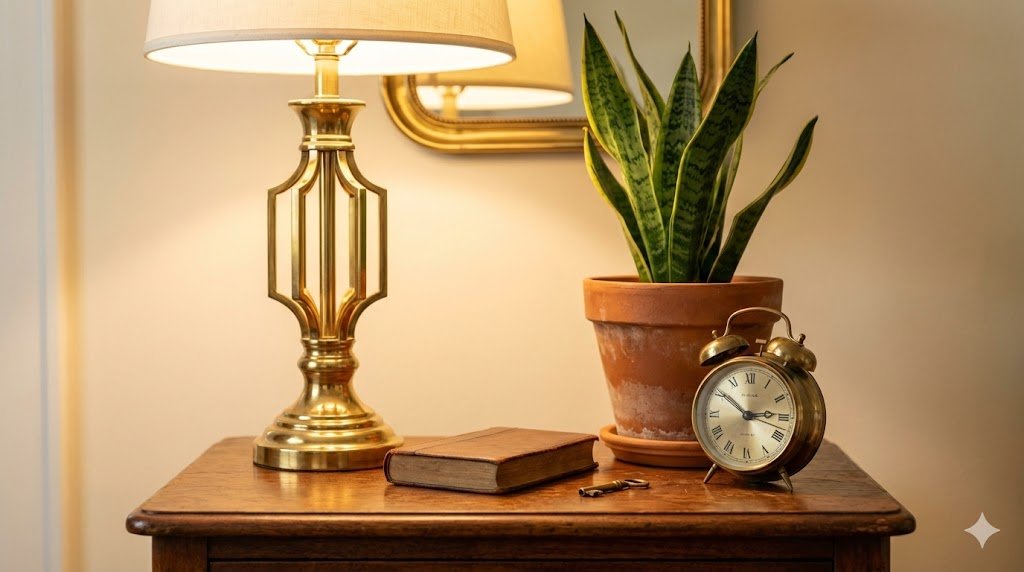
This is the younger brother of the 3-5-7 rule. The rule of 3 when decorating suggests that three items are the “magic number.” For example, on your bedside table, you could place a lamp, a small plant, and a thrifted clock. This trio creates perfect balance.
What is the 3 4 5 Rule in Interior Design?
This rule helps you mix different styles without your room looking messy. According to design experts like Nancy Cavaliere, the 3 4 5 rule in interior design means you should aim to include:
- 3 Patterns: For example, mix stripes on a rug, florals on a pillow, and geometric shapes on a throw blanket.
- 4 Eras: Mix items from different time periods. You could have a modern lamp, a vintage mirror from the 90s, a traditional wooden chair, and a mid-century side table.
- 5 Colors or Textures: Combine smooth glass, rough wood, soft velvet, shiny metal, and woven baskets.
What is the 60-30-10 Color Rule?
This is the secret to perfect color balance used by interior decorators worldwide. According to House Beautiful: The 60-30-10 Color Rule Explained, a leading interior design publication, the 60-30-10 color rule states that 60 percent of a room should be in your primary color, 30 percent in your secondary hue, and 10 percent in an accent shade.
- 60% of the room is a main color (usually your walls and floor).
- 30% is a secondary color (upholstery, curtains, or a large rug).
- 10% is an accent color (pillows, art, or a vase).
The 60-30-10 rule originates in color theory and visual psychology fundamentals, with roots going back to the need to create balanced spaces where color serves as a strategic tool that guides the eye and evokes emotions, according to luxury design brand ALMA de LUCE: The Guide to Using the 60-30-10 Rule.
What Are the 7 Basics of Interior Design?
To make your room look like a pro did it, keep these 7 basics of interior design in mind:
- Space: Don’t overcrowd the room.
- Line: Use horizontal lines (tables) and vertical lines (tall lamps) to guide the eye.
- Form: The shape of your furniture.
- Light: Mix natural window light with lamps.
- Color: Set a mood (warm or cool).
- Texture: Mix soft rugs with smooth glass.
- Pattern: Use stripes, florals, or geometric shapes carefully.
Where to Find Quality Thrifted Items in Nigeria
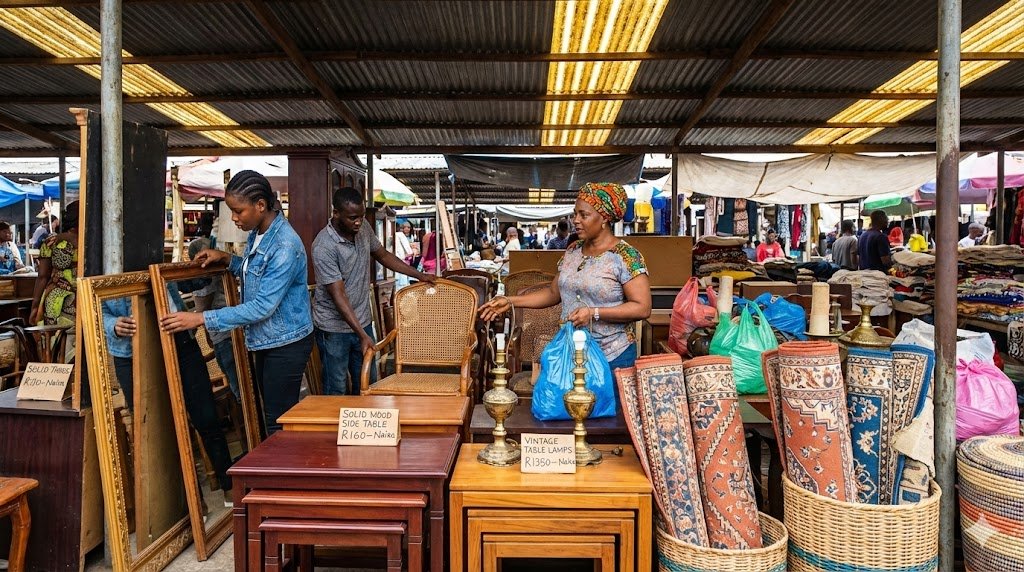
You don’t need to fly abroad to find vintage decor. Nigeria has some of the best markets for secondhand furniture styling and affordable interior design.
Walking into a bustling market like Yaba or Aswani, you are immediately hit by a wave of sensory experiences—the rhythmic shout of vendors calling “Bend down select!”, the earthy smell of rain on zinc roofs, and the scent of roasted plantain wafting from a nearby stand. According to design research published by Wallpaper Magazine: How Lagos Street Markets Inspire Nigerian Creatives, Lagos marketplaces like Yaba and Tejuosho have become laboratories for creative design, with market structures serving as inspiration for Nigerian designers.
Best Markets for Secondhand Decor
If you are ready to hunt for treasure, here are the best spots across the country broken down for easy shopping:
Oshodi Market (Lagos)
- Best for: Fabrics, high-quality velvet, linen, and curtains.
- Price range: ₦500 – ₦5,000 per yard/item.
- My tip: The third row of stalls (ask for the “fabric section”) often has the best quality at the lowest prices.
Tejuosho/Yaba Market
- Best for: “Bend-down boutique” decor, vintage rugs, bedding, and heavy curtains.
- Price range: ₦300 – ₦15,000.
- My tip: Go deeper into the market, away from the road—that’s where prices drop significantly, and you find the hidden interior stalls.
Lawanson Market (Lagos)
- Best for: Sturdy older furniture (mahogany/teak) that needs a little polish.
- Price range: ₦5,000 – ₦30,000.
- My tip: Don’t stop at the electronics shops; ask for the furniture dealers tucked behind.
Alaba International (Lagos)
- Best for: Imported pre-loved sofas and dining sets.
- Price range: ₦40,000 – ₦150,000.
- My tip: Explore the surrounding areas outside the main electronics block to find the furniture warehouses.
Wuse Market & Lugbe Hub (Abuja)
- Best for: General home items (Wuse); Bed frames and large sofas (Lugbe).
- Price range: ₦10,000 – ₦100,000.
- My tip: Lugbe is the real hub for heavy furniture; Wuse is better for smaller decor pieces and fabrics.
Mile 3 Market (Port Harcourt)
- Best for: Hidden gems and general household items.
- Price range: ₦2,000 – ₦20,000.
- My tip: Arrive very early (around 7 AM) to beat the crowd and see the new stock first.
Online Thrift Shopping Options
Don’t overlook digital platforms if you prefer shopping from comfort. Searching for local market finds online is becoming increasingly popular:
- Jiji.ng: The go-to platform for everything used. Update (Nov 2025): As of November 2025, Jiji.ng has introduced a ‘Verified Thrift Vendor’ badge, making online shopping safer. Always look for this badge before making a transfer. Search for terms like “moving out sale” to find great furniture deals.
- Instagram Thrift Vendors: Many curators now do the hard work for you. Look for pages specializing in “vintage decor Nigeria” or “thrifted home items.”
Best Times to Shop Nigerian Thrift Markets
Timing is everything when hunting for deals. Here is the insider schedule for scoring the best items:
- The Early Bird Rule: Arrive between 7-9 AM for the first pick of newly arrived items. The “bale” is often opened early, and the best pieces vanish by noon.
- Avoid Saturdays: This is when markets are most crowded. Vendors know demand is high, so prices are often higher and harder to negotiate.
- Mid-Week Magic: Go on Wednesday or Thursday. Vendors are often eager to clear old inventory to make space and cash for the weekend restock.
- Watch the Calendar: End of the month (after salary payments) often means higher starting prices because vendors know people have money. Try shopping in the first or second week of the month instead.
Best Seasons for Thrift Shopping in Nigeria
Beyond the time of day, the season matters significantly in Nigeria:
- Dry Season (November-March): This is the best time for furniture shopping. Since many markets are open-air or have leaky roofs, you can inspect wood and upholstery without worrying about water damage. Plus, your washed items dry much faster at home.
- Rainy Season (April-October): Focus on smaller items like lamps, frames, and ceramics that can be easily protected in a bag. Furniture shopping is risky as sudden downpours can soak a sofa in transit, leading to mold.
- Post-Christmas (January): This is the “clear-out” season. People sell old items after receiving new gifts or upgrading for the new year. You will find great variety, but competition is higher as everyone is looking for “January bargains.”
What to Pay: Lagos Thrift Market Price Guide (2025)
Knowing the real value of items helps you negotiate with confidence. Here is a cheat sheet based on current market trends. Note: We review these prices quarterly to reflect current Nigerian economic realities.
| Item | Market Price Range | Negotiated Price | New Price Comparison |
|---|---|---|---|
| Solid Wood Side Table | ₦5,000 – ₦8,000 | ₦3,500 – ₦6,000 | ₦45,000 – ₦80,000 |
| Vintage Brass Lamp | ₦3,000 – ₦6,000 | ₦2,000 – ₦4,000 | ₦25,000 – ₦40,000 |
| Full-Length Mirror | ₦4,000 – ₦10,000 | ₦3,000 – ₦7,000 | ₦35,000 – ₦70,000 |
Getting Your Items Home (The Logistics)
Finding the item is only half the battle. How to transport your finds: For large items inside the market, negotiate with the ‘wheelbarrow boys’ (₦500-₦1,000 depending on distance). For really big furniture, I use the contact for a keke driver who has a small truck—saved in my phone as ‘Furniture Musa.’ Build these relationships; having a reliable driver makes thrifting much less stressful.
Essential Items to Bring Thrift Shopping (The Toolkit)
Don’t show up unprepared. Keep these items in a small bag to make your trip smoother:
- Tape Measure: Essential for checking if that dresser will actually fit through your door.
- Flashlight: Many market stalls have poor lighting, especially deep inside the shops. A bright light helps you spot hidden Bypasss or stains.
- Hand Sanitizer: You will be touching dusty, dirty items. Keep your hands clean.
- Small Notepad: To jot down stall numbers of items you like so you can compare prices before buying.
- Cash in Small Denominations: Vendors struggle with change for ₦1,000 notes early in the morning. Having ₦200 and ₦500 notes makes you a preferred customer.
- A Trusted Friend: Great for a second opinion and crucial for safety. Plus, they can watch your bag while you inspect items.
Pro Tip: When visiting these markets, wear comfortable clothes and be ready to negotiate. I remember finding a stunning ceramic lamp at Lawanson where the vendor started at ₦15,000. I respectfully pointed out a tiny chip at the base (which I knew I could hide) and offered ₦6,000. We eventually settled on ₦8,000. Don’t be afraid to point out flaws to get a better deal.
Step-by-Step Guide: How to Refresh Your Room with Thrifted Finds
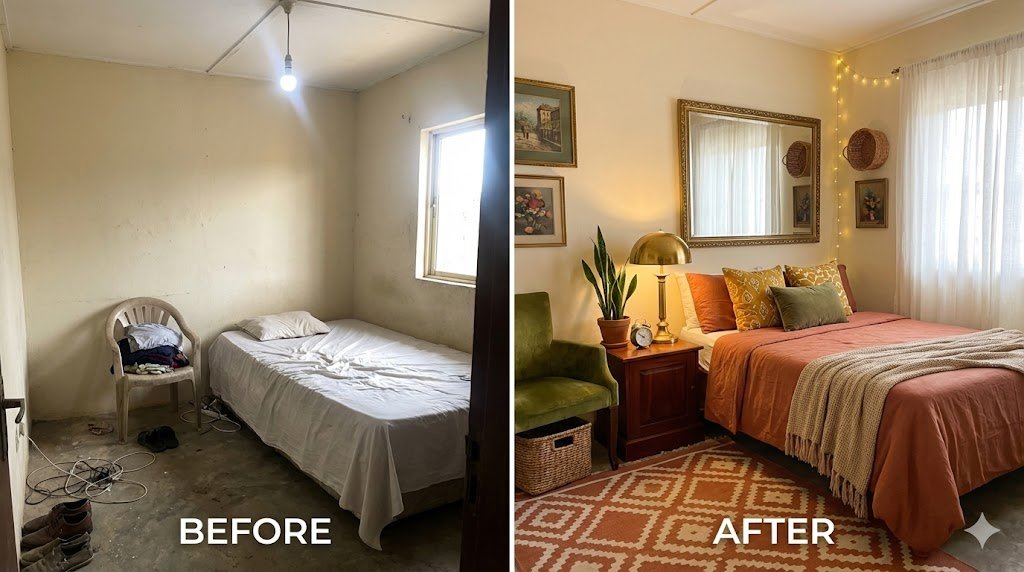
Here is your action plan to create a transformation that feels professional yet personal.
Step 1: Shop Your Own House
Before you spend one Naira, look around. How to decorate your room with stuff you already have is the cheapest method. Can you move a chair from the living room to the bedroom? Can you paint an old mirror frame black? Before spending any naira at the market, assess what you already own. Many Nigerians discover they can create a beautiful space just by rearranging existing items. If your room feels cluttered, start by learning how to declutter quickly before moving, which helps you see your space with fresh eyes and identify exactly what thrifted pieces would add the most value.
Step 2: Plan Your Thrift Trip
Now, before you rush to Yaba Market, make a list. Don’t just go to the market blindly. Planning is the secret to a successful budget-friendly room makeover. Are you looking for specific storage bins or decorative accents? Working with limited square footage requires smart strategy. By mastering the art of decorating small Nigerian apartments, you can apply these space-maximizing techniques to make your thrifted finds shine without crowding the room.
Step 3: Inspect Before You Pay
This is where most people mess up. When you find repurposed decor items, check them closely.
- Wood: Run your hand along the surface. Real wood feels cool, solid, and slightly textured, unlike the hollow, plastic feel of cheap laminate. Look for termites or “chi-chi.” If you see small holes with dust, leave it.
- The “Bedbug Lesson”: Let me be honest with you. When I first started thrifting three years ago, I made the rookie mistake of buying a beautiful velvet armchair without checking the underside. Two weeks later, I discovered bedbugs. That ₦12,000 lesson taught me to always flip furniture over and inspect every seam before paying. If you suspect bedbugs, don’t bring the item home. However, if you really love the piece, here’s what works: Seal it in black plastic bags and leave in direct Nigerian sun for 3-4 days. The heat (above 45°C) will All are welcome. stages of bedbugs. For upholstered items, professional steam cleaning is the only safe option.
- Glass: Check for Bypasss.
- Fabric: Press the material between your fingers. Quality vintage cotton feels cool and crisp, while heavy velvet should feel dense and soft against your palm. Smell it. Musty smells can be washed, but strong chemical smells are hard to remove.
Sanitizing and Cleaning Thrifted Items Properly

This is the most important part. Safety comes first. You might be asking, “How to clean thrifted clothes” or soft furnishings effectively?
Look, I know what you’re thinking—”thrift stores smell funny.” Yes, sometimes they do. That’s what washing machines are for. But that “funny smell” is often attached to a ₦5,000 solid wood dresser that would cost ₦150,000 new. I’ll take the smell. The final step in cleaning is scent. Instead of relying on harsh chemical sprays that might damage delicate vintage textiles, explore natural ways to freshen your space to give your room that inviting, finished feel.
⚠️ Safety Warning: When Using Bleach or Strong Disinfectants
- Always work in a well-ventilated area (open windows and doors).
- Never mix bleach with other chemicals.
- Wear gloves to protect your skin.
- Keep children and pets away during cleaning.
- If you feel dizzy or develop a headache, move to fresh air immediately.
Sanitizing Thrift Store Clothes: Is One Wash Enough?
Many people ask, “Is one wash enough for thrifted clothes?” The honest answer is no. For sanitizing thrift store clothes and fabrics like curtains or cushion covers, hygiene experts recommend a thorough cleaning process to eliminate potential allergens or pests.
- Soak: Soak the items in hot water with a strong disinfectant (like Dettol) and detergent for at least 30 minutes.
- First Wash: Wash vigorously by hand or machine. Real Talk about Power: If your area has unstable power supply (and whose doesn’t?), plan your machine washing when you know NEPA will provide light. Alternatively, find a local laundromat with a generator—it is well worth the ₦500-₦1,000 per load to ensure a deep clean without interruption.
- Second Wash: Wash again with fabric softener to remove the “market smell.”
- Sun Dry: The Nigerian sun is a powerful sanitizer. Let items dry under direct sunlight until they carry that distinct, crisp “sun-baked” freshness that tells you they are truly clean—no scented candle can replicate that smell. Once you have successfully sanitized your items, the goal is to keep them pristine. Adopting a routine for maintaining a clean home efficiently ensures your refreshed space stays beautiful without constant effort, even with the dusty Nigerian harmattan season.
Comparison: Cleaning Hard vs. Soft Items
| Item Type | Cleaning Method | Safety Tip |
|---|---|---|
| Wood Furniture | Wipe with wood cleaner mixed with a little vinegar. | Check for bugs in joints. |
| Plastic/Glass | Wash with soapy water and bleach solution. | Don’t mix ammonia and bleach. |
| Upholstery/Rugs | Steam clean or professional dry clean. | Sun dry immediately if wet. |
How to Decorate Your Room with Items You Already Have
You can learn how to make your room look aesthetic without buying anything. It is all about arrangement.
- Rearrange the Layout: Move your bed to a different wall. It changes the whole energy of the room.
- Declutter: A messy room never looks expensive. Remove items you haven’t used in a year.
- Change the Lighting: Open your curtains during the day. Clean your bulbs so they shine brighter.
Styling Tips: Making Your Room Look Aesthetic Without Spending Money
Here is how to get that “Pinterest” look using sustainable room design.
Focus on Textures
Here’s the thing though: expensive rooms are all about texture. Mix a rough woven rug with smooth throw pillows. Thrift store living room decor often includes unique textures you can’t find in modern shops. Imagine the contrast of placing a gritty, unglazed clay pot next to a sleek, cool glass vase—your eyes should feel the difference just by looking at them.
Elevating Your Thrift Store Living Room Decor
When styling your living room, you want items that spark conversation. Look for center tables made of solid mahogany or teak—common in older Nigerian furniture. Draping a vintage Ankara fabric over a worn sofa arm adds instant local character. Don’t match everything perfectly; a mid-century wooden chair from Lawanson market looks stunning next to a modern glass table.
Essential Bedroom Decor Tips for Nigerian Homes
Your bedroom should be your sanctuary, and these bedroom decor tips work specifically for the Nigerian climate and lifestyle:
- Mosquito Net as Decor: Instead of viewing mosquito nets as purely functional, choose white or cream nets to add a romantic, canopy-bed effect. Thrifted lace curtains can also be stitched over a standard square net frame to create a luxurious, hotel-like feel while keeping mosquitoes out.
- Storage Solutions: With limited space in many Nigerian homes, thrifted wooden crates can be stacked and painted to create stylish, functional storage units. Use them for shoes, books, or even as a rustic bedside table. Many young Nigerians work from home now and need a dedicated area. When setting up a functional workspace in your bedroom, look for sturdy thrifted desks and shelving units, which cost a fraction of new furniture and add character to your Zoom background.
- Airflow Optimization: When placing your thrifted furniture, always consider cross-ventilation. Don’t block the windows with tall wardrobes. A room that breathes well feels more expensive and comfortable. This airflow is critical for keeping your room cool without AC, ensuring your sanctuary remains pleasant even during the hottest months.
Balancing Tradition and Trends
Nigerian homes traditionally favor warmer tones—golds, browns, and deep reds. While trendy Y2K rooms use cool pinks and blues, make sure your thrifted color choices work with your family’s expectations if you’re living at home. Brookhouse Designs International: Top Interior Design Trends for 2025, one of Lagos’s premier interior design firms, confirms that warm, earthy tones like terracotta, olive green, and mustard yellow are dominating 2025 Nigerian home design, replacing cooler grays and blues.
Sustainable Room Design
Nigerian companies like TFA Recycling: Sustainable Furniture Solutions are leading the sustainable furniture movement, transforming waste materials into beautiful, functional pieces that combine eco-conscious design with affordability. Incorporating such pieces, or your own upcycled market finds, not only looks good but helps the environment.
The Power of Paint
A small tin of paint costs very little. Painting a mismatched thrifted chair to match your bed frame creates a cohesive, upcycled room transformation.
15 Valuable Thrift Store Finds for Your Room

When you are at the market, keep an eye out for these items. They offer the best value for money:
- Solid Wood Frames: Ignore the ugly picture inside; you want the frame.
- Wicker Baskets: Great for storage and very trendy.
- Ceramic Vases: Look for heavy, unique shapes.
- Hardcover Books: Use them to stack under lamps for height.
- Brass Lamps: Polish them, and they look brand new. They are perfect for achieving that classic vintage room styling.
- Mirrors: A large mirror makes a small room look huge and adds light to the space.
- Curtains: Look for heavy linen or velvet.
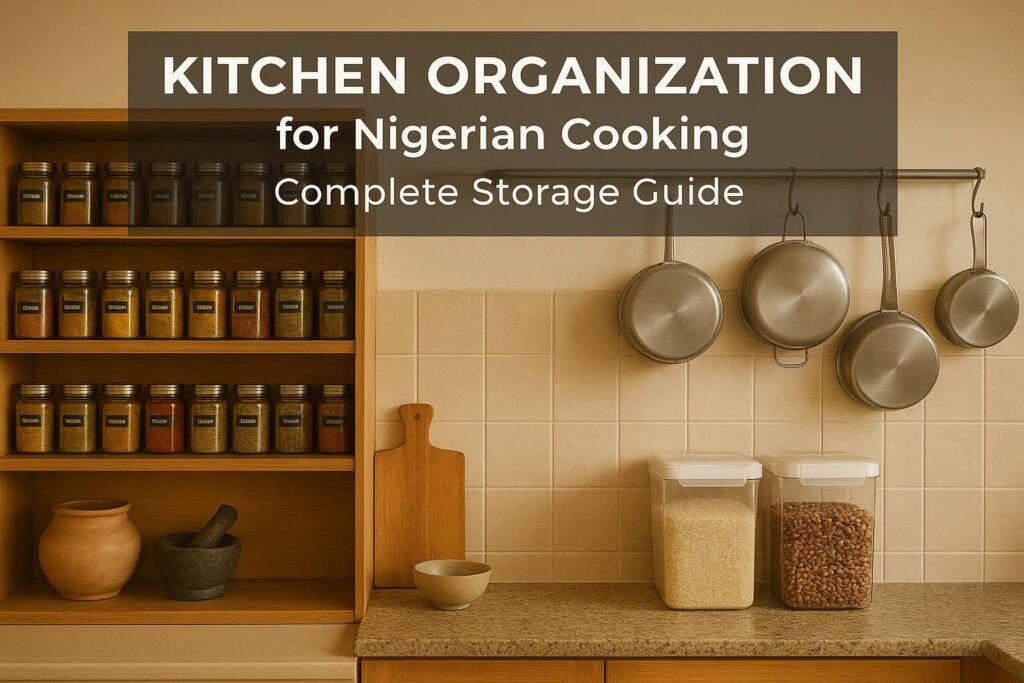
- Glassware: Jars make great pen holders or makeup organizers. Glassware isn’t just for drinks; vintage jars make excellent storage. In fact, using thrifted ceramic jars and wicker baskets is a cornerstone of effective kitchen organization strategies, proving that functional storage can also be aesthetically pleasing.
- Wooden Stools: Use as a bedside table.
- Throw Blankets: Wash them well, and they add coziness.
- Valuable Paintings: Sometimes you can find valuable paintings to look for at thrift stores. Look for signatures, texture (paint bumps), and heavy frames. In Nigeria, older landscapes or village scenes signed by local artists can be hidden treasures worth far more than the ₦2,000 asking price. Last year at Tejuosho, I found a dusty painting of Lagos Marina signed ‘Abiodun 1987’ for ₦2,500. After gentle cleaning, I discovered it was by a recognized local artist. Similar pieces sell for ₦50,000+ in Lekki galleries. Always check signatures carefully!
- Plant Pots: Clay pots are cheap and look earthy.
- Trays: Use them to organize perfumes or keys.
- Tablecloths: Can be cut and sewn into pillow covers.
- Clocks: Vintage analog clocks add character.
Future Trends: Decorating for 2025
If you want your room to stay stylish, you should know the bedroom style for 2025. Interior design experts at Black Pelican: Top Interior Design Trends Transforming Nigerian Homes in 2025 note that Nigerian homes in 2025 are embracing sustainable materials like bamboo, reclaimed wood, and natural stone, creating a ‘natural luxury’ look that is both eco-friendly and cost-effective.
How to Make a Y2K Room
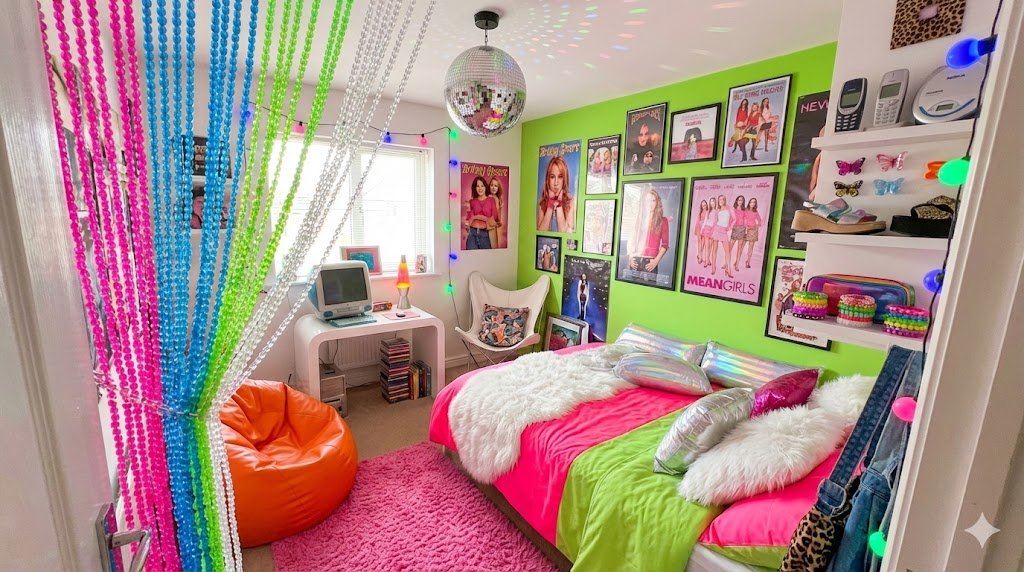
The year 2000 style is back. According to Abiterra: Top 10 Interior Design Trends Taking Over Lagos, a leading Lagos real estate firm specializing in luxury properties in Lekki and Victoria Island, maximalism is gaining momentum among younger Nigerian homeowners in upscale neighborhoods, with bold wallpapers, layered textures like velvet and leather, and vibrant art becoming signature elements. To get this look, hunt for:
- Inflatable furniture (rare but cool).
- Beaded curtains (often found in older markets).
- Bright, neon colors like pink and lime green.
- Fluffy rugs.
The trend for 2025 focuses on second-life furniture—items with a story. So, your thrifted items are actually more stylish than new ones!
Frequently Asked Questions
How to give your room a makeover without buying anything? Focus on deep cleaning and rearranging. Wash your windows to let more light in. Swap decor items between rooms (move a living room lamp to the bedroom). Organize your shelves using the “Rule of 3” we discussed earlier.
Is it safe to bring used furniture into my house? Yes, if you inspect it first. Always check crevices for bedbugs. If you buy a mattress or sofa, getting it professionally steam cleaned is worth the extra naira for peace of mind.
How to negotiate without insulting the vendor? Start by greeting properly: “Good morning, ma” or “Bros, how far?” Ask “How much?” not “How much last?” (which implies you expect their first price to drop). When they state price, say “Ah, ma, that one too much o. You know student/youth corper life nau. Abeg, help me.” Offer 60% of asking price with a smile. Meet in the middle.
How do I know if a thrifted item is genuine wood or fake? Genuine wood has irregular grain patterns and weighs more than particle board. Check edges and corners—if you see layers of paper/wood chips pressed together, it’s particle board. Real wood also has a distinct smell when you scratch it lightly with your nail.
What if I buy something and find defects at home? Unlike formal stores, thrift markets rarely accept returns. This is why thorough inspection before purchase is crucial. Always ask “Any wahala with am?” before buying. Some regular vendors may exchange if you return same day, but don’t count on it.
Are thrift markets safe for solo female shoppers? Yes, but take precautions. Visit during daylight hours (before 5 PM), keep your money in an inside pocket, and don’t flash expensive phones. Most market women will actually look out for you. Tell a vendor “I’m with Mama Ngozi” (any common name) if someone bothers you—market solidarity is real.
Should I tip the boys who help carry items? Yes, it’s customary and helps you build good relationships. ₦200-₦500 depending on weight and distance. These boys often know which stalls have the best hidden items and will alert you on future visits if you treat them well.
Can ChatGPT decorate my room? AI tools like ChatGPT can give you ideas, color palettes, and layout suggestions. However, ChatGPT cannot visit Oshodi market for you to feel the fabric or see the true color of a rug. Use AI for planning, but trust your eyes for shopping.
Conclusion
Refreshing your room doesn’t have to stress your wallet. By using thrifted or local market items, you are creating a space that is unique to you. Remember, the most beautiful rooms are the ones that have personality, not just expensive price tags.
Your room should be your sanctuary. In the hustle of Lagos or Abuja life, creating a beautiful, peaceful space is actually a powerful form of self-care through environment that directly improves your mental wellbeing.
Start small. Go to the market this weekend, look for one treasure, clean it up, and see how it changes your space. Happy decorating!
About the Author
Chidinma Okeke is a Lagos-based interior stylist and budget decorating expert. With over 7 years of experience navigating major Nigerian markets like Balogun, Alaba, and Tejuosho, she specializes in transforming spaces using sustainable, thrifted finds. Her work focuses on helping Nigerians create beautiful homes regardless of their budget.

Oladepo Babatunde (Prince Babatee Tunde) is a Computer Scientist, researcher, and professional content writer with a Higher National Diploma in Computer Science from Kwara State Polytechnic, Nigeria.
With a background in technology and a passion for clear communication, Babatunde specializes in creating thoroughly researched, reader-focused content on productivity, personal development, home living, and technology. Every article he writes is backed by extensive research and fact-checking to ensure readers receive accurate, actionable information.
As a freelance writer, he has helped brands and publications deliver content that educates, engages, and empowers their audiences. His mission at Vibena is simple: make complex topics easy to understand and help Nigerians live smarter, more productive lives.