This article draws from clinical guidelines published by the American Academy of Sleep Medicine, research from the Sleep Foundation, and expert commentary from board-certified physicians at institutions including Cleveland Clinic and Columbia University.
Let’s be honest for a second.
You wake up exhausted. Your body feels heavy. It feels like gravity has been turned up overnight.
The thought of facing another demanding day makes you want to hide. Answering emails, running errands, just being a person—it all feels like too much. You just want to pull the covers over your head and disappear.
Sound familiar? You’re definitely not alone. Many of us have experienced that heavy, can’t-move feeling.
In fact, there is a name for exactly what you are craving: bed rotting.
I know, the name sounds a little gross. It sounds like forgotten fruit in the back of the fridge. But the practice is actually a massive bed rotting trend that has taken over social media.
But here’s the thing: Is staying in bed all day actually good for you? Or is it a slippery slope? If you’ve ever felt guilty after a full day in bed, you know the mixed feelings this brings.
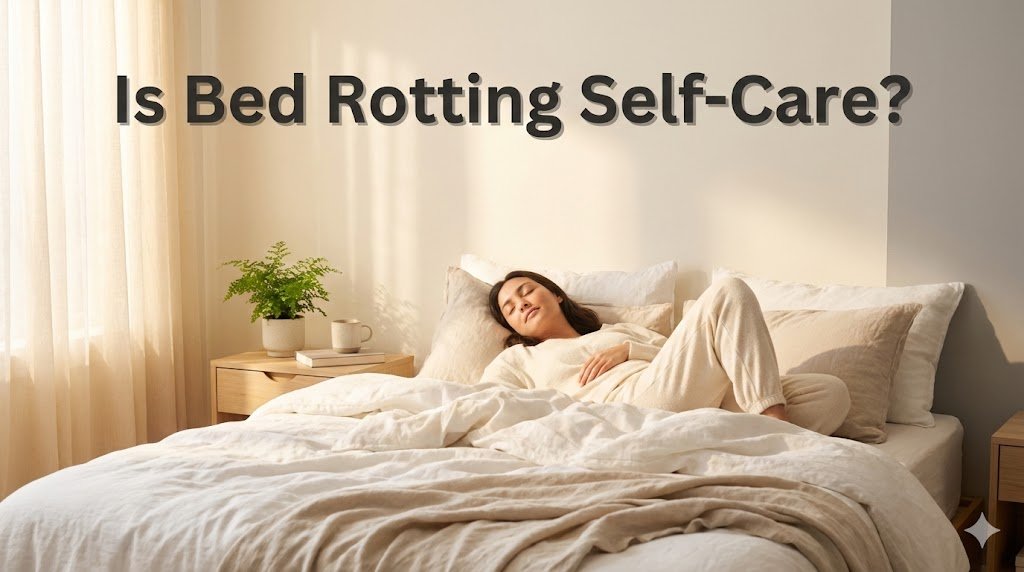
In this Bed Rotting Self Care Guide, we are going to figure out if this viral trend is the break you need or a habit you should kick.
Here is the truth: Bed rotting has captured Gen Z more than any other generation. A June 2025 survey from the American Academy of Sleep Medicine found that almost one-third (31%) of Gen Z have tried bed rotting, compared to just 5% of adults 65 and over. This stark generational divide reflects how younger generations are responding to burnout differently.
However, it’s not all relaxing—53% of Americans feel guilty after bed rotting. And since 53% of Americans rate their sleep as just “fair” or “poor,” it makes sense that we are all looking for a way to recharge.
By the end of this guide, you will know exactly how to rest without the guilt. You will learn to spot the red flags and use bed rotting the right way.
What Is Bed Rotting? Understanding the Viral Self-Care Trend
Let’s keep it simple. Bed rotting is when you intentionally stay in bed for hours—or even a whole day—while you are awake.
It’s not just sleeping in on a Saturday. It is active downtime.
In 2024, the practice was officially defined as:
“The practice of spending many hours in bed during the day, often with snacks or an electric device, as a voluntary retreat from activity or stress.”
Nicole Maselli, a licensed mental health counselor, adds that it is a conscious choice:
“Bed rotting is when someone makes a conscious choice to be alone in their bed rather than participating in an activity that requires more effort, socialization, or energy.”
This bed rotting trend exploded on TikTok in 2023. It became a way for people, especially Gen Z, to push back against “hustle culture.” Instead of trying to be productive every single second of the day, you choose to do… absolutely nothing. Or at least, nothing that requires much brain power.
Typical bed rotting activities usually include:
- Binge-watching your favorite TV shows.
- Endlessly scrolling through social media.
- Reading a book you actually like.
- Snacking while under the blankets (we won’t judge).
- Taking naps on and off.
Some mental health professionals prefer calling it “bed marinating.” Sounds a lot nicer, doesn’t it? It implies you are soaking up rest like a sponge. But whether you call it rotting or marinating, the goal is the same. You want to unplug from stress and let your body and mind hit the reset button.
Is Bed Rotting Self-Care? What Mental Health Experts Say
So, here is the big question: Is bed rotting self-care, or are we just being lazy?
The answer isn’t black and white. It really depends on why you are doing it and how it makes you feel afterwards.
We looked at what experts from big-name organizations like the Cleveland Clinic and Columbia University have to say about it.
The Supporting Views
Some doctors believe we are way too hard on ourselves about taking a break.
“Resting gives your muscles, joints, nervous system and more a chance to reset and recover from the daily stressors you endure in life.” — Dr. Meghan Galili, MD, internal medicine physician at Cleveland Clinic
The Cautionary Views
However, it’s not all green lights. Other experts warn that there is a fine line between resting and hiding from the world.
“Rest is vital, but too much emphasis on passive rest can backfire.” — Dr. Laurence Chan, clinical assistant professor of psychiatry at Columbia University (via Therapy Group of DC)
Dr. Chan warns that staying in bed all day “blurs the boundary between sleep space and living space.” This can totally confuse your brain’s internal clock.
Dr. John Saito, a sleep medicine physician and spokesperson for the AASM, warns:
“Staying in bed for long periods of time for activities other than sleep may hurt sleep health, and potentially mental health. If you retire to your bed to ‘rot’ away anxiety or daily challenges, it can cause negative thoughts and emotions to fester and potentially worsen over time.”
Dr. Patrick McGrath, PhD, Chief Clinical Officer at NOCD, adds a really important point about avoidance. He suggests that if you are bed rotting to hide from your problems, “you’re avoiding things and staying stuck.”
The Verdict
So, is it healthy? In moderation, yes.
If you do it on purpose and mindfully, bed rotting can be a legitimate tool for mental health recovery. It only becomes a problem when it turns into a habit or an escape route.
Think of it like eating cake. A slice at a birthday party? Great. Eating a whole cake every night for dinner? That is going to make you feel pretty sick.
The Real Benefits of Bed Rotting (When Done Right)
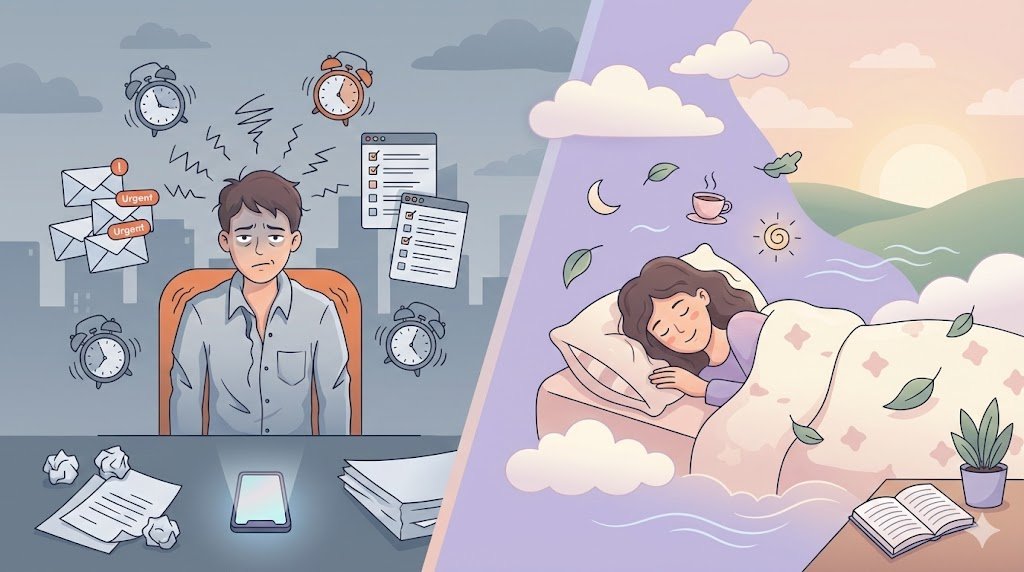
If you follow the tips later in this guide, there are some real perks. Here is why taking a day off might be exactly what your body is screaming for.
- Stress Relief and Burnout Prevention: When you unplug, you lower your cortisol (that nagging stress hormone). For those on the edge of burnout, a day of zero demands can act like a hard reset for your nervous system. Often, the urge to bed rot comes from burnout. Setting healthy boundaries can prevent you from reaching that breaking point.
- Catch-Up Sleep: Research cited by the Sleep Foundation shows that catch-up sleep can help some people avoid the bad effects of sleep deprivation. However, it isn’t ideal as a long-term strategy. Interestingly, one study found that women benefit from catch-up sleep more than men. But there is a catch: small amounts of catch-up sleep worked better than large amounts, especially for middle-aged and older women.
- Mental Clarity: Sometimes, the world is just too loud. Lying in quiet comfort gives you space to reflect. When done right, it helps you process emotions you’ve been ignoring during the busy work week.
- Rest Beyond Sleep: You don’t have to be asleep to rest. Passive activities in a soft, safe place can nourish your spirit. It gives you a feeling of comfort that a busy coffee shop or a loud gym just can’t match.
What Can Bed Rotting Do to Your Body? Bed Rotting Side Effects and Risks
Okay, we have to talk about the not-so-fun stuff. While a lazy Sunday is fine, the bed rotting trend has a dark side if you take it too far. Your body is designed to move, and your mind actually craves daylight. Here are the specific bed rotting side effects you need to know.
Physical Health Risks
If you practice bed rotting all day, especially for several days in a row, your body starts to complain.
- Muscle and Bone Issues: It’s not just stiffness. Dr. Joslyn Gober from Jackson Health System warns that “lying in bed all day means prolonged inactivity.” This results in muscle wasting, decreased bone density, and increased risk for fractures.
- Metabolic Changes: Your internal engine slows down fast. Research indicates that after just ten days of inactivity, mitochondrial density drops, and insulin sensitivity declines.
- Cardiovascular Impact: NASA-funded experiments demonstrate measurable baroreflex decline—how your body regulates blood pressure—after just two weeks of head-down bed rest.
- Skin Issues: Studies on hospital patients showed bed sores can develop in as little as 6 to 8 hours of remaining in one position.
- Circulation Problems: According to the CDC, staying sedentary slows your circulation. In extreme cases, this raises the risk of blood clots.
Mental Health Risks
This is where bed rotting and mental health get tricky.
- Increased Anxiety: It might feel safe, but it can backfire. Research highlighted by the Therapy Group of DC notes that staying in bed beyond eight hours resulted in more anxiety after just one week.
- The Depression Loop: It’s a vicious cycle. Ohio State University Health explains that depressed mood leads to inactivity, and that inactivity leads to more depressed mood.
- Doomscrolling Trap: If your bed rotting involves 6 hours of TikTok or reading bad news, you aren’t really resting. You are stressing your brain out while your body is still. This is often called “doomscrolling.” If your bed rotting sessions involve hours of scrolling, learning to protect your peace on social media can make a big difference.
Sleep Quality Impact
The American Academy of Sleep Medicine and the Sleep Foundation generally recommend using your bed for two things only: sleep and sex.
When you watch TV, eat, and work in bed, you confuse your brain. You are training yourself to associate the bed with being awake. This can lead to insomnia when you actually try to sleep at night. Plus, missing out on sunlight messes up your body’s internal clock (circadian rhythm).
How Do I Know If I’m Bed Rotting? Signs and Symptoms
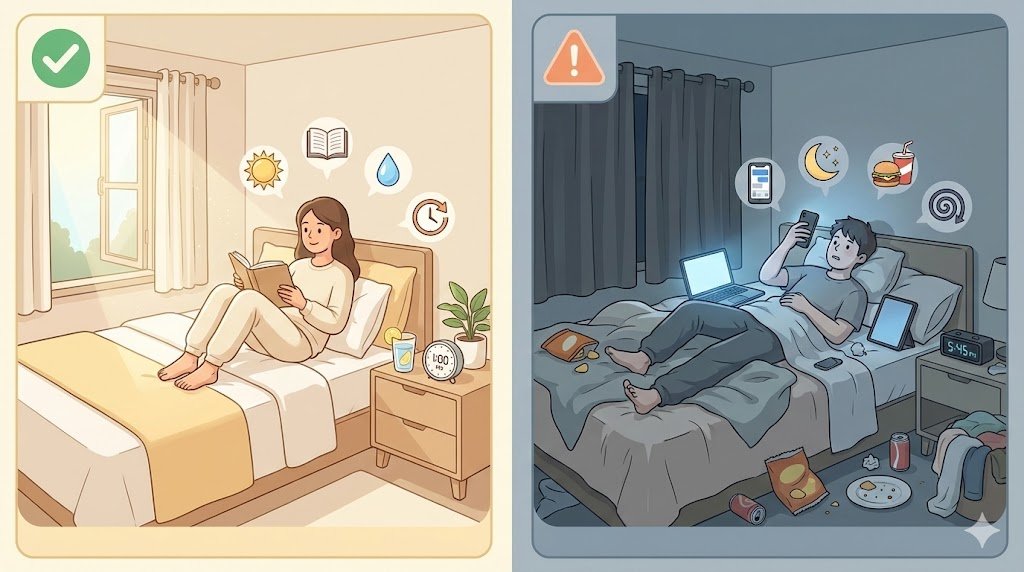
How do you know if you are practicing self-care or falling into a slump? Here are the common bed rotting symptoms to look out for.
Signs of Healthy Bed Rotting
- You planned it. You said, “I am going to rest until 2 PM,” and you actually did.
- You feel refreshed and lighter afterward.
- It happens occasionally (maybe once or twice a month).
- Your mood improves.
- You can easily get up and make dinner or see a friend when the time is up.
Warning Signs of Problematic Bed Rotting
- You stay in bed the entire day and skip showers, meals, or chores.
- You feel guilty, gross, or more tired when you finally get up.
- You are canceling plans with friends just to stay in bed.
- It is becoming a regular weekend routine, not a treat.
- You are doing it to avoid a stressful email or a difficult conversation.
- You feel like you need to rot just to function.
If you find yourself bed rotting frequently because you’re always tired with no energy, there might be underlying issues worth exploring.
Bed Rotting and Mental Health Conditions
Sometimes, the urge to stay in bed isn’t just about being tired. It can be a symptom of something deeper.
Bed Rotting and Depression
Bed rotting depression is a common search term for a reason. While staying in bed isn’t a mental illness itself, it is a major red flag.
This trend didn’t appear out of nowhere. World Health Net reports CDC data showing a 31% increase in depressive symptoms among 18-24 year olds between 2019 and 2022. For many young adults, bed rotting has become a coping mechanism for this rising tide of mental health struggles.
Depression often makes everything feel physically harder and slower to do (doctors call this “psychomotor retardation”).
Dr. McGrath notes that if you have lost interest in things you used to love and just want the quick stimulation of a screen, it could be a sign. If you feel worthless or empty while rotting, please reach out to a professional.
Bed Rotting and ADHD
For people with ADHD, bed rotting can be a dopamine trap. You might get stuck in “wait mode” or paralysis. The brain seeks the quick hits of dopamine from social media. The comfort of the bed makes it physically hard to start the task of getting up.
Bed Rotting and Anxiety
Anxiety makes the world feel unsafe. Your bed feels like a fortress. But avoiding the world makes the world seem even scarier.
Nicole Maselli explains that for some, this behavior goes deeper than just being tired:
“Bed rotting can be seen as a freeze response in which people are feeling unsafe and perhaps on a conscious and unconscious level, they’re choosing the safety of their bed.”
This is called “avoidance behavior.” It works in the short term because you feel safe, but in the long run, it makes your anxiety grow.
Bed Rotting Treatment: When Rest Becomes a Problem
If bed rotting has become compulsive rather than occasional, several evidence-based treatments can help:
- Cognitive Behavioral Therapy (CBT): This approach helps you understand the connection between thoughts, feelings, and behaviors like bed rotting. CBT can identify whether you’re resting or avoiding.
- Stimulus Control Therapy: This is a technique that reserves your bed only for sleep. It helps break the unhealthy habit of doing everything else in bed.
- Behavioral Activation: For those whose bed rotting stems from depression, this technique focuses on small steps. You gradually increase meaningful activities to break the cycle of doing nothing.
If you’ve been struggling for more than two weeks, consider reaching out to a licensed therapist who specializes in sleep or mood disorders.
When to Seek Professional Help: If you have felt down for more than two weeks, if you are struggling to care for yourself, or if the bed rotting feels compulsive (like you physically can’t stop), it is time to talk to a therapist.
How to Pull Yourself Out of Bed Rotting: Practical Strategies
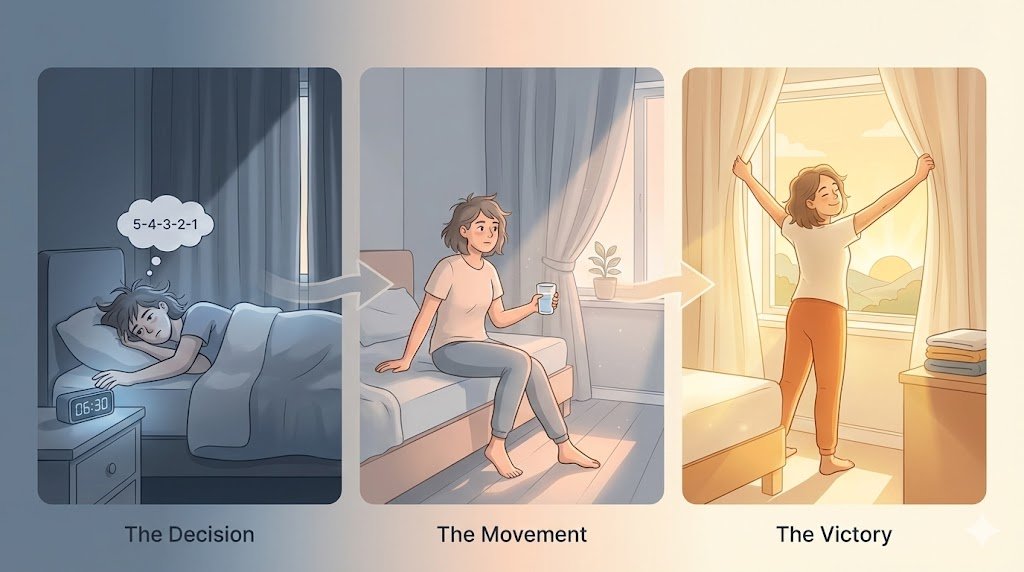
Okay, let’s say you have been in bed for 14 hours. You need to get up, but you feel glued to the mattress. How do you break the spell? If bed rotting has become a way to avoid responsibilities, these science-backed strategies to stop procrastinating can help you break the cycle.
1. The 123 Method (or 5-4-3-2-1 Countdown): This technique interrupts the overthinking that keeps you paralyzed in bed. When you know you need to get up but feel stuck, count backward: 5-4-3-2-1. On “1,” physically launch yourself out of bed. The counting occupies your brain’s resistance long enough for your body to take action. Some people shorten this to a simple 3-2-1 count for quicker results.
2. Start Small with Tiny Actions: Don’t think about “cleaning the whole house.” Think about “wiggling my toes.” Then, “sit up.” As counselor M Clark Canine suggests, just take one step. Even standing up counts as a victory.
3. Move Your Phone Away: This is tough, I know. But try putting your charger across the room. If you want to check your notifications, you have to physically get up. Once you are up, you are halfway there.
4. Create Morning Excitement: Give yourself a reason to leave the sheets. It doesn’t have to be big. Maybe it’s a really good cup of coffee, a podcast you love, or just watching the sunrise. Plan this the night before so you have a “hook” to pull you out. Building a morning routine that works gives you a reason to leave the sheets.
5. Use Sensory Jolts: Your body is in a cozy coma. Shock it gently.
- Drink a glass of ice-cold water (keep it on your nightstand).
- Open the curtains immediately to let light hit your eyes.
- Splash your face with water.
6. Inconvenience Yourself: Don’t bring snacks and water into bed. Make yourself go to the kitchen. Break the bubble of comfort.
7. Build Structure and Routine: If you have nowhere to be, you will likely stay in bed. Schedule a walk with a friend at 10 AM. When someone else is counting on you, it overrides the urge to rot.
What Should I Do Instead of Bed Rotting? Healthier Alternatives
If you want to rest but want to avoid the “rot,” try these alternatives. Instead of staying in bed all day, try these quick ways to relieve stress at home that take just minutes. They give you that rest and relaxation without the guilt.
Restful Alternatives
- Get Outside: Even sitting on a park bench is better than sitting in bed. Fresh air and nature improve mental health almost instantly.
- Meditate: You can lie down (on the floor or a yoga mat) and listen to a 10-minute guided meditation. It rests the brain without the screen time. In fact, the AASM reports that 27% of adults now practice mindfulness, meditation, or breathwork to aid their sleep.
- Watch a Movie in the Living Room: Move to the couch. It seems small, but separating “sleep space” from “entertainment space” protects your sleep quality.
Active Alternatives
- Movement Snacks: You don’t need a grueling gym workout. Just do 5 minutes of stretching.
- Walk: A 30-minute walk meets a chunk of the World Health Organization’s exercise guidelines.
- Journal: Write down why you are tired. Getting the thoughts out of your head is often more restful than scrolling Instagram. Instead of scrolling, try 2-minute journaling prompts that help you process emotions while you rest.
The Key Difference: “Bed Marinating” is intentional rest that refreshes you. “Bed Rotting” is a default setting that drains you. Aim to marinate, not rot.
How to Help Someone Who Is Bed Rotting
Seeing a friend or child bed rotting can be worrying. Here is how you can help.
Do:
- Approach without judgment. They likely already feel lazy or guilty.
- Offer low-pressure company. “I’m going to grab a coffee, want to come for the ride?”
- Help them with one small task to break the paralysis.
Don’t:
- Yell or shame them for being “lazy.”
- Force them to be productive immediately.
- Enable them by bringing every meal to bed (unless they are physically ill).
Try saying: “I’ve noticed you’ve been in your room a lot lately. I miss you. Is everything okay?”
How to Bed Rot the Healthy Way: A Guilt-Free Guide
You clicked on this article because you want to stay in bed, right? Good news: You can. You just need some ground rules. Here is your Bed Rotting Self Care Guide.
1. Set a Time Limit
Don’t leave it open-ended. Decide, “I am rotting until 2 PM.” Set an alarm. When it goes off, the session is over.
2. Keep It Occasional
Treat it like a spa day. Once a month? Great. Every Saturday? That’s too much. If you need more than a few hours of rest, consider planning a proper reset day that’s more structured and restorative than random bed rotting.
3. Choose Activities Wisely
Swap the doomscrolling for something that actually fills your cup. Read a fiction book, knit, journal, or listen to music. If you must watch TV, watch something funny, not something stressful.
4. Let Natural Light In
Open the blinds. This tells your brain it is daytime, even if you are horizontal. It helps prevent that groggy, confused feeling later.
5. Stay Hydrated
Bring a big bottle of water to bed. Dehydration makes fatigue feel way worse.
6. Plan a Gentle Exit
Know what you are doing after the rot. Plan a shower or a stretch. It helps bridge the gap between “rotting” and “living.”
7. Check In With Yourself
Ask: “Do I feel better than I did two hours ago?” If the answer is no, stop.
The 5 C’s of Self-Care (Beyond Bed Rotting)
Bed rotting is just one tiny tool. True mental health recovery requires the 5 C’s. Bed rotting is just one tool in your self-care toolkit. For more practical self-care routines that work, check out our complete guide.
- Connection: Humans need humans. Call a friend.
- Calm: This is where bed rotting fits. Calming the nervous system.
- Competence: Doing something you are good at gives you a boost.
- Compassion: Be kind to yourself.
- Consistency: Regular sleep and food routines beat crashing and burning.
The 10-3-2-1 Rule for Better Sleep
This rule helps prevent the exhaustion that leads to excessive bed rotting:
- 10 hours before bed: No more caffeine
- 3 hours before bed: No more food or alcohol
- 2 hours before bed: No more work
- 1 hour before bed: No more screens
- 0: The number of times you hit snooze
Following this routine improves sleep quality. You wake feeling genuinely rested—reducing the urge to “rot” the next day.
Frequently Asked Questions About Bed Rotting
Q: Is it okay to rot in bed all day? Occasionally, yes—but not regularly. Experts recommend limiting bed rotting to one or two days maximum per month. If you feel worse after a full day in bed, it’s a sure sign you’ve overdone it.
Q: How long should you bed rot? Experts recommend setting a hard stop. Two hours is a reasonable maximum for occasional rest. The practice is “best left for special occasions or one to two days maximum.” If you need more than that, your body may be signaling something deeper that needs attention.
Q: Can bed rotting cause insomnia? Yes. Sleep experts recommend using your bed only for sleep and sex. When you spend time in bed watching TV, scrolling, or eating, you create an association between wakefulness and being in bed. This can contribute to difficulty falling asleep at night.
Q: Is bed rotting a mental illness? No, bed rotting is not a mental illness itself. However, chronic bed rotting can be a sign of underlying mental health issues such as depression or burnout. If bed rotting becomes habitual and interferes with daily life, it may be worth speaking with a mental health professional.
Q: Is the Navy Seal sleep trick real? This technique is widely shared online as the “Military Method,” though its exact origins are difficult to verify. The relaxation principles it uses—progressive muscle relaxation and visualization—are well-established sleep techniques. To do it: Relax your entire face, drop your shoulders, exhale, and relax your chest and legs. Then, clear your mind for 10 seconds.
Q: Is it better to make your bed or leave it unmade? There is a debate here! Some people argue leaving it unmade airs out moisture, though for bed rotting recovery, making the bed is usually better because it signals that “sleep time” is over.
Q: Is bed rotting bad? It depends on the context. Short, intentional rest is good. Chronic bed rotting can worsen mental health, disrupt sleep patterns, and weaken your body.
Q: What are 5 tips for self-care beyond bed rotting?
- Get outside for sunlight.
- Connect with friends regularly.
- Move your body gently every day.
- Set boundaries to stop burnout before it starts.
- Keep a consistent sleep schedule.
Quick Takeaways
- Bed rotting can be healthy self-care when done occasionally and intentionally.
- Warning signs include feeling worse afterward, doing it regularly, or using it to avoid problems.
- Limit sessions to 1-2 hours with a set end time.
- If it feels compulsive or is linked to persistent low mood, seek professional support.
Conclusion
Here is the bottom line: Is bed rotting self-care? It can be.
You deserve rest. We live in a loud, busy world, and wanting to hide under a duvet is a totally normal human reaction to stress. But there is a huge difference between recharging your battery and letting it corrode.
The key is intention. Are you resting to heal, or are you hiding to avoid life?
If you choose to bed rot, do it with pride. Set a timer, grab a book, get cozy, and do it guilt-free. But when the timer goes off, get up. Open the window. Life is waiting for you, and now you have the energy to face it.
Instead of bed rotting every weekend, try following a Sunday reset routine that actually prepares you for the week ahead.
Note: This article is for informational purposes only and is not a substitute for professional medical advice. If you’re experiencing symptoms of depression or anxiety, please consult a licensed healthcare provider.

Oladepo Babatunde (Prince Babatee Tunde) is a Computer Scientist, researcher, and professional content writer with a Higher National Diploma in Computer Science from Kwara State Polytechnic, Nigeria.
With a background in technology and a passion for clear communication, Babatunde specializes in creating thoroughly researched, reader-focused content on productivity, personal development, home living, and technology. Every article he writes is backed by extensive research and fact-checking to ensure readers receive accurate, actionable information.
As a freelance writer, he has helped brands and publications deliver content that educates, engages, and empowers their audiences. His mission at Vibena is simple: make complex topics easy to understand and help Nigerians live smarter, more productive lives.