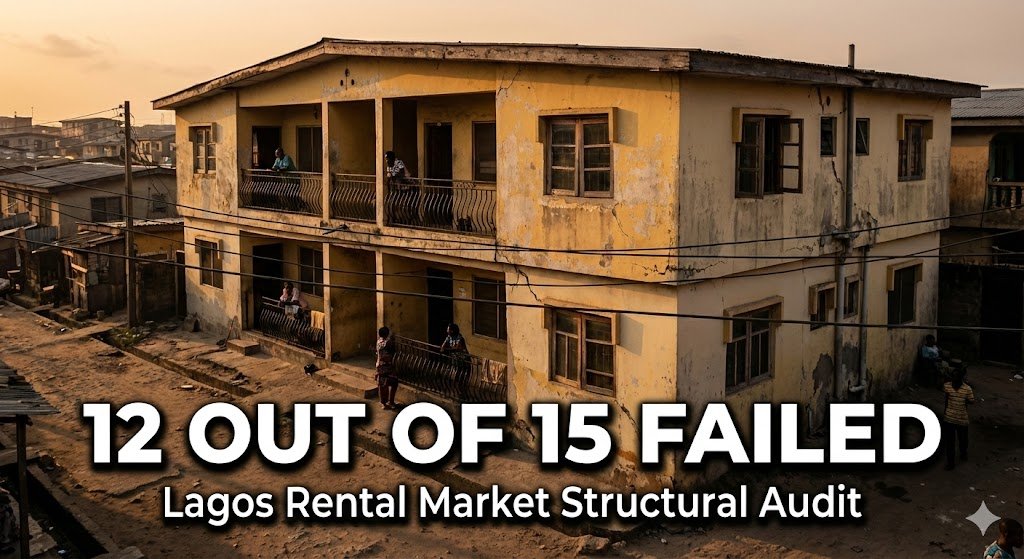
Lagos has recorded over 150 building collapses in the past decade—and the budget apartment segment is most affected. When I set out to conduct an informal Lagos rental market structural audit of 15 “budget” apartments across Yaba, Surulere, and Lekki Phase 2, I expected to find a few minor problems. I did not expect 12 of them to fail basic safety checks that any tenant could perform in 10 minutes.
I didn’t go alone. I took a licensed structural engineer with me. We posed as a couple looking for an apartment between ₦300,000 and ₦800,000 per year. What we found was shocking: painted-over cracks, sinking foundations, and agents who kept saying “no wahala” (no problem) while standing in a room with a sagging ceiling.
If you are looking for a house in Lagos, you need to read this. It might save your life.
Why I Did This Lagos Rental Market Structural Audit (The Housing Issues in Lagos Nobody Discusses)
Three months ago, a friend of mine in Iwaya woke up to a loud crack. A chunk of his ceiling, heavy with water and concrete, fell onto the exact spot where he had been sitting just moments before. He was lucky. Many others are not.
That incident changed how I see housing issues in Lagos. We complain about high rent, but we never talk about whether the buildings will actually stand.
Nigeria has a massive housing problem. According to the Lagos State Ministry of Housing, while Nigeria’s national housing deficit stands at 28 million units, the situation here is critical. Lagos specifically faces a 3.4 million unit shortfall—a 15% increase from 2.95 million units in 2016. Because there are not enough houses, landlords can rent out anything—even dangerous buildings—and desperate people will pay for them. In fact, the average Lagos resident spends 40-60% of their income on rent, making the cost of living in Lagos one of the highest concerns for young professionals.
I realized that “budget apartment” in Lagos is often code for “unsafe apartment.” I wanted to prove it, and I wanted to show you exactly what to look for so you don’t become a statistic in another building collapse Lagos news story.
How Big Is the Real Estate Industry in Nigeria? (Why This Matters)
As we move into 2025, Nigeria’s real estate market is projected at $2.61 trillion USD (approximately ₦4.17 quadrillion at current rates), with the residential segment alone valued at $2.25 trillion. The market is forecast to reach $3.41 trillion by 2029 at a growth rate (CAGR) of 6.87%. Lagos has a population of over 23 million people, and that number is growing every day.
The scale of the problem is daunting. Nigeria needs to construct 550,000 housing units annually for the next decade to close the deficit, yet the government and private sector collectively deliver only 50,000 units annually. To show how slow progress is, official records reveal that the Sanwo-Olu administration has delivered 9,970 home units in six years and targets 14,022 affordable units by 2027. But this is a fraction of what’s needed. This massive shortfall drives the desperation that allows dangerous buildings to thrive.
The Lagos Mortgage Board has pushed initiatives like the Rent-to-Own Program to make housing accessible. This program allows first-time buyers to make just a 5% down payment, take immediate possession, and pay the balance over 10 years (monthly payments are capped at 33% of income). However, the sheer scale of the deficit means most people are still stuck in the unverified private rental market.
The government is waking up to this reality. The Lagos State 2025 budget allocated ₦101.6 billion for Housing and Community Amenities—an 81.69% increase from ₦55.92 billion in 2024. This demonstrates clear government awareness of the crisis. But because private developers are still rushing to build fast and make money to fill the gap, they are often cutting corners before government oversight can catch them.
Real Estate Trends in Nigeria 2025: Why Budget Apartments Are More Dangerous
Why is it so bad right now? It comes down to the economy.
The real estate trend in Nigeria 2025 is being driven by inflation. While inflation has slowed to 16.05% in October 2025—its lowest since 2022—this moderation has not eased pressure on housing markets. Rental apartments now make up over 80% of the Lagos market, driven by the inability of many to afford homes. Property prices in Lagos have surged by nearly 40% in the last year alone. One-bedroom flats in Lekki-Ajah now average ₦2.2 million annually—a staggering figure that effectively consumes the entire annual salary of an average mid-level worker.
The cost of building materials has skyrocketed. The price of a 50kg bag of cement rose from approximately ₦4,500 in early 2024 to over ₦8,500 by early 2025.
To put this in perspective, current market data shows that to construct a one-bedroom flat today, you need between ₦12 million and ₦15 million—an amount that could previously build a twin duplex. Even the basics are out of reach; roofing alone for a basic three-bedroom design now costs between ₦3 million and ₦4.5 million.
- The Problem: A landlord wants to build a house for ₦20 million. Midway through, the price of materials doubles.
- The Result: Instead of buying the high-quality iron rods the engineer recommended, they buy the cheap ones. Instead of mixing the concrete correctly, they add more sand.
This creates “Sandcrete” buildings—structures that look fine on the outside but fail a proper structural integrity inspection on the inside. These “Sandcrete” structures are the silent culprits behind the frightening statistics of building collapse in Lagos. This is the reality of the market I audited.
Why Some Areas Are Riskier: While the 68km Green Line Metro Rail (Marina to Lekki Free Trade Zone) and Fourth Mainland Bridge construction are driving development, rushed construction to capitalize on these projects is contributing to unsafe buildings in corridors like Lekki Phase 2.
The New Rent Law in Lagos State: What Tenants Must Know
Before you sign any papers, you need to know your rights. The New rent law in Lagos State (referencing the 2011 Law and the 2025 Bill proposals) is a hot topic, but many tenants are confused about what is legally binding versus what is proposed.
While the 2011 Tenancy Law remains the primary binding legislation, significant reforms are currently being debated in the 2025 Tenancy Bill to close loopholes.
Key Provisions & Proposed Protections:
- Advance Rent Limits:
- Current Law: Landlords cannot demand more than 1 year from new tenants.
- 2025 Proposal: Stricter limits are proposed, potentially capping sitting monthly tenants at 3 months’ advance rent payment to ease the burden on salary earners.
- Agency Fee Limits:
- Current guidelines cap agency fees at 10-20%, with ongoing debates to reduce this further to ease the burden on tenants. Additionally, the legal agreement fee should not exceed 10%.
- Tip: Always ask if your agent is registered with LASRERA (Lagos State Real Estate Regulatory Authority).
- Maintenance & Structure:
- The Lagos State Tenancy Law explicitly requires landlords to ensure properties are “fit for human habitation.”
- Landlord Responsibility: Under the law, all major structural maintenance—including the walls, roof, and foundation—is the sole responsibility of the landlord, not the tenant.
- Enforcement: Tenants can report violations directly to the Lagos State Building Control Agency (LASBCA). To back this up, the government has allocated ₦60 billion in the 2025 budget specifically for LASBCA’s enforcement activities, giving them significantly more power to crack down on negligent landlords.
But let’s be honest: laws only work if you use them. The Lagos State Building Control Agency (LASBCA) mandates specific stages of inspection for every building to prevent failures, but during my audit, not a single agent mentioned these safety standards or showed a certificate of habitation.
My Methodology: How I Conducted This Lagos Rental Market Structural Audit
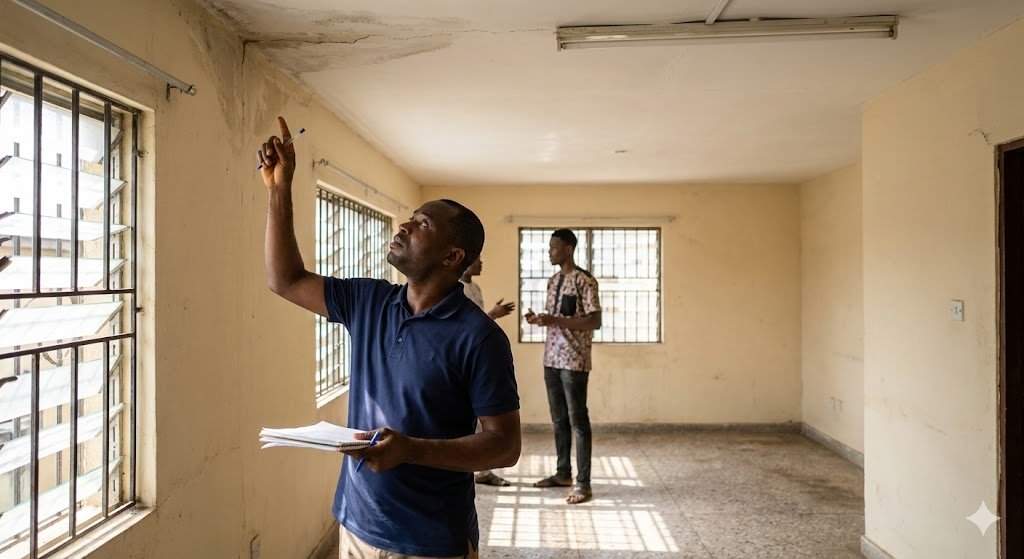
I didn’t want a polished PR tour. I wanted the truth. So, I didn’t go as a writer; I went as a tenant.
- Who: Myself and “Engr. Tunde” (a civil engineer with 10 years of experience).
- Where: We visited 5 neighborhoods: Yaba, Surulere, Lekki Phase 2, Ikeja, and Gbagada.
- The Target: 15 apartments total.
- The Budget: ₦300,000 to ₦800,000 per year.
- The Approach: We acted interested. While I distracted the agent with questions about the “last price,” Engr. Tunde was conducting a discreet structural integrity inspection of the walls, floors, and beams.
Quick-Reference Table: Audit Results by Neighborhood
| Neighborhood | Apartments Visited | Failed | Pass Rate |
|---|---|---|---|
| Yaba | 3 | 2 | 33% |
| Surulere | 3 | 3 | 0% |
| Lekki Phase 2 | 4 | 3 | 25% |
| Ikeja | 3 | 2 | 33% |
| Gbagada | 2 | 2 | 0% |
| Total | 15 | 12 | 20% |
The 15-Point Structural Safety Checklist I Used (Use This Before You Rent)
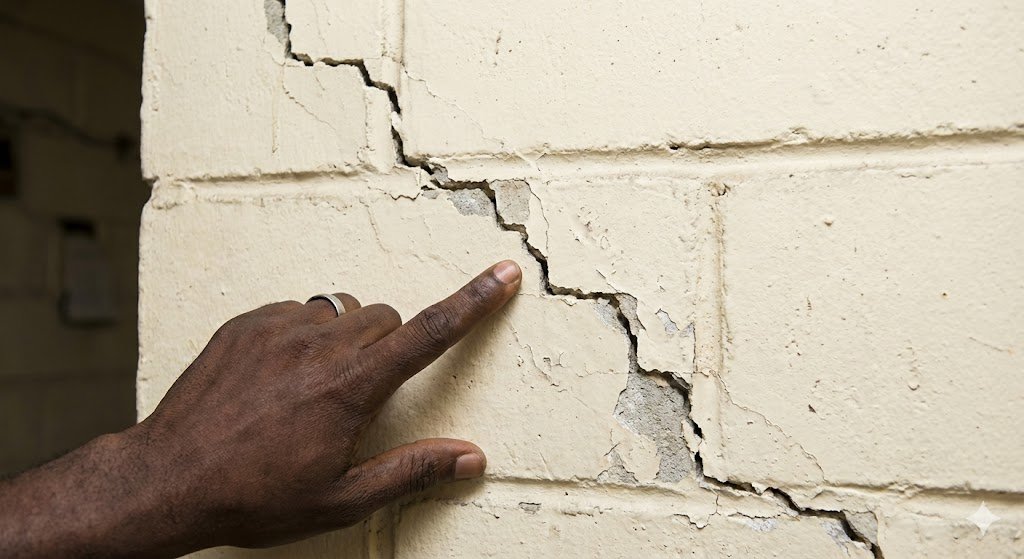
You don’t need a degree to check if a house is safe. We used this Lagos apartment safety checklist. You can use it too.
- Foundation Cracks: Look at the bottom of the house outside. Are there cracks going up from the ground? That is a major danger sign.
- Wall Crack Patterns:
- Hairline cracks (thin): Usually okay, just plaster issues.
- Diagonal cracks (stair-step shape): DANGER. This means the house is sinking or shifting.
- The Ceiling Map: Look for brown water stains. If it looks like a map of Africa, the roof is leaking or the toilet upstairs is leaking.
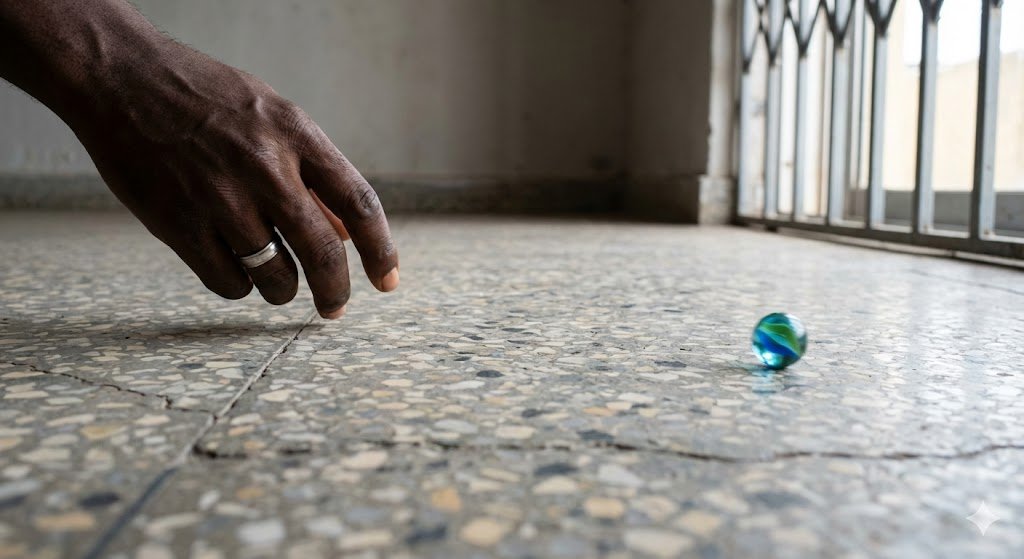
- The Ball Test (Floor Levelness): Put a marble or a small ball on the floor. If it rolls fast to one corner, the building is tilting.
- Door/Window Alignment: Open and close every door. If they stick or won’t close, the frame has twisted because the building settled.
- Electrical Panel: Are wires hanging out like spaghetti? This is a fire hazard.
- Plumbing Pressure: Turn on the tap. Is the water brown? Is the pressure weak?
- The Rain Test: (More on this later). Visit when it rains.
- Staircase Stability: Jump lightly on the stairs. Do they vibrate? They shouldn’t.
- Balcony Attachment: Look underneath the balcony. Is the concrete crumbling?
- Roof Condition: If you can see the roof, look for rust or sagging wood.
- Building Permits: Ask the caretaker, “Can I see the LASBCA approval?” Watch their face. If they look scared, run.
- Neighboring Buildings: Is the house next door leaning against the one you want to rent?
- Emergency Exits: Is there a back door? Is it locked?
- Age vs. Fresh Paint: Be suspicious of a very old house that smells heavily of fresh paint. They are often hiding rot.
The 15 Budget Apartments in Lagos I Visited: Location-by-Location Breakdown
Here is the truth about the Lagos rental market structural audit findings.
Yaba Apartments (3 Visited, 2 Failed)
Yaba is the tech hub, so demand is high.
- The Fail: One apartment in Akoka had a visible vertical crack splitting the back wall. The agent said, “It’s just the plaster.” Engr. Tunde confirmed it went through the block.
- The Verdict: Landlords here are partitioning old boys’ quarters into tiny “self-cons” without reinforcing the foundations. Even excellent one-bedroom apartment design can’t fix a sinking floor.
Surulere Apartments (3 Visited, 3 Failed)
Surulere surprised me. All three failed.
- The Fail: In Aguda, we saw a shop that had been illegally converted into an apartment. There were no windows for ventilation, and the sewage pipe ran directly over the kitchen area.
- The Verdict: Illegal building conversion is a major issue here. While you can learn how to cool down a hot house without AC, you cannot fix a lack of airflow caused by bad construction.
Lekki Phase 2 Apartments (4 Visited, 3 Failed)
You think because it is Lekki, it is safe? No.
- The Fail: These were “new builds.” But the walls were damp. In one house, I pushed my key into the wall, and it went in like the wall was made of biscuit. Too much sand, not enough cement.
- The Verdict: Rushed construction.
Ikeja Apartments (3 Visited, 2 Failed)
- The Fail: Major drainage issues. One compound was green with algae, showing that water sits there for days. This weakens the foundation over time.
Gbagada Apartments (2 Visited, 2 Failed)
- The Fail: Severe roof sagging. You could actually see the wood bowing under the weight of the roofing sheets.
The 3 Apartments That Passed: What Made Them Different
It wasn’t all bad news. 3 out of 15 apartments passed our rigorous structural integrity inspection. Here is what they had in common:
- Transparency: The landlords showed us pictures of the building process.
- No “Fresh Paint” Trap: They didn’t try to hide old walls with cheap paint. They let us see the true state of the house.
- Proper Documentation: When I asked for the property verification Lagos documents, they didn’t get angry. They showed me.
- The Price: They were slightly more expensive (about 10% higher), but safety is worth the extra cost.
Once you secure a safe space, you can even learn how to furnish a mini flat in Nigeria for under ₦500k without breaking the bank. Or, if you prefer smaller spaces, these secure buildings offered a blank canvas perfect for those looking to decorate a one-room apartment.
The Tests I Performed
To get the real truth, I did things you won’t find on a standard checklist.
The Rain Test: Visiting 5 Lekki Estates During a Downpour
I went back to the Lekki apartments when it was raining heavily.
- Result: The road to one “luxury” budget apartment was impassable. The water was knee-deep. Inside the compound, the water was rising towards the door.
- Lesson: Never rent in Lagos during the dry season without asking neighbors about the flood level.
Following the Agent Fee: Where Does ₦150,000 Actually Go?
I tracked the “Agency and Agreement” fees.
- Discovery: In the dangerous apartments, the agents were desperate for the fee. They often pushed for 20% agency fees. In the safe apartments, the fee was strictly 10%, and the agent gave me a receipt with a company letterhead.
- Lesson: Desperate agents pushing for cash-in-hand often represent desperate landlords with bad buildings.
The Water Quality Question
I asked every caretaker: “Is this borehole or water board?”
- The Safe Answer: “We have a treatment plant.”
- The Dangerous Answer: “The water is a bit brown, but if you buy alum, it will clear.” (Do not rent a house where you have to treat your own water).
How to Protect Yourself: Actionable Steps Before Signing
Don’t be a victim. Follow these Lagos rental tips:
- Demand the Documents: Ask for the building plan approval.
- Hire a Pro: You can hire a young structural engineer or a builder for ₦20,000 – ₦30,000 to perform a structural integrity inspection with you. It is cheaper than a hospital bill.
- Talk to Tenants: Knock on a neighbor’s door. Ask them, “Does the roof leak?” They will tell you the truth the agent won’t.
- Google the Street: Search for “Flood [Street Name]” or “[Street Name] building issues.”
- Trust Your Gut: If the floor feels uneven, or the house smells wet, walk away.
- Prepare to Move Smart: Once you find a safe place, declutter quickly before moving to make your transition easier.
Resources: Lagos Rental Market Structural Audit Tools
- LASBCA (Lagos State Building Control Agency): You can report dangerous buildings on their website.
- Lagos State Tenancy Law: Download a copy to know your rights regarding eviction and repairs.
- Downloadable Checklist: Take a screenshot of the 15-point list above and keep it on your phone.
Verified Sources & Further Reading
To ensure accuracy and transparency, this report relies on data from the following authoritative sources. We encourage you to verify these facts:
- LASBCA Official Website (lasbca.lagosstate.gov.ng)
- Verify: Building control regulations, Certificate of Fitness for Habitation process, and enforcement stages.
- Lagos State Official Government Portal (lagosstate.gov.ng)
- Verify: Official housing initiatives, policy announcements, and agency contact details.
- Lagos State Q1 2025 Budget Implementation Report (PDF Download)
- Verify: The ₦60 billion allocation for LASBCA enforcement and Ministry of Housing figures.
- ThisDay Live – Housing Deficit Report (Read Report)
- Verify: The 3.4 million unit deficit in Lagos, 12% price rise, and rental demographics.
- Punch Nigeria – Housing Market Report (Read Report)
- Verify: Historical delivery figures and the impact of the housing deficit on rental prices.
- LASBCA Official Guide (PDF Download)
- Verify: Stage inspection procedures and building approval requirements.
- Centre for Affordable Housing Finance Africa (CAHF) (Read Profile)
- Verify: National housing deficit data (28 million units) and urbanization impacts.
The housing deficit is real, and the pressure to find a home is high. But please, look at the cracks, check the water, and don’t let a coat of fresh paint fool you. Download the checklist, take it on your next apartment hunt, and share this with someone who needs it.
Disclaimer: I am an investigative writer, not a government official. This article reflects my findings from a specific audit conducted in late 2024/early 2025. Always consult with a professional before signing legal documents.

Oladepo Babatunde (Prince Babatee Tunde) is a Computer Scientist, researcher, and professional content writer with a Higher National Diploma in Computer Science from Kwara State Polytechnic, Nigeria.
With a background in technology and a passion for clear communication, Babatunde specializes in creating thoroughly researched, reader-focused content on productivity, personal development, home living, and technology. Every article he writes is backed by extensive research and fact-checking to ensure readers receive accurate, actionable information.
As a freelance writer, he has helped brands and publications deliver content that educates, engages, and empowers their audiences. His mission at Vibena is simple: make complex topics easy to understand and help Nigerians live smarter, more productive lives.