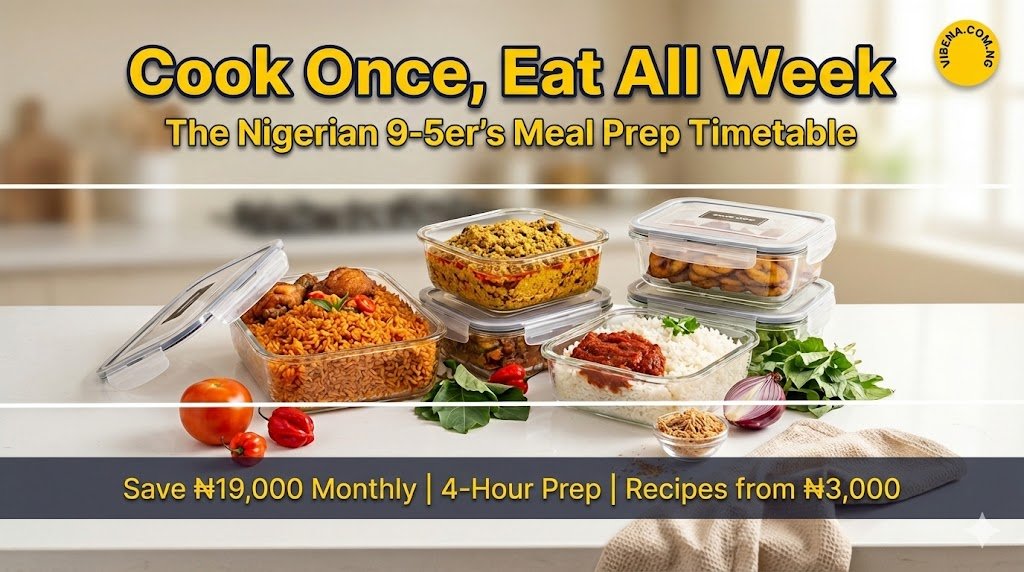
It’s 6:30 PM. You just managed to escape the madness of Third Mainland Bridge or Wuse market traffic. Your body is aching, your phone battery is on 10%, and the last thing you want to do is stand in the kitchen to pound yam or fry plantain.
Sound familiar?
We have all been there. You end up stopping at a fast food joint to buy rice and chicken for ₦2,500. It tastes okay, but your bank account is feeling the heat. Or maybe you just soak garri and sleep, promising yourself you will “eat better tomorrow.” Coming home exhausted at 8 PM, only to face a kitchen full of unwashed pots and unprepared ingredients; it’s one of the most stressful parts of the 9-5 lifestyle. Meal prep eliminates this daily pressure, but for immediate relief on tough days, explore these ways to relieve stress quickly at home.
Living and working in Nigeria is a full-time sport. Between the 9-5 grind, the “go-slow,” and family wahala, finding time to cook fresh meals every day is almost impossible. As the Federal Ministry of Health continues to promote improved nutrition and health outcomes for all Nigerians, practical meal planning becomes essential for busy working families to maintain a balanced diet despite these challenges.
But what if I told you that you could cook just once, maybe on a Saturday or Sunday, and eat like royalty for the rest of the week?
This isn’t just about saving time; it is about saving your sanity and your money. In this guide, we will break down a realistic Meal Prep Timetable for Busy 9-5ers that fits the Nigerian lifestyle, budget, and taste buds.
Understanding Meal Prep for Nigerian 9-5ers
Why Traditional Meal Planning Fails Busy Professionals
Let’s be honest. Most meal plans online are not designed for us. They talk about salads and sandwiches. But as a Nigerian, you need your swallow, your spicy stew, and your pepper soup.
Traditional cooking in Nigeria takes time. You have to pick beans, wash bitter leaf, boil meat, and blend pepper. Doing this every day after work is a recipe for burnout.
The challenges are real:
- The Traffic Factor: If you leave work at 5 PM and get home at 8 PM, your day is gone. Between your 9-5 job, Lagos traffic, and maybe even a side hustle, finding time to cook feels impossible. If you’re also juggling business dreams alongside your day job, check out our time management strategies for side hustlers to help you balance everything without burning out.
- The “Freshness” Myth: We grew up believing soup must be made fresh daily. But with modern freezers (and a good generator or inverter), this mindset is changing.
- Budget Wahala: Buying ingredients in bits and pieces from the street corner is 30-40% more expensive than bulk buying. This lack of structure is why budget meal planning Nigeria often feels impossible for the average worker.
The Cook Once, Eat All Week Philosophy
This is the secret sauce. The “Cook once eat all week” method is simple: you dedicate 4 to 6 hours on a weekend to do 90% of the work.
Think of it like this:
- Batch Cooking: Instead of boiling two pieces of meat, boil the whole kilo. It takes the same amount of gas.
- Money Savings: When you go to Mile 12 or your local open market to buy in bulk, you save serious Naira. This is the core of effective budget meal planning Nigeria.
- Energy Management: You cook when you have energy (weekend), so you can just warm and eat when you are tired (weekdays).
By following a dedicated meal prep schedule for Nigerian 9-5 workers, you reclaim your evenings. No more chopping onions at 9 PM.
The Nigerian 3-3-3 Meal Prep Method
If you are new to Nigerian meal prep, the 3-3-3 rule is a lifesaver. It keeps things simple so you don’t get overwhelmed.
What is the 3 3 3 Rule for Eating?
For a Nigerian kitchen, the 3-3-3 rule means you prepare:
- 3 Protein Sources: e.g., Fried Fish (Titus/Mackerel), Boiled/Grilled Chicken, and Assorted Meat or Beans.
- 3 Soup/Stew Bases: e.g., A big pot of Tomato Stew, Egusi Soup, and Okro or Vegetable Soup.
- 3 Carbohydrate (Swallow/Grain) Options: e.g., White Rice, Eba (Garri), and Yam or Pasta.
This combination gives you endless variety. You can eat Rice and Stew on Monday, Eba and Egusi on Tuesday, and Yam and Stew on Wednesday. You won’t get bored.
Why Eating Every 3-4 Hours Works for 9-5ers
Many people skip meals because they are busy or stuck in traffic, but this often leads to overeating later. Eating every 3 to 4 hours helps maintain stable blood sugar levels and keeps your metabolism active.
- The 2 PM Slump: Have you ever felt your eyes closing at your desk right after lunch? That is usually because you waited too long to eat, got starving, and then ate a massive portion of heavy carbs (like Eba) which spiked your blood sugar.
- The Solution: By eating smaller, pre-prepped meals every 3-4 hours (Breakfast at 8 AM, Lunch at 12 PM, Snack at 4 PM, Dinner at 8 PM), you keep your energy steady. You won’t need that sugary drink to stay awake.
- Metabolic Boost: Your body burns calories just by digesting food. Keeping the engine running with regular fuel prevents your body from going into “starvation mode” where it stores fat.
The 5 4 3 2 1 Meal Plan for Nigerian Families
If you are shopping for a family, try the 5-4-3-2-1 method to organize your market list. The World Health Organization emphasizes the importance of dietary diversity, consuming vegetables, proteins, and whole grains, which the 5-4-3-2-1 method naturally incorporates.
- 5 Vegetables: Ugu, Spinach (Efo), Tomatoes, Scotch Bonnet (Rodo), and Onions.
- 4 Proteins: Chicken, Fish, Beef, and Eggs (for breakfast).
- 3 Carbs: A bag of Rice, Tubers of Yam, and Garri or Wheat.
- 2 Fats/Oils: Palm Oil and Vegetable Oil.
- 1 Treat: Plantain chips, Chin Chin, or fruit for snacking.
This helps you stay focused in the market so you don’t buy things you don’t need.
Budget-Friendly Meal Prep
Money is tight, and food prices are climbing every day. With nutrition challenges affecting millions of Nigerians, as documented by WHO, affordable meal planning strategies become critical for ensuring families access nutritious food despite economic constraints. Strategic budget meal planning Nigeria style makes eating well 100% possible.
What Can I Cook with 3000 Naira in Nigeria?
This is a popular question. While prices fluctuate, ₦3,000 can still get you a decent pot of soup or a hearty meal if you shop smart at a local market (not a supermarket) and focus on local ingredients rather than imported ones.
Option 1: Okro Soup (Budget Style)
- Okro: ₦500
- Pumpkin leaf (Ugu): ₦300
- Iru (Locust beans): ₦200
- Crayfish: ₦300
- Smoked Panla Fish: ₦1,200
- Pepper/Onions: ₦300
- Palm Oil: (Assuming you have a bottle at home, or buy small ₦200)
- Total: ~₦3,000 (Serves 4-5)
Option 2: Concoction Rice (Native Jollof)
- 2 De-ricas of Rice: ~₦1,800
- Smoked Fish: ₦500
- Pepper/Onions: ₦400
- Palm Oil/Salt/Maggi: ₦300
- Total: ~₦3,000
Option 3: Beans and Fried Plantain (Dodo) with Fish
- Beans (Oloyin/Honey Beans): ₦1,000 (Approx. 2 milk cups or half a mudu depending on location).
- Plantain: ₦1,000 (3-4 fingers of ripe plantain. Buy the ones that are just starting to spot for sweetness).
- Smoked/Fried Fish: ₦600 (Get “Shawa” or a cut of Titus).
- Palm Oil & Onions: ₦400 (Small bottle of oil and 2 bulbs of onions).
- Pepper/Maggi: Included in the budget above.
- Total: ₦3,000.
- Tip: Cook the beans with onions to soften it faster and save gas. The palm oil goes in last to give it that rich color.
Detailed Price Comparison: Mile 12/Oyingbo vs. Street Vendor
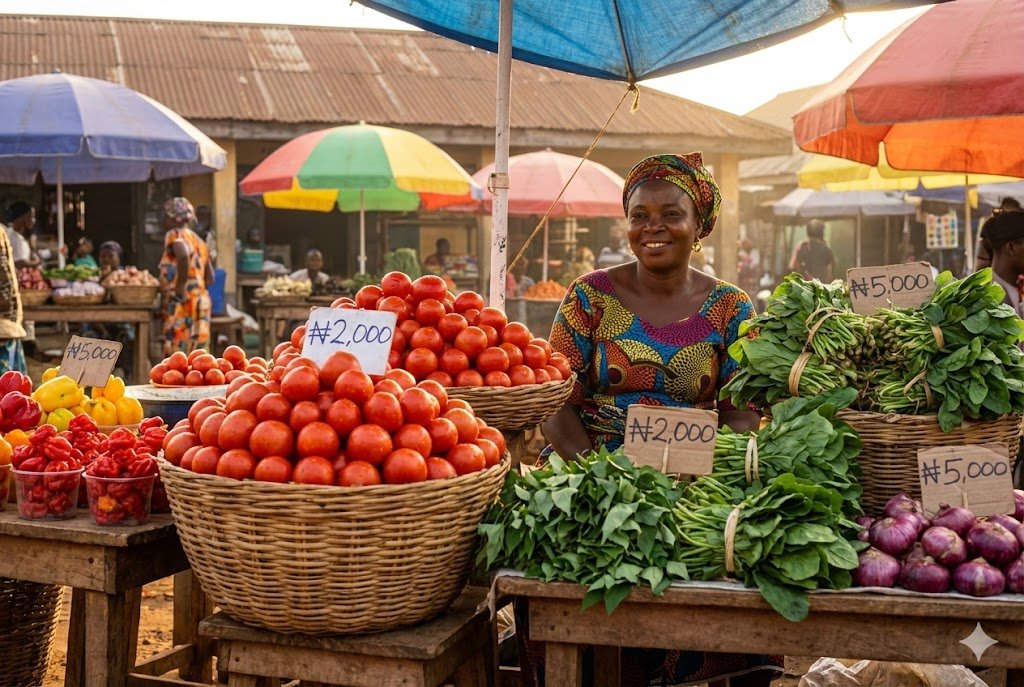
One of the biggest mistakes busy 9-5ers make is buying ingredients daily from the “Mallam” or kiosk down the street. While convenient, you are paying a “convenience tax.” This defeats the purpose of the cook once eat all week strategy.
| Item | Street Price (Retail) | Market Price (Bulk) | Monthly Savings |
|---|---|---|---|
| Tomatoes | ₦500 for 4-5 pieces | ₦5,000 for a small basket (approx 60-70 pieces) | ₦3,500+ |
| Rice | ₦1,800 per De-rica | ₦85,000 per bag (approx ₦1,300/De-rica) | ₦5,000+ |
| Pepper (Rodo) | ₦200 for a tiny nylon | ₦2,000 for a “paint rubber” (bucket) | ₦4,000+ |
| Yam | ₦2,500 per tuber | ₦8,000 for 5 tubers (₦1,600 each) | ₦4,500 |
| Palm Oil | ₦1,200 per bottle | ₦7,000 for 4 Liters | ₦2,000+ |
| Total Savings | ~₦19,000/month |
The Verdict: By spending one Saturday morning a month at a major market, you can save nearly ₦20,000. That is enough to pay for your data subscription for the month or fuel your generator for a week!
Specific Market Tips for Maximum Savings
You don’t just walk into a Nigerian market; you enter with a strategy.
- The “6 PM Clearance” Rule: Most market sellers want to go home with cash, not perishable stock. If you go to the tomato and pepper section around 6:00 PM (just as the market is winding down), sellers are desperate to clear their tables.
- The Hack: That pile of pepper they sold for ₦2,000 at noon? You can often price it down to ₦1,000 or ₦1,200. “Madam, sell am make you go house, night don come.” Works like magic.
- Avoid the “Front Row” Syndrome: The sellers at the very entrance of the market pay higher stall fees, so their prices are higher. Walk 5-10 minutes deeper into the market. The women sitting on low stools deep inside usually have the best farm-to-market prices.
- The “Join Body” Strategy: Some items like a full basket of tomatoes or a bag of onions are too much for one person. Form a “co-op” with 2 or 3 colleagues or neighbors.
- One person goes to the market.
- You buy a full basket of tomatoes for ₦25,000.
- You share it into three.
- Result: You get massive quantity for wholesale price without wasting food.
Complete Weekly Meal Prep Timetable for Busy 9-5ers
Now that you understand the budget side, let’s get into the actual execution. Here is your step-by-step weekly meal prep timetable for busy 9-5ers. This is the core of the guide. This Meal Prep Timetable for Busy 9-5ers is designed to give you structure. Following this weekly meal timetable for busy professionals ensures you are never wondering what to eat.
The Saturday/Sunday Prep Schedule
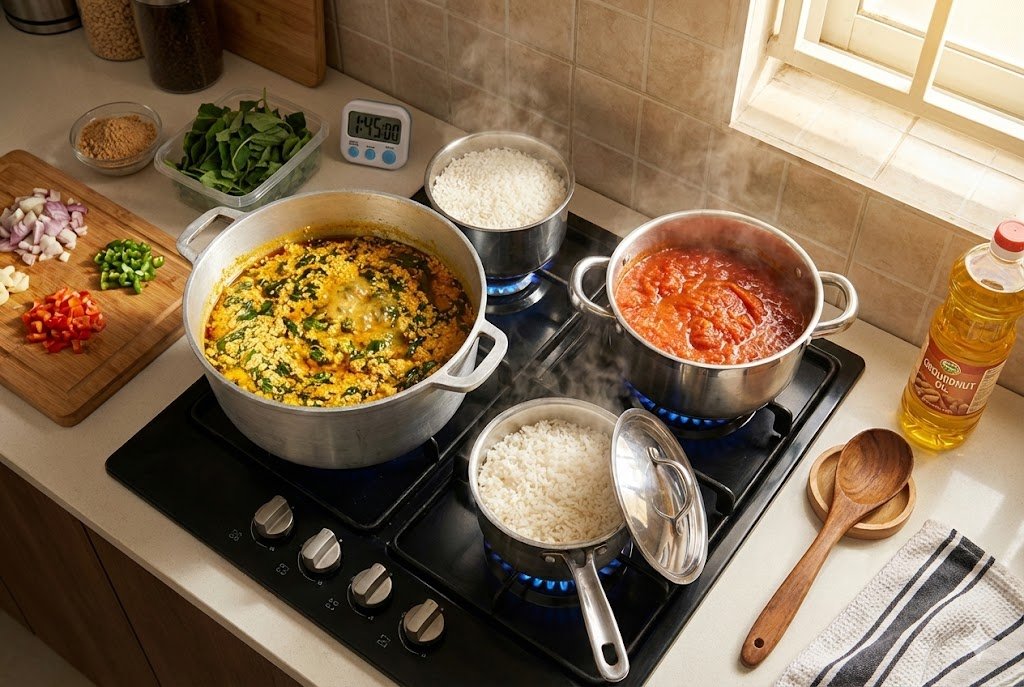
You don’t need to spend the whole weekend in the kitchen. Here is a focused 6-hour plan:
- 9:00 AM: Hit the market. Go early to get the freshest fish and greens.
- 11:00 AM: Prep time. Wash your meat. Blend your peppers. Pick your beans. Chop your Ugu and waterleaf.
- 12:00 PM: Pot 1 – The Base Sauce. Start a massive pot of Tomato/Pepper stew base. This will be used for Jollof rice, plain stew, and pasta.
- 1:00 PM: Pot 2 – The Soup. While the stew boils, start your Egusi or Ogbono soup on the second burner.
- 2:30 PM: Proteins. Steam your meat/chicken. Once tender, grill them in the oven or air fryer (healthier and less messy than frying).
- 3:30 PM: Sides. Boil a pot of beans or Moi-moi.
- 4:30 PM: Cool and Pack. Allow everything to cool completely before packing into bowls.
- 5:00 PM: Clean up.
Your Saturday meal prep session will create some serious kitchen mess—pots everywhere, chopped vegetables, oil splatters. The good news? Just like meal prepping saves cooking time all week, having a cleaning system saves time too. See our guide on keeping a house clean with a busy schedule for strategies that work.
Nigerian Food Time Table for Family (Complete Week)
Serves: 4-6 | Focus: Balanced Diet & Time Saving
With your meals prepped, your mornings become stress-free. No more rushing to make breakfast or skipping the most important meal. Pair your meal prep system with an efficient morning routine to start every workday energized and focused.
| Day | Breakfast | Lunch (Packable) | Dinner (Comfort) | Prep Notes | Time to Assemble |
|---|---|---|---|---|---|
| Mon | Boiled Yam & Egg Sauce | Jollof Rice & Chicken | Eba with Egusi Soup | Uses pre-made Egusi/Jollof from Sunday batch | 15 mins |
| Tue | Bread, Butter & Tea | Jollof Rice & Beef | Semo with Egusi Soup | Semo made fresh; Soup reheated from freezer | 20 mins |
| Wed | Pap & Moi-Moi | White Rice & Stew | Porridge Beans | Uses pre-made Moi-Moi & Beans batch | 10 mins |
| Thu | Cereal/Oats | Spaghetti & Turkey | Wheat & Okro Soup | Uses pre-made Stew base for Spaghetti | 25 mins |
| Fri | Fried Yam & Sauce | Beans & Garri | Fufu with Vegetable Soup | Soup reheated; Fufu (store-bought or powder) | 15 mins |
| Sat | Akara & Pap | Indomie & Egg | Light Soup (Pepper soup) | Flexible weekend cooking | 30 mins |
| Sun | Sunday Rice & Chicken | Salad & Meat | Leftovers / Tea | Fresh Sunday cooking session | 1 hour+ |
Note: Adapt breakfast to your regional preferences: Hausa families might prefer fura da nono, Yoruba families might choose moi-moi and pap, Igbo families might prefer ji akpu (yam) and ukazi soup for special occasions.
Nigerian Food Time Table for School Children
Managing school runs in Nigeria requires military precision. This schedule ensures your kids are fed and out the door before the bus honks.
The School Run Routine:
- 6:30 AM (Breakfast): High energy, fast to eat. Eaten before the school bus arrives.
- 12:00 PM (School Lunch): Portable, non-messy meals packed in a flask.
- 4:00 PM (After-School Snack): Light food to hold them over until dinner.
- 7:00 PM (Dinner): Heavy/Filling meal for a good night’s sleep.
Portable Lunch Box Ideas:
| Day | Lunch Box Menu | Snack Box Idea | Prep Tip |
|---|---|---|---|
| Monday | Jollof Rice with Diced Chicken (Boneless) | Sliced Apple & Juice | Use Sunday’s Jollof batch. |
| Tuesday | Fried Yam Sticks with Egg Sauce | Biscuits & Yogurt | Fry yam in the morning or air-fry frozen yam. |
| Wednesday | Spaghetti Jollof with Sliced Sausages | Banana & Groundnuts | Make spaghetti fresh in 15 mins using stew base. |
| Thursday | Indomie Noodles with Carrots & Peas | Chin-Chin & Ribena | Pack in a good flask to keep warm till noon. |
| Friday | Moi-Moi & Garri (or Custard) | Plantain Chips | Use Moi-moi made during weekend prep. |
Advanced Meal Prep Strategies
Refining your Meal Prep Timetable for Busy 9-5ers takes time, but these strategies will help you master it faster.
How Should a Beginner Meal Prep for the Week?
Don’t try to cook five different soups your first time. You will cry.
- Start Small: Just cook one big pot of Stew and one Soup (like Egusi) for the first week.
- Buy Containers: Go to a plastics market. Buy square or rectangular containers (they stack better in the freezer than round ones).
- Label Everything: Use masking tape to write what is inside. Frozen Stew and Frozen Vegetable soup look very similar!
Understanding the 80-20 Rule for Sustainable Eating
The 80-20 rule (or rule of 20 eating) is a simple, sustainable way to maintain a healthy lifestyle without hating your diet. According to WHO’s healthy diet guidelines, sustainable eating patterns include flexibility and enjoyment, which is why the 80-20 approach works long-term compared to overly restrictive diets.
- How it works for Nigerians: From Monday to Friday afternoon, stick to your healthy, Nigerian meal prep dishes (that’s your 80%).
- The 20% Fun: On Friday night or Saturday, feel free to enjoy that Owambe party rice, buy Suya on the road, or visit a restaurant with friends.
- Why it works: This flexibility prevents burnout. If you try to be 100% perfect, you might quit in two weeks. Knowing you have a treat coming makes it easier to eat your Eba and Vegetable soup during the week. This makes your meal prep schedule for Nigerian 9-5 workers sustainable long-term.
Batch Cooking Techniques for Nigerian Soups
- Undercook Vegetables: If you are freezing Okro or Vegetable soup, don’t cook the greens all the way. They will soften more when you reheat them.
- Thick Stews: Boil your tomato stew until the water dries completely. It saves freezer space and tastes better.
- Stock: Don’t throw away your meat water (stock). Freeze it in small cups to add flavor to your Jollof or pasta later.
Specific Recipe Guides and Costs
This section is detailed because the success of your Nigerian meal prep depends on these recipes tasting good and lasting long.
1. The Perfect Freezer Egusi Soup
Cost Estimate: ₦5,000 – ₦6,000 (Family Size Pot) This recipe is designed to be frozen. It uses the “frying method” which prevents the soup from going sour quickly compared to the boiling method.
Ingredients Breakdown:
- Egusi (Melon seeds): 3 milk cups (approx 400g), blended smoothly. (₦1,500)
- Beef/Shaki (Tripe): 1kg combined. (₦3,500)
- Stockfish & Smoked Fish: Generous amount for flavor. (₦1,500)
- Palm Oil: 2 cooking spoons. (₦200)
- Vegetables: Ugu (Pumpkin leaves) – 2 bunches, washed and chopped. (₦500)
- Pepper Mix: 5 Scotch Bonnet (Rodo), 2 Bell Peppers (Tatase), 2 Onions – blended roughly. (₦500)
- Locust Beans (Iru): 2 tablespoons. (₦100)
- Crayfish: 3 tablespoons (ground). (₦200)
- Seasoning: Maggi/Knorr cubes and salt.
Step-by-Step Method:
- Boil the Meat: Wash beef and shaki thoroughly. Season with onions, maggi, and salt. Cook until tender. Crucial: Do not let the water dry up; you need the stock.
- Prep the Paste: Mix the ground Egusi with a little water or onion juice to form a thick paste. Set aside.
- Fry the Oil: In a dry pot, heat the palm oil. Add chopped onions and fry until translucent.
- Fry the Egusi: Add the Egusi paste to the hot oil. Fry it like you are frying eggs. Keep stirring for about 10 minutes until it becomes crumbly and starts to smell nutty. This frying step ensures it doesn’t spoil.
- Add Pepper & Stock: Pour in your blended pepper mix and the meat stock. Stir well. If it’s too thick, add a little water.
- Simmer: Cover and let it cook for 15-20 minutes. You want the oil to rise to the top.
- Add Proteins: Add the boiled meat, stockfish, and smoked fish. Add the Iru and crayfish. Taste for salt and seasoning.
- Vegetables Last: Turn down the heat. Add the Ugu leaves. Stir and cook for only 2 minutes.
- Finish: Turn off the heat. The residual heat will finish cooking the greens.
Storage Instructions: Allow the soup to cool completely (open the pot lid). Divide into 4-5 plastic containers. Place in the deep freezer. This will last up to 8 weeks.
2. The All-Purpose Nigerian Tomato Stew
Cost Estimate: ₦4,000 (Large Pot) This is the base for Jollof Rice, Pasta, Yam sauce, or just White Rice and Stew.
Ingredients Breakdown:
- Tomatoes: 1 paint bucket (fresh). (₦2,500 in season)
- Tatase (Red Bell Pepper): 10 pieces (for redness). (₦800)
- Rodo (Scotch Bonnet): 10 pieces (adjust for spice). (₦400)
- Onions: 4 large bulbs. (₦300)
- Vegetable Oil: 500ml. (₦1,000)
- Tomato Paste: 2 small sachets or 1 small tin (optional, for thickness). (₦300)
- Seasoning: Thyme, Curry powder, Ginger, Garlic, Seasoning cubes.
Step-by-Step Method:
- Blend & Boil: Blend tomatoes, peppers, and onions. Pour into a pot and boil until the water dries up completely. This is the secret. If there is water, your stew will be sour and won’t freeze well.
- Heat Oil: Heat vegetable oil in a separate pot. Add sliced onions and fry until browned.
- Fry Paste: If using tin tomato, add it now. Fry it in the oil for 5 minutes to remove the metallic taste.
- Fry the Mix: Add the boiled tomato pepper mix. Fry on medium heat.
- Season: Add curry, thyme, garlic, ginger, maggi, and salt.
- The Long Fry: Keep frying and stirring occasionally for 20-30 minutes. You know it is done when the oil separates and floats on top, and the taste is sweet, not sour.
- Add Meat Stock: Pour in your meat stock (from boiling chicken/turkey). Let it simmer together for 10 minutes.
Storage Instructions: Cool completely. Store in 1-liter containers. You can freeze this for up to 3 months. When ready to use, you can just boil white rice and warm a portion of stew.
3. Beans Porridge (Ewa Riro)
Cost Estimate: ₦2,500 Beans are high in protein and perfect for meal prep because they actually taste better the next day.
Ingredients Breakdown:
- Beans: 3 cups (Oloyin/Honey beans preferred). (₦1,200)
- Palm Oil: 1 cooking spoon. (₦100)
- Onions: 2 bulbs. (₦100)
- Crayfish: 3 tablespoons. (₦100)
- Pepper: Blended Rodo and onions. (₦200)
- Optional: Smoked fish or ponmo diced small. (₦800)
Step-by-Step Method:
- Pick & Wash: Pick dirt/stones from beans. Wash clean.
- Pre-cook: Boil beans with water for 5 minutes. Drain this water (this helps reduce gas/heartburn).
- Cook to Tender: Add fresh water and chopped onions. Cook until soft (approx 45 mins to 1 hour, or 20 mins in a pressure cooker).
- Make the Sauce: While beans are softening, heat palm oil in a small pan. Fry onions and blended pepper. Add crayfish and seasoning.
- Combine: When beans are very soft (mashing consistency), pour the fried sauce into the beans. Add smoked fish if using.
- Simmer: Stir and add salt. Note: Never add salt at the beginning, it makes beans hard. Simmer for 10 minutes on low heat so the beans absorb the oil.
Storage Instructions: Beans freeze very well. Portion into single-serve containers. When reheating, add a splash of water as it thickens when cold.
4. Oven-Baked Jollof Rice (Batch Method)
Cost Estimate: ₦4,500 Cooking Jollof on the stovetop requires constant stirring to prevent burning. The oven method is perfect for batch cooking because you can “set it and forget it.”
Ingredients:
- Rice: 4 cups (Long grain or Sella/Basmati). (₦2,200)
- Stew Base: 3 cups of your pre-made Tomato Stew.
- Stock: 3 cups of meat stock + 1 cup water.
- Seasoning: Bay leaves, Curry, Thyme, White Pepper.
- Foil Paper: Essential for steaming.
Step-by-Step Method:
- Prep: Preheat your oven to 180°C (350°F). Wash your rice thoroughly with hot water to remove starch.
- Mix: In a large baking tray (or deep pot that is oven safe), mix the washed rice, stew base, stock, and seasonings. Stir well.
- Seal: Cover the tray tightly with foil paper. Ensure there are no gaps for steam to escape. This is how the rice cooks evenly.
- Bake: Place in the oven for 45-50 minutes. Do not open it.
- Fluff: Remove from oven. Careful with the steam when opening! Fluff with a fork. You will have perfectly separated grains with that signature Jollof taste.
Why this works for 9-5ers: You can be baking your rice while frying your plantain or cleaning the kitchen. It saves burner space and effort.
Storage and Food Safety
You have cooked all this food. Great! But improper storage will ruin everything. Here is how to keep your food fresh in the Nigerian climate. Proper storage is the difference between food that saves you money and food that sends you to the hospital. Following NAFDAC’s food safety guidelines, always ensure cooked food is properly cooled and stored within safe temperature ranges to prevent bacterial growth.
The 2-2-2 Food Safety Rule
Food safety is critical, especially given the heat in cities like Lagos and Abuja. WHO’s food safety guidelines recommend not leaving cooked food at room temperature for more than 2 hours, especially in warm climates like Nigeria where bacterial growth accelerates rapidly. The “2-2-2 Rule” helps ensure your meal prep doesn’t make you sick:
- 2 Hours (Room Temp): Do not leave cooked food at room temperature for more than 2 hours. Bacteria multiply rapidly in our warm climate (30°C+). If you leave that pot of soup on the counter overnight “to cool,” it has likely started fermenting by morning.
- 2 Hours (Refrigerate): Refrigerate prepared food within 2 hours of cooking. To cool a large pot of soup faster so you can fridge it, place the pot in a large basin of cold water (ice bath method). Stir occasionally to release heat.
- 2 Months (Freezer): While frozen food can technically remain safe indefinitely if kept at constant 0°F, for the best quality and taste, try to consume your frozen Nigerian soups and stews within 2 months. After this, the taste of ingredients like crayfish and stockfish may start to degrade.
Power Outage Emergency Guide: The “No Light” Protocol
The biggest fear for Nigerian meal preppers is power outages. If NEPA takes light for 24+ hours, your batch-cooked food could spoil. Beyond food storage, power interruptions affect every aspect of life; learn how to stay focused during power outages to maintain productivity even when the lights go out. Here is your survival strategy timeline:
- 0 – 4 Hours: Do nothing. Do not open the freezer door. A full freezer acts like a block of ice. It will hold its temperature perfectly.
- 4 – 24 Hours: Cover the freezer with thick blankets or duvets (insulation). This traps the cold inside. If you have a generator, run it for 2 hours every 6 hours to maintain the ice block.
- 24 – 48 Hours: If you have ice blocks (always keep 3-4 frozen water bottles in your freezer for this exact moment), move them to the top shelf. Cold air sinks, so this will help cool the food below.
- 48+ Hours (Critical Zone): Check the food.
- Ice Crystals: If the food is partially thawed but still has ice crystals, it is safe to refreeze (though texture might change slightly).
- Fully Thawed (Cold): If it is fully thawed but still refrigerator-cold (4°C), cook it immediately and eat it, or cook it and re-freeze it.
- Warm: If the food feels warm or room temperature, throw it away. Do not taste it to check. “When in doubt, throw it out.”
Container Recommendations: Invest to Save
Stop using old ice cream bowls. They crack, leak, and don’t seal properly.
- Square over Round: Square or rectangular containers stack like bricks in a wall. Round containers leave empty gaps of wasted space in your freezer.
- Recommended Brand/Type: Look for BPA-free plastic containers with clip-lock lids (often called “Click-clack”).
- Where to Buy:
- Tejuosho Market (Yaba): You can get a set of 6 sturdy square containers for about ₦3,500 – ₦4,500.
- Supermarkets: Often sell the same for ₦8,000+. Go to the market.
- Glass vs. Plastic: Glass is better for health and reheating, but heavy and breakable. For a busy 9-5er commuting with food, high-quality plastic is more practical.
Having an organized kitchen makes meal prep 10x easier. Your pots, containers, and ingredients should all have designated spots so you can move efficiently during your 4-hour cooking session. Learn our complete system in our guide to kitchen organization for Nigerian cooking.
The Labeling System
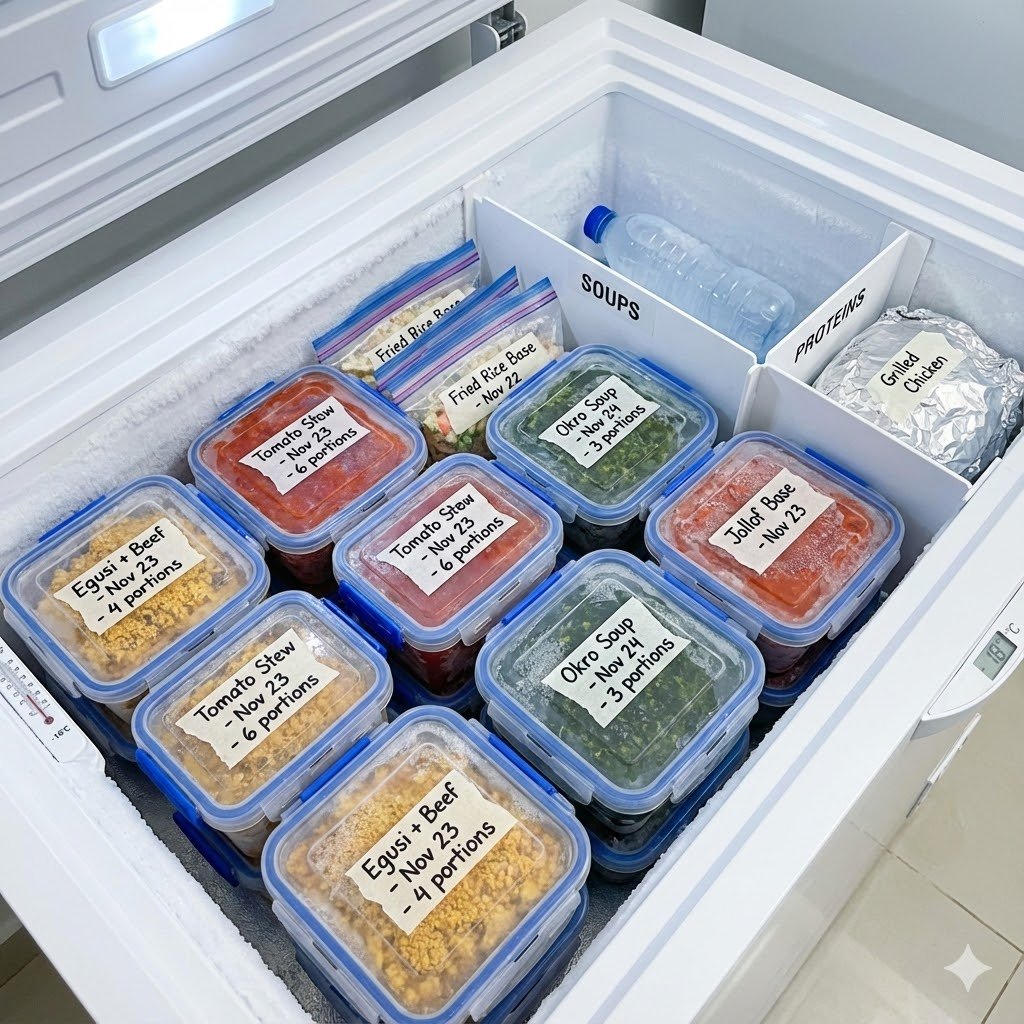
You think you will remember that the red stew is “Fish Stew” and the other red stew is “Beef Stew.” You won’t. Two weeks later, they all look identical.
- Tools: Buy a roll of Masking Tape (₦500) and a Permanent Marker.
- What to Write:
- Contents: e.g., “Egusi + Goat Meat”
- Date Cooked: e.g., “Nov 24”
- Portions: e.g., “2 servings”
- FIFO Method: First In, First Out. When you put new food in the freezer, put it at the bottom or back. Eat the older food first so nothing stays frozen for 6 months.
Monthly Planning and Rotation
Cooking the same Egusi soup every week will make you hate food. The secret to long-term success is rotation.
Complete 4-Week Rotation Timetable
This timetable ensures you don’t eat the same soup twice in a row.
| Week | Soup Base (Swallow) | Stew Base (Rice/Pasta) | Side Dish/Special | Breakfast Focus | Shopping Focus |
|---|---|---|---|---|---|
| Week 1 | Egusi Soup (Beef & Shaki) | Tomato Stew (Chicken) | Moi-Moi (Beans pudding) | Bread & Tea / Eggs | Bulk Meat & Tomatoes |
| Week 2 | Okro/Ogbono (Fish) | Curry Sauce (Turkey) | Fried Plantain (Dodo) | Pap (Ogi) & Akara | Fish & Vegetables |
| Week 3 | Vegetable Soup (Efo Riro) | Ofada Sauce (Assorted) | Beans Porridge | Oats / Cereal | Palm Oil & Assorted Meat |
| Week 4 | Native Soup (Oha/Bitterleaf) | Jollof Rice (Batch cook) | Yam Porridge (Asaro) | Yam & Egg Sauce | Tubers & Spices |
Note: You cook Week 1’s menu on the first weekend. When Week 2 approaches, your Week 1 food should be finished or nearly finished. This staggering helps with cash flow too—you don’t buy everything every week.
Seasonal Ingredient Calendar: Save Money by Knowing When to Buy
Prices in Nigeria are dictated by the rain. Knowing this calendar saves you thousands of Naira and is vital for budget meal planning Nigeria.
- December – February (Dry Season):
- Buy: Tomatoes are usually cheaper and redder (especially from the North). Onions are abundant.
- Avoid: Corn is scarce/expensive. Ugu might be dry and sandy.
- June – August (Rainy Season):
- Buy: Ugu and Waterleaf are lush, green, and cheap. Corn is everywhere (boil/roast).
- Avoid: Tomatoes. This is usually the “Tomato Ebola” or scarcity season. Prices triple.
- Strategy: During these months, switch to Palm Oil based soups (Native soups, Banga) or use Tin Tomato for stews instead of fresh.
- September – November (Harvest):
- Buy: Yams! New yam enters the market. Prices drop significantly.
Monthly Grocery Budget Breakdown (Estimates)
How much should you budget for a full month of meal prepping?
1. Single Person (The Bachelor/Spinster)
- Budget: ₦40,000 – ₦50,000
- Strategy: Focus on one pot of soup per week. Buy half-kilo of meat. Use more eggs.
2. Young Couple (No Kids)
- Budget: ₦70,000 – ₦90,000
- Strategy: Buy a quarter bag of rice. Share a basket of tomatoes with neighbors.
3. Family of 4 (Parents + 2 Kids)
- Budget: ₦120,000 – ₦150,000
- Strategy: Must buy in bulk (Bag of rice, 5 liters oil, Carton of turkey). Buying retail will bankrupt you. Batch cook school lunches (Meatpies/Sausage rolls) to avoid giving lunch money daily.
Troubleshooting and FAQs
Common Meal Prep Challenges
- “My soup tastes watery after freezing.”
- Solution: You didn’t let the water dry enough during cooking. Reduce the liquid content next time. Freezing breaks down cell walls in vegetables, releasing more water upon thawing. Start with a thicker soup.
- “I don’t have light.”
- Solution: Cook smaller batches (every 3 days) or invest in a high-quality cooler (like Coleman) with ice packs for short-term storage if you lack a generator.
Meal Frequency and Weight Management
We often hear questions like “How many times should I eat a day to lose belly fat?” or “Which meal is best to skip for weight loss?”.
- The Reality: While meal prep helps with portion control, there is no one-size-fits-all answer. Some Nigerians do well with 3 balanced meals, while others prefer 2 larger meals.
- The Golden Rule: Consistency is key. Try to avoid heavy eating late at night (after 8 PM), which is a common habit due to traffic delays.
- Advice: Don’t rely on “starving” yourself. For personalized advice, consult a nutritionist.
Frequently Asked Questions
Q: What is the 3 3 3 rule for eating? A: It is a simplified meal planning method: 3 proteins, 3 carb sources, and 3 vegetable/soup bases. It ensures variety without complicating your shopping list.
Q: What can I cook with 3000 naira in Nigeria? A: You can make a basic pot of Okro soup (using smoked fish instead of beef), a pot of Beans porridge, or Concoction Jollof rice with dried fish and crayfish.
Q: How should a beginner meal prep for the week? A: Start by batch cooking just your proteins (meat/chicken) and one base stew. Assemble meals daily using these pre-cooked bases. Don’t try to cook 7 full meals at once.
Q: What is the healthiest food in Nigeria? A: The Federal Ministry of Health Nigeria recommends balanced nutrition across all food groups, which is why methods like the 3-3-3 rule align with official healthy eating guidelines for Nigerians. Vegetable soups (Edikang Ikong, Efo Riro) prepared with less oil are very healthy. Moi-moi (steamed bean pudding) is also excellent because it is high in protein and steamed, not fried.
Q: What is a 3 course meal in Nigeria? A: Starter: Pepper soup or Small Chops. Main: Jollof Rice/Fried Rice with Moi-moi and Chicken/Fish. Dessert: Fruit salad or Puff-puff.
Getting Started This Weekend
You have the plan. Now you need the action.
Your Action Plan for This Weekend: This Saturday morning, before you watch football or go to church on Sunday, take these three steps:
- Step 1 (Friday Night – 20 minutes): Review this guide and write your shopping list using the 5-4-3-2-1 method.
- Step 2 (Saturday 8 AM – 2 hours): Go to the market. Bring cash, negotiate firmly, and buy in bulk.
- Step 3 (Saturday 12 PM – 4 hours): Follow the prep schedule. Put on your favorite music, cook your base stew and one soup.
I know what you’re thinking: ‘This sounds great, but I’ll start next month.’ Don’t fall into that trap. The best time to start is this weekend. If you struggle with taking action, our guide on stopping procrastination breaks down the psychology behind why we delay and how to overcome it.
By 5 PM Saturday, you’ll have dinner ready for the entire week.
By next Friday, when your colleagues are complaining about traffic and rushing to buy food, you’ll walk through your door knowing a warm, home-cooked meal is waiting.
That feeling? It makes every minute of Saturday prep worth it.
Drop a comment below: Which soup will you start with: Egusi, Okro, or Vegetable? Let me know!
Comparison Table: Daily Cooking vs. Meal Prep
| Feature | Daily Cooking | Meal Prep (Batch Cooking) |
|---|---|---|
| Time Spent | 1.5 – 2 hours daily (10+ hours/week) | 4-5 hours once (Weekend) |
| Cost | High (Buying retail/small portions) | Low (Buying bulk saves 30%) |
| Stress Level | High (Cooking when tired) | Low (Just warming food) |
| Health | Lower (Temptation to eat junk) | Higher (Controlled portions) |
| Cleanup | Daily washing of pots | One major cleanup per week |
| Variety | Limited (whatever you have energy for) | High (9 combinations from 3-3-3 method) |
| Family Impact | Often eat separately/different times | Everyone eats together, same quality food |
Conclusion
Meal prepping is a journey, not a sprint. The goal isn’t to have a Pinterest-perfect fridge on day one, but to reclaim your time and health from the chaos of Lagos traffic and 9-5 stress. By dedicating a few hours on the weekend, you’re not just cooking soup; you’re buying yourself peace of mind for the entire week.
Remember, consistency beats intensity. Start with the 3-3-3 method, find the recipes that make your soul happy, and adjust the budget as you go. Whether you’re a single professional in Yaba or raising a family in Abuja, this system is your tool for a balanced, stress-free life.
Now, turn off this screen, grab your market bag, and take that first step. Your future self—eating delicious homemade Jollof on a busy Tuesday—is already thanking you.

Oladepo Babatunde (Prince Babatee Tunde) is a Computer Scientist, researcher, and professional content writer with a Higher National Diploma in Computer Science from Kwara State Polytechnic, Nigeria.
With a background in technology and a passion for clear communication, Babatunde specializes in creating thoroughly researched, reader-focused content on productivity, personal development, home living, and technology. Every article he writes is backed by extensive research and fact-checking to ensure readers receive accurate, actionable information.
As a freelance writer, he has helped brands and publications deliver content that educates, engages, and empowers their audiences. His mission at Vibena is simple: make complex topics easy to understand and help Nigerians live smarter, more productive lives.