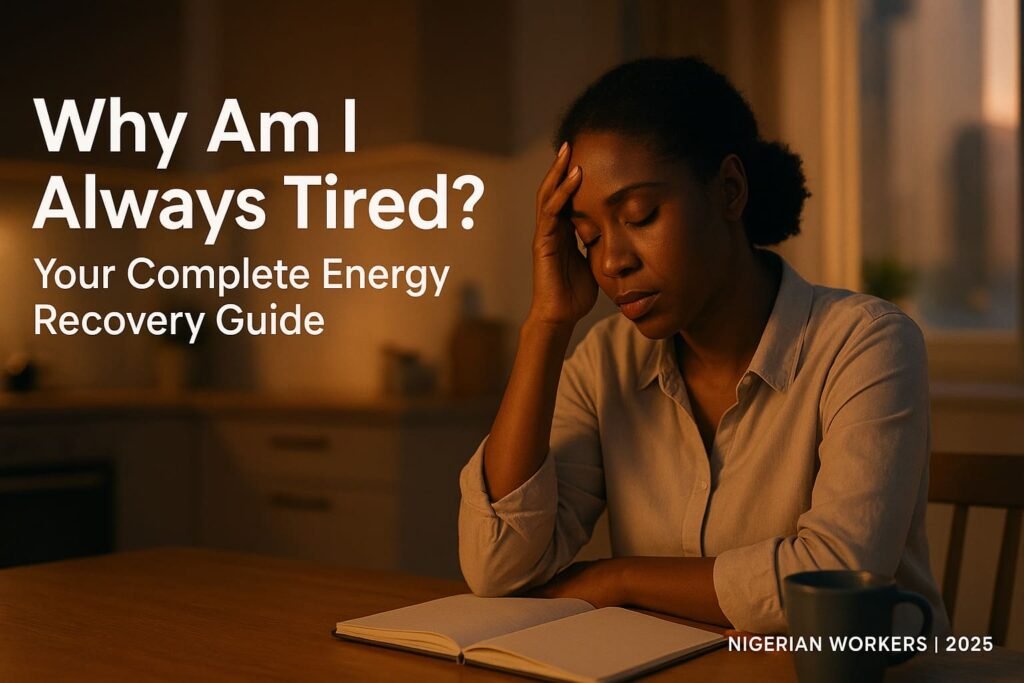
It’s 7:30 PM on a Thursday evening in Lagos. You’ve finally made it home after spending two hours in standstill traffic from the Island to the Mainland. Your body feels heavy, your mind is foggy, and all you want to do is collapse on your bed. The thought of cooking dinner feels impossible. Even scrolling through your phone seems like too much effort.
Exhausted. Completely drained. Sound familiar?
You’re not alone. Thousands of Nigerian workers face this same exhaustion daily, wondering how to plan a reset day that actually works when you’re too tired after work to do anything.
Here’s the truth: The constant feeling of “why am I always tired and have no energy” is your body’s way of demanding what it needs – proper rest and recovery. This complete guide will show you exactly how to recharge after feeling drained, with practical, low-energy self-care ideas that fit Nigerian realities (including our traffic, our work culture, and our budgets).
Whether you work in Victoria Island, Yaba, or Port Harcourt, you’ll find simple, actionable strategies that work even when you’re physically exhausted. Nobody should feel guilty about needing rest—your energy matters.
⚠️ MEDICAL DISCLAIMER This article provides general wellness information and should not replace professional medical advice, diagnosis, or treatment. If you’re experiencing severe or persistent exhaustion, chest pain, difficulty breathing, or other concerning symptoms, please consult a qualified healthcare provider immediately.
Nigerian readers can access mental health services through their HMO or contact:
- HealthConnect Nigeria
- Mentally Aware Nigeria Initiative (MANI)
- She Writes Woman
Published: November 17, 2025 | Last Updated: November 17, 2025
Understanding Why You’re Always Tired: The Full Story

Let’s be real about the big question: Why am I always tired and have no energy? The problem is almost never just one thing. It’s usually a combination of what’s happening inside your body, what’s going on in your head, and the unique stresses of working in Nigeria.
Medical Red Flags to Check
Sometimes, feeling constantly tired is your body waving a red flag about a simple health issue. If you find yourself thinking, “why my body feels weak and tired,” it’s smart to check with your doctor.
- Anemia (Low Iron): This is one of the biggest reasons why I want to sleep all the time and have no energy, especially for women. When you don’t have enough healthy red blood cells, your body isn’t getting enough oxygen. You might feel weak and dizzy. As the Mayo Clinic explains, both iron and B12 deficiencies can lead to severe fatigue. Ask your HMO (Health Maintenance Organization) provider about getting a simple iron level blood test.
- Thyroid Issues: This small gland in your neck acts like your body’s energy thermostat. If it’s too slow (underactive), you feel sluggish and heavy all the time.
- Vitamin Deficiency: Are you low on Vitamin D or Vitamin B12? Vitamin B12 is key for proper nerve function and energy. Since most of us work indoors, not getting enough sun for Vitamin D is sadly common. A quick check with your doctor can confirm this.
- Sleep Apnea: You might sleep eight hours, but if your breathing keeps stopping and starting, your brain wakes up constantly. That means the sleep is poor quality, leaving you with chronic fatigue even after a “full” night.
Mental Drain: Stress, Anxiety, and Cortisol
Your mind is constantly burning energy to process the stress of Nigerian life—from the cost of living to office politics. This is why you feel mentally drained. In fact, a study on workplace stress suggests that 79% of Nigerian employees face elevated mental health risk, directly contributing to chronic exhaustion.
- The Cortisol Crash: When you’re stressed—stuck in traffic, worrying about a deadline, or trying to manage money—your body pumps out a stress hormone called cortisol. This keeps you alert (good for survival), but eventually, it completely drains your battery. Understanding how to manage and lower cortisol levels is key to long-term energy recovery. High cortisol levels are a major reason why I am always tired and have no energy in the long run.
- Burnout vs. Tiredness: We use the word burnout a lot, but it’s serious. If your exhaustion persists despite rest for weeks or months, and you feel negative and detached from your job (cynicism), you’ve likely crossed the line from normal tiredness into work burnout.
Why Nigerian Workers Face Unique Exhaustion Challenges

As someone living in Nigeria, I get it—the exhaustion felt here is often made worse by things outside of our control. These environmental and cultural factors deplete your energy levels before you even start work.
The Commute Factor and Traffic Stress
Commuting in major cities like Lagos or Abuja is incredibly draining. It’s a literal fight for survival that starts your workday with a stress bomb.
- Lagos Traffic Congestion: You know how it is when you finally reach home after that Lekki-Ikeja traffic. You might spend 2 to 5 hours per day sitting in traffic, with Lagos commuters averaging 70 minutes each way according to 2025 global traffic rankings. In extreme cases on routes like Lekki-Ajah or Third Mainland Bridge, travel times can exceed 3-4 hours daily, contributing to the poor outcomes highlighted in Nigeria’s work-life balance ranking data. That stress, noise, and immobility trigger your fight-or-flight response, releasing cortisol and making you physically exhausted after work before your desk chair even warms up.
- Road Rage and Commute Stress: Being constantly frustrated by reckless drivers or road conditions uses mental energy. Nigeria, in fact, ranks sixth on the continent for daily work stress, with 57% of adults reporting feeling stressed. Furthermore, research examining workplace stress found that 75% of Nigerian workers report experiencing significant stress, with high burnout rates among healthcare professionals
Power, Noise, and Sleep
NEPA power outages (or when NEPA took light again) are a huge problem for getting restorative sleep.
- Generator Noise Pollution: When the generator kicks on, the sound and vibration make deep sleep impossible. Your body is constantly slightly on guard. This prevents the proper restoration of energy levels and throws off your circadian rhythm.
- Heat Factor: The lack of AC when the power is out makes it hard to sleep comfortably in Nigeria’s climate, leading straight to chronic fatigue.
Beyond sleep disruption, power outages also drain mental energy during work hours. Learn practical strategies for staying productive during NEPA outages to reduce cumulative daily stress.
The “Always Available” Work Culture
The general Nigerian work hours culture often adds pressure.
- The Second Shift: Many jobs expect employees to answer calls, emails, and WhatsApp messages long after the official 5 PM close. This means you never truly switch off, and your brain doesn’t get the recovery time it desperately needs. This is a common reason why I am so tired at work but not at home. The second you put your work phone down at home, the built-up exhaustion hits you like a truck.
- Economic Stress: The high cost of living in Lagos/Abuja forces people to work longer hours or take on side hustles, adding to the work exhaustion Nigeria. That financial worry constantly triggers your stress response.
If you’re managing both a full-time job and side business—common in Nigeria’s economy—learn effective time management for balancing multiple commitments without sacrificing your health.
Why Am I Always Tired and Have No Energy Female? (The Double Burden)
If you are a woman asking “why am I always tired and have no energy female” more often than your male colleagues, please know that you are not exaggerating. Biological differences and cultural expectations create a double burden that significantly affects energy levels.
Medical and Hormonal Factors
- Iron Deficiency: Due to monthly cycles, women are statistically more likely to suffer from iron deficiency and resulting anemia, which directly causes feelings of being physically tired Lagos and overall weakness.
- Hormonal Swings: Fluctuations in hormones like estrogen and progesterone directly affect your sleep quality and stress response, making recovery harder at certain times of the month.
The “Second Shift” Reality
Culturally, many Nigerian women face the “second shift” concept: working a full-time job, getting home, and immediately starting another set of duties.
- Household Management: After navigating traffic and working until 6 PM, many women are still expected to manage the home, coordinate tasks, and care for family. This leaves no true rest time after paid work ends.
- The Mental Load: Even if your partner helps with chores, the mental work—planning meals, managing school needs, worrying about bills—is often carried by the woman. This constant planning is highly draining, making women often feel too tired after work to do anything else.
Immediate Strategies When You’re Too Tired After Work to Do Anything
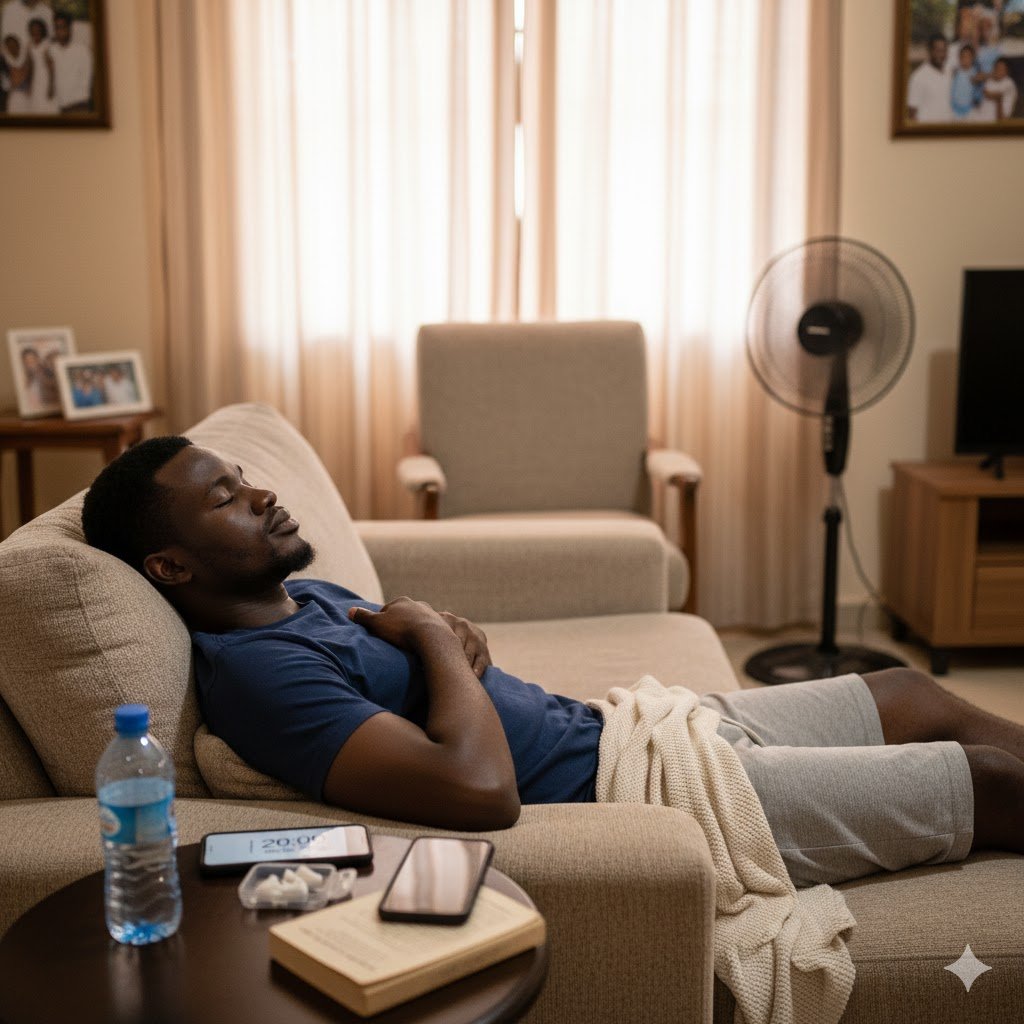
When you are too tired after work to do anything, you need simple, low-effort ways to recharge. These 12 strategies are designed to help Nigerian workers manage severe energy depletion without adding more stress.
| Low-Energy Recovery Strategy | How to Implement (The Nigerian Reality) | Search Intent |
|---|---|---|
| 1. The 20-Minute Power Nap | Immediately after reaching home (before checking WhatsApp!). Set a phone alarm for exactly 20 minutes. Resting with your eyes closed counts. Nigerian Tip: If the generator noise is bad, use cheap foam earplugs (₦500-₦1,000). | Navigational |
| 2. Structured Breathing | Use the 4-7-8 technique (Inhale 4, Hold 7, Exhale 8). It tells your body to stop pumping out the stress hormone (cortisol). Nigerian Tip: Do this in your car while stuck in traffic on the Lekki-Ajah expressway. Turn off the radio. | Transactional |
| 3. Cold Water Face Immersion | Splash cold water on your face. This stimulates the vagal nerve, which is like hitting the reset button on your heart rate. Nigerian Tip: The water doesn’t have to be icy cold; the sudden action is the signal. | Transactional |
| 4. Micro-Breaks Every Hour | Set a silent timer to stand up and stretch for 2 minutes every hour. Roll your shoulders and look away from your screen. Nigerian Tip: Use this time to quickly refill your water bottle or buy something small at the local buka. | Navigational |
| 5. Digital Detox Evening | Screens keep your brain active and excited. Designate an hour—say, 8 PM—when all work apps and social media are off. Nigerian Tip: Listen to an audiobook or podcast while preparing dinner instead of watching TV. | Transactional |
| 6. Light Movement | Don’t go to the gym! Take a slow, non-strenuous 10-minute walk around your compound or down the street. It’s relaxing movement, not exercise. Nigerian Tip: This helps break the stress pattern from sitting at a desk all day. | Navigational |
| 7. Sensory Comfort Ritual | Immediately change out of your work clothes and take a warm shower using your favorite soap. The smell and warmth tell your body the workday is finally over. Nigerian Tip: Use your favorite body cream or perfume right after the shower for an extra layer of comfort. | Transactional |
| 8. Gratitude Micro-Practice | Before bed, write down (or just think about) three simple, good things that happened. Maybe “The okada driver was polite” or “My neighbor shared their jollof rice.” Nigerian Tip: This simple practice helps manage the pervasive work-related stress Nigeria is known for. | Navigational |
| 9. Comfort Food (Mindfully) | Don’t stress over a perfect diet right away. Have a small portion of a meal you genuinely enjoy—maybe a tasty plate of pounded yam or a treat from Mr. Biggs. Eat slowly and focus on the taste. | Navigational |
| 10. Social Connection (10 Minutes) | Call one supportive friend or family member. Limit the conversation to 10 minutes. Share one good and one bad thing about your day. Nigerian Tip: Peer support is a huge factor in managing professional stress. | Transactional |
| 11. Environmental Control | Optimize your bedroom. Use heavy curtains to block light. Nigerian Tip: If you are sensitive to heat, place a bowl of ice or cold water in front of a small fan for a localized cool breeze. | Navigational |
| 12. Creative Distraction (Nollywood Comedy) | Recovery means shifting focus. Watch something that makes you laugh—a short skit or a light-hearted Nollywood movie. Laughter physically relaxes your muscles. Nigerian Tip: Choose entertainment that has nothing to do with your job or finances. | Navigational |
For more low-energy recovery options, explore these additional quick stress relief techniques at home that require minimal effort but deliver maximum impact when you’re feeling overwhelmed.
How to Stop Feeling So Drained After Work (Long-Term Solutions)
To stop feeling so drained after work, you need long-term changes that build boundaries and optimize your health.
Workplace Boundaries That Actually Work
In many Nigerian workplaces, setting boundaries is tough because the culture expects you to be “always available.” But you have to start somewhere.
- Communication Scripts: Don’t just ignore a late evening work message; that causes wahala (trouble). Use a specific, professional phrase instead. Try this: “Thank you for sending this. I’ve finished my work for the day, and I’ll need a clear head to look at this, so I will respond first thing tomorrow morning at 8:30 AM.” It’s firm but respectful.
- The Progressive Approach: Start small. Maybe you decide not to open work WhatsApp on Saturdays. Once that feels comfortable, you move to the next boundary, protecting your evenings. This helps you stop feeling mentally drained by work creeping into your personal life.
Understanding why setting boundaries is essential for work-life balance helps you implement these communication scripts with confidence, even in Nigerian workplace culture where expectations run high.
Building Recovery Into Your Routine
Recovery needs to be a non-negotiable part of your daily life. It’s not a reward; it’s maintenance.
Prevention starts at dawn. Building an effective morning routine sets positive momentum that reduces stress accumulation throughout your workday.
- The Post-Work Transition: When you leave work, find a ritual to shift your brain. Read a novel or listen to music on your way home. This small ritual tells your brain the work part is done and helps you recharge after feeling drained.
- Energy Journaling: For two weeks, track what gives you energy and what drains it. You might find out that meetings with a specific manager or the drive through the Victoria Island commute are the biggest drains. Knowing this allows you to manage those times better.
When and How to Seek Professional Help
If your exhaustion lasts more than a few weeks, and you are constantly thinking “why my body feels weak and tired,” it’s time to look into professional help.
- Therapy: Cognitive Behavioral Therapy (CBT) is an evidence-based way to manage the stress and anxiety that lead to chronic fatigue. Check your HMO benefits! Many major Nigerian HMOs like Hygeia, Avon, and Leadway now cover outpatient therapy sessions.
- Addressing Stigma: Seeking help is a sign of strength, not weakness. You wouldn’t ignore a broken bone; don’t ignore a stressed mind.
How to Recover from Work Burnout (Your Comprehensive Plan)
If you’ve crossed the line into full work burnout, you need a deeper plan. Recovery takes time—usually 3 to 6 months—but it is totally possible to recover from work burnout without quitting your job right away.
The 7-Day Digital Detox Strategy
One of the most powerful strategies to lower cortisol is a digital detox. It’s a game-changer.
- The Goal: A full 7 days without work emails, calls, or texts. You have to plan this carefully.
- How to Implement: Set an out-of-office message that clearly states you will not be responding. Give a trusted colleague a phone number for emergencies only. Use the time to sleep, rest, and engage in those low-effort recovery strategies from Section 4.
The Role of Physical Health in Recovery
You have to physically rebuild your body’s systems.
- Affordable Exercise: You don’t need a fancy gym membership. Simple, brisk walking is free, and home bodyweight exercises (just search YouTube) are highly effective.
- Nutrition: Focus on hydration, eating whole Nigerian foods, and avoiding crash diets. Your body needs stable fuel to rebuild. Try to make sure your jollof rice is balanced with plenty of protein and vegetables!
- Sleep Optimization: Sleep is your priority. Be strict with your phone use an hour before bed and manage the generator noise as best as you can (those foam earplugs are your friend).
Medical Evaluation and Treatment (Commercial Investigation)
If you have constant heart palpitations, chronic stomach issues, or constantly feel why does my body feel weak and tired all of a sudden, see a medical doctor. They can check for severe vitamin deficiency or underlying anxiety disorders. Getting a proper diagnosis through your HMO is the first step toward lasting recovery.
If daily strategies aren’t enough and you need deeper recovery, learn how to plan a complete reset day for stress relief in Nigeria that addresses accumulated burnout systematically.
Frequently Asked Questions (FAQ Section)
Is it normal to feel exhausted every day?
No, it’s not normal to feel exhausted every single day. We expect to be tired after a hard day, but chronic, persistent exhaustion is a sign your body isn’t recovering properly. If you are constantly asking “why am I always tired and have no energy,” it means your energy input is less than your output, likely caused by unmanaged stress, poor sleep quality, or a health issue.
How do I convince my family I need rest time? (Nigerian context)
In our culture, it can be hard to say no to family demands. Instead of saying “I’m tired,” which can invite argument, use clear communication: “I love you, but I need 30 minutes to myself to recharge so I can be present with you later.” Explain that protecting your energy levels makes you a better parent, spouse, or sibling in the long run. Try to schedule your rest rather than waiting for it to happen.
Does exercise help when I’m already exhausted?
Yes, but only if it’s light movement. Going for a high-intensity run when you’re burnt out can make things worse. Aerobic exercise like a brisk 15-minute walk or gentle stretching reduces the stress hormone (cortisol) and boosts mood. It helps you recharge after feeling drained without completely using up your resources.
What vitamin deficiency causes fatigue?
The most common vitamin deficiency causing chronic fatigue is Vitamin D (especially for indoor workers) and Vitamin B12 (essential for blood and nerve health). Iron deficiency is also a major cause of anemia, which makes you feel weak.
How long does it take to recover from burnout?
Recovering from work burnout typically takes 3 to 6 months with consistent effort. You have to stick with the recovery practices. The key is implementing daily boundaries and consistent recovery practices, not just resting for one weekend.
Conclusion
If you’ve been constantly wondering “why am I always tired and have no energy,” know that this is a widespread challenge for Nigerian workers. The combination of environmental stress from the Lagos traffic congestion and generator noise, combined with intense work demands, creates a perfect storm for work exhaustion Nigeria.
But you can fix this. Recognizing the problem is the most important step. Whether your exhaustion is caused by a simple vitamin deficiency, poor sleep quality, or the severe drain of work burnout, solutions are within your reach.
Don’t wait until you are too tired after work to do anything. Start small today. Try just one of the 12 low-effort recovery strategies from Section 4 this week. Recovery is not selfish; it is necessary for your long-term health and your ability to thrive. You are not alone, and your energy restoration techniques start now.

Oladepo Babatunde (Prince Babatee Tunde) is a Computer Scientist, researcher, and professional content writer with a Higher National Diploma in Computer Science from Kwara State Polytechnic, Nigeria.
With a background in technology and a passion for clear communication, Babatunde specializes in creating thoroughly researched, reader-focused content on productivity, personal development, home living, and technology. Every article he writes is backed by extensive research and fact-checking to ensure readers receive accurate, actionable information.
As a freelance writer, he has helped brands and publications deliver content that educates, engages, and empowers their audiences. His mission at Vibena is simple: make complex topics easy to understand and help Nigerians live smarter, more productive lives.